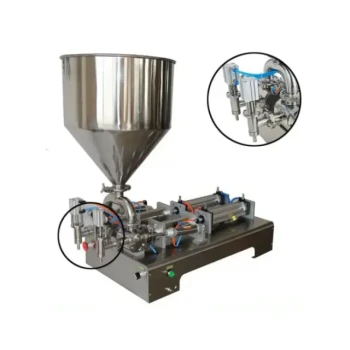
The primary function of a semi-automatic dosing machine is to replace labor-intensive manual filling with automated, precise flow control. By automating the distribution of honey, this equipment ensures consistent net weight across all containers and significantly reduces the physical strain associated with manual packaging.
The core value of a semi-automatic doser lies in its ability to standardize product volume while protecting the operator from the repetitive strain injuries common in manual processing.
Core Operational Benefits
Achieving Consistent Net Weight
The most immediate technical advantage of a semi-automatic dosing machine is precise flow control.
Unlike manual filling, which often results in volume fluctuations, dosing machines automate the distribution process to strictly adhere to weight specifications.
This ensures that every bottled container meets the required net weight, eliminating product giveaway and ensuring regulatory compliance.
Reducing Biomechanical Load
Manual honey filling requires repetitive opening, closing, and gripping motions that place significant stress on the hands and wrists.
A semi-automatic machine absorbs this physical burden by mechanizing the actual dispensing action.
This reduction in biomechanical load protects the operator's upper limbs, creating a safer and more sustainable laboratory work environment.
The Semi-Automatic Workflow
The Role of the Operator
It is critical to understand that "semi-automatic" implies a partnership between the machine and the human operator.
These models do not automate the entire production line; tasks such as placing the empty jar or capping may still require manual intervention.
The machine specifically targets the filling phase, transforming it from a manual variable into a controlled constant.
Hygiene and Quality Control
By minimizing direct human contact during the filling phase, these machines help maintain a cleaner processing environment.
Precise filling reduces spills and drips, which is essential for maintaining hygiene standards.
For high-value products, such as medical-grade honeys, this precision also helps minimize air exposure, preserving the potency of active ingredients.
Understanding the Trade-offs
Throughput vs. Full Automation
While semi-automatic machines improve efficiency over manual methods, they generally have lower throughput than fully industrial automatic lines.
Because an operator is still required for parts of the process, production speed is ultimately limited by the speed of the human handler.
Operational Dependency
The system relies on the operator's continuous presence to feed containers or manage the cycle.
If the operator steps away, production stops, unlike fully automated conveyor systems that process large volumes autonomously.
Making the Right Choice for Your Goal
When integrating dosing technology into your honey production, consider your specific operational needs.
- If your primary focus is Product Consistency: Rely on the machine’s flow control to eliminate weight variance and standardize every unit.
- If your primary focus is Worker Safety: Implement this technology specifically to minimize repetitive strain injuries and reduce the biomechanical load on your staff.
- If your primary focus is High-Volume Scale: Recognize that while this improves manual speed, extremely large commercial volumes may require fully automatic industrial solutions.
By automating the most physically demanding and variable part of the process, you secure both the quality of your product and the health of your workforce.
Summary Table:
| Feature | Manual Filling | Semi-Automatic Dosing | Benefit |
|---|---|---|---|
| Weight Accuracy | High Variance | Precise Flow Control | Regulatory compliance & zero waste |
| Physical Strain | High (Repetitive) | Low (Mechanized) | Reduced injury risk for operators |
| Hygiene | Higher Contact Risk | Minimal Contact | Improved product purity & cleanliness |
| Consistency | Human-Dependent | Machine-Standardized | Uniform product volume every time |
Scaling Your Apiary Operations with HONESTBEE
Transitioning from manual labor to automated precision is the key to scaling your honey production. HONESTBEE specializes in supporting commercial apiaries and distributors with high-performance beekeeping tools, honey-filling machines, and specialized hardware designed for efficiency and durability.
Whether you are looking to upgrade your extraction facility or source essential industry consumables, our comprehensive wholesale offering ensures you have the right equipment to grow your brand.
Ready to modernize your honey production line? Contact our team of experts today to find the perfect machinery solutions for your business!
References
- Giovanni Maina, A Baracco. How to Assess the Biomechanical Risk Levels in Beekeeping. DOI: 10.1080/1059924x.2016.1141132
This article is also based on technical information from HonestBee Knowledge Base .
Related Products
- Semi Automatic Small Honey Bottle Filling Machine Honey Filler
- Precision Durable Efficient HONESTBEE Rotary Honey Filling Machine
- Automatic Single-Dose Snap & Squeeze Honey Sachets Packing Machine
- Automatic Honey Filling and Filtering Machine for Beekeeping Bottle Filling
- Manual Honey Filling Machine Bottling Machine for Honey
People Also Ask
- What is a semi-automatic honey filler? Scale Your Honey Production with Precision and Efficiency
- Why are high-precision honey filling machines and labeling equipment necessary for the commercialization of stingless bee honey?
- What are the key features to consider in a honey filling machine? Optimize Your Production with the Right Equipment
- How does high-precision honey filling machinery help improve product competitiveness in modern apiary upgrades?
- What are the different types of honey filling machines based on automation level? A Guide for Apiaries & Distributors