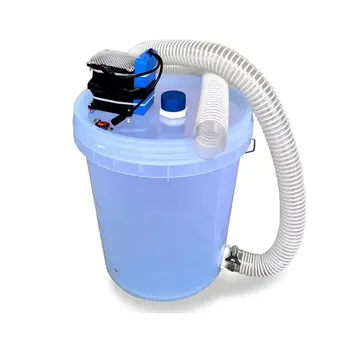
The primary function of a vacuum evaporator in propolis extraction is to concentrate the extract by removing solvents, such as ethanol, at significantly reduced temperatures. By lowering the atmospheric pressure within the system, the device reduces the solvent's boiling point, allowing evaporation to occur rapidly without the need for high heat.
Core Takeaway The vacuum evaporator solves the conflict between needing to remove solvents and needing to preserve chemistry. It enables the creation of a high-purity, concentrated propolis residue by facilitating distillation below the thermal threshold that would otherwise destroy vital bioactive compounds.
The Mechanism of Preservation
Lowering the Boiling Point
Under standard atmospheric pressure, removing an ethanol solvent would require high temperatures that damage delicate organic compounds. A vacuum evaporator creates negative pressure, which drastically alters the physical properties of the solvent.
This vacuum environment allows the ethanol to boil and evaporate at much lower temperatures, typically around 40°C. This phase change at low heat is the fundamental advantage of the technology.
Protecting Heat-Sensitive Compounds
Propolis is rich in bioactive ingredients, specifically polyphenols and flavonoids, which are highly sensitive to thermal degradation. High heat can cause these molecules to oxidize or break down, neutralizing their therapeutic value.
By keeping the process temperature low, the vacuum evaporator prevents the destruction of specific antioxidants like caffeic acid and ferulic acid. This ensures the final product retains the full biological profile of the raw material.
Quality and Purity Outcomes
Efficient Concentration
The process transforms the liquid extraction mixture into a concentrated state known as a "dark brown concentrated extract." Because the vacuum facilitates rapid evaporation, the processing time is reduced, minimizing the extract's exposure to processing conditions.
High-Purity Residues
The result of vacuum evaporation is a high-purity propolis residue free of excess solvent. Because the biological structure remains intact, this residue is immediately suitable for demanding industrial or pharmaceutical applications where potency is critical.
Operational Constraints
The Temperature Threshold
While the vacuum enables low-temperature boiling, operator vigilance regarding temperature limits remains vital. Supplementary data indicates that maintaining the temperature strictly below 50°C is critical to success.
Risk of Degradation
Even within a vacuum system, exceeding this 50°C thermal limit can lead to the degradation of active components. The equipment does not automatically protect the compounds; it merely provides the capability to operate safely if parameters are set correctly.
Making the Right Choice for Your Goal
To maximize the quality of your propolis extraction, consider the following operational targets:
- If your primary focus is Potency: Maintain your evaporation temperature strictly between 40°C and 50°C to preserve caffeic and ferulic acids.
- If your primary focus is Efficiency: Utilize the maximum vacuum pressure your equipment allows to achieve the lowest possible boiling point, speeding up solvent removal without adding heat.
- If your primary focus is Purity: Ensure the process runs until the solvent is fully removed, resulting in a dense, dark brown residue.
The vacuum evaporator is the technical bridge that transforms a raw chemical solution into a viable, bioactive pharmaceutical product.
Summary Table:
| Feature | Function in Propolis Extraction | Benefit |
|---|---|---|
| Pressure Reduction | Lowers the solvent boiling point | Enables evaporation at temperatures as low as 40°C |
| Thermal Protection | Prevents overheating of flavonoids | Preserves therapeutic antioxidants like caffeic acid |
| Solvent Removal | Efficiently distills ethanol/solvents | Produces high-purity, dark brown concentrated residues |
| Efficiency | Accelerates the concentration process | Minimizes exposure time to processing conditions |
Elevate Your Propolis Production with HONESTBEE
Are you looking to scale your propolis processing or optimize your apiary’s output? At HONESTBEE, we specialize in providing commercial apiaries and distributors with high-performance beekeeping machinery and tools.
From advanced vacuum evaporators and honey-filling machines to essential consumables, our comprehensive wholesale offerings are designed to ensure your products maintain the highest biological potency and purity. Whether you are a large-scale distributor or a specialized industrial honey producer, we provide the hardware and expertise to help your business thrive.
Ready to upgrade your processing facility? Contact us today to explore our full range of beekeeping equipment!
References
- Nursen ORAK, Salih Tunç Kaya. An Evaluation of Damages Caused by Doxorubicin in Liver Tissue and Potential Protective Effect of Propolis on These Damages. DOI: 10.18521/ktd.1049919
This article is also based on technical information from HonestBee Knowledge Base .
Related Products
- Heavy Duty 12V Oxalic Acid Evaporator Vaporizer for Bee Varroa Mite Treatment Beekeeping Fumigator Atomizer
- 12V Bee Mite Removal Evaporator Oxalic Acid Vaporizer for Bee Fumigation Treatment 180W Atomization
- Durable 12V Oxalic Acid Vaporizer for Varroa Mite Treatment Beehive Beekeeping Tool
- Oxalic Acid Vaporizer 12V for Bee Varroa Mite Treatment
- Adjustable Formic and Acetic Acid Dispenser for Bee Mite Treatment
People Also Ask
- How can oxalic acid treatment be applied effectively when capped brood is present? Master the 3-Stage Vapor Protocol
- What are the main advantages of using oxalic acid vaporization for Varroa mite control? Achieve 90%+ Efficacy Safely
- What is the process of using an oxalic acid vaporizer? A Step-by-Step Guide to Safe Varroa Control
- How can oxalic acid vaporization be used effectively in a hive that contains brood? Master Multi-Stage Mite Control
- Why is it necessary to control varroa mite infestations? Protect Your Colony with Oxalic Acid Vaporizers