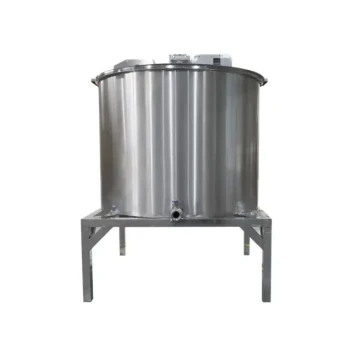
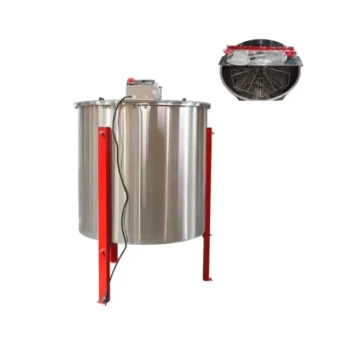
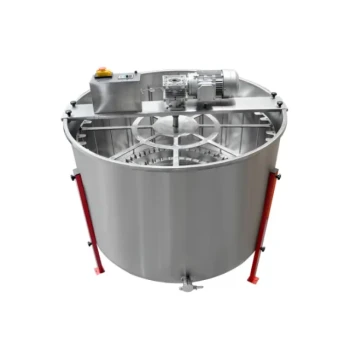
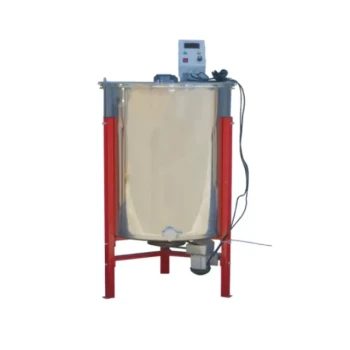
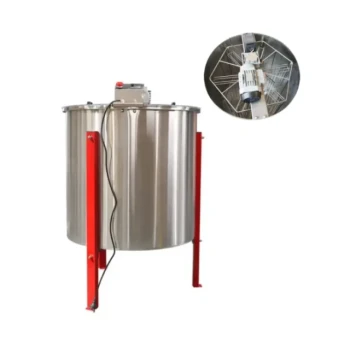
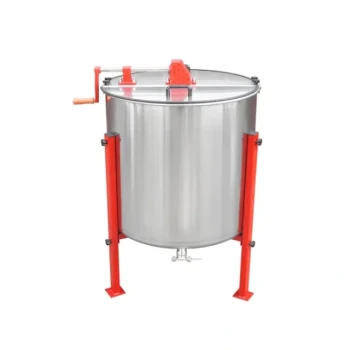
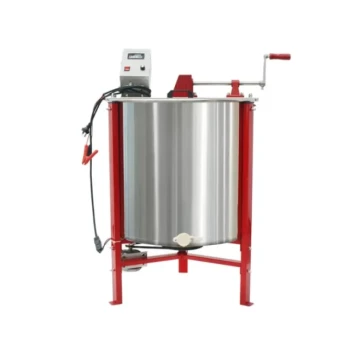
The primary function of an industrial honey extractor is to utilize centrifugal force to separate liquid honey from the honeycomb without destroying the wax structure. This mechanized process allows for high-speed, high-purity extraction that significantly outperforms manual gravity drainage or crushing methods.
Core Takeaway: The industrial extractor is not merely a harvesting tool; it is a conservation device for the colony. By extracting honey while preserving the honeycomb's integrity, it allows beekeepers to return empty combs to the hive, saving bees the immense energy required to rebuild wax and redirecting their effort toward maximizing honey production.
The Mechanics of Centrifugal Extraction
Utilizing Centrifugal Force
The extractor operates by spinning honey frames at high speeds within a drum or barrel. This rotation generates centrifugal force, which pulls the liquid honey out of the uncapped wax cells and throws it against the inner walls of the tank. The honey then flows down to a collection gate or spigot for packaging.
Non-Destructive Separation
Unlike a mechanical honey press, which separates honey by physically crushing the comb, an extractor is designed for structural preservation. The frames are held securely in baskets, ensuring that the delicate beeswax remains intact throughout the spinning process. This distinguishes the extractor as the standard for commercial-grade operations where efficiency is paramount.
Strategic Advantages for Production
Enabling Comb Reuse
The most critical advantage of this technology is the ability to recycle honeycombs. Once the extraction cycle is complete, the empty, intact frames can be immediately returned to the colony. This cycle is essential for sustainable, large-scale beekeeping.
Energy Conservation for the Colony
Bees consume a significant amount of energy and resources to secrete wax and construct honeycombs. When an extractor allows for the reuse of existing combs, it drastically reduces the energy expenditure required for hive reconstruction. Consequently, the colony can focus its metabolic energy on foraging and nectar gathering, leading to higher overall yields.
Efficiency and Purity
Mechanized extraction ensures a more thorough separation than manual methods, leading to a higher recovery rate. It also maintains high honey purity by minimizing the introduction of wax debris or other contaminants often found in crushed honey methods.
Understanding Operational Trade-offs
The Requirement of Uncapping
An extractor is not a "load and go" solution; it requires preparation. As noted in operational protocols, you must first manually or mechanically remove the wax caps from the cells before placing frames in the extractor. If the cells remain capped, centrifugal force cannot pull the honey out.
Process Complexity vs. Simple Pressing
While a honey press (which squeezes combs) is mechanically simple, it is destructive. The extractor is more complex—involving motors, speed controls, and balanced loading—but is necessary for preservation. The trade-off for saving the comb is the requirement for electricity (in motorized models) and a strict adherence to spinning protocols (such as reversing direction) to ensure the frame is not damaged by the force.
Making the Right Choice for Your Goal
To maximize the utility of an industrial honey extractor, align your usage with your specific production targets:
- If your primary focus is Volume: Prioritize a motorized radial extractor that can spin both sides of the frame simultaneously to minimize downtime.
- If your primary focus is Colony Health: Ensure the extractor speed is carefully regulated to prevent "blowouts," preserving the maximum amount of drawn comb for immediate reuse by the bees.
The industrial honey extractor serves as the bridge between biological efficiency and commercial viability, turning a destructive harvest into a sustainable cycle.
Summary Table:
| Feature | Centrifugal Extractor | Mechanical Honey Press |
|---|---|---|
| Primary Method | High-speed centrifugal spinning | Physical crushing and squeezing |
| Comb Preservation | High (Intact & Reusable) | None (Destroyed) |
| Honey Purity | High (Minimal wax debris) | Lower (High wax contamination) |
| Colony Impact | Saves bee energy on wax building | High energy cost to rebuild comb |
| Ideal Use | Commercial apiaries & High volume | Small-scale or specialty wax harvest |
Scaling Your Apiary Efficiency with HONESTBEE
At HONESTBEE, we understand that for commercial apiaries and distributors, efficiency is the heartbeat of a successful harvest. Our industrial honey extractors are engineered to maximize your yield while protecting your most valuable asset: the honeycomb. By preserving the wax structure, our equipment allows your colonies to focus on honey production rather than reconstruction, drastically increasing your annual output.
From high-capacity honey-filling machines to specialized hive-making hardware and essential beekeeping consumables, HONESTBEE provides a comprehensive wholesale portfolio designed for professional growth.
Ready to elevate your production and optimize your colony health?
Contact our experts today to explore our full spectrum of beekeeping machinery and tools.
References
- Lidija Madžar. Motives for the introduction of agricultural innovations in Serbia with particular accent on beekeepers: The application of logistic regression. DOI: 10.5937/ekopolj2201027m
This article is also based on technical information from HonestBee Knowledge Base .
Related Products
- HONESTBEE 72 Frame Industrial Electric Honey Extractor for Beekeeping
- Commercial Electric 12 Frame Honey Extractor Spinner Motorized Honey Extractor
- 32 Frame Commercial Electric Honey Extractor for Beekeeping and Honey Production
- 8-Frame Electric Self-Reversing Honey Extractor Spinner for Commercial Honey Extraction Equipment
- 24 Frame Honey Extractor Commercial Radial Honey Frame Extraction Machine
People Also Ask
- What is the importance of balancing honeycomb frames within a honey extractor? Ensure Stability and Protect Machinery
- How is honey separated from the frames after they are uncapped? Efficient Extraction Methods for High Yields
- What are the main benefits of using a honey extractor? Maximize Yields and Protect Your Honeycomb
- What are the recommended methods for removing honey from the honeycomb? Top Extraction Techniques for Maximum Efficiency
- How do manual honey extractors compare to electric honey extractors? Choosing the Right Tool for Your Apiary Growth