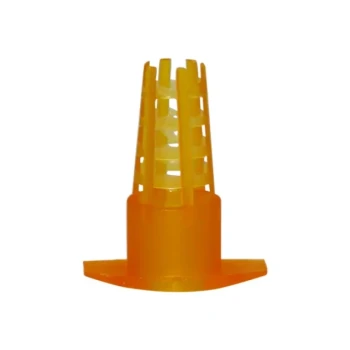
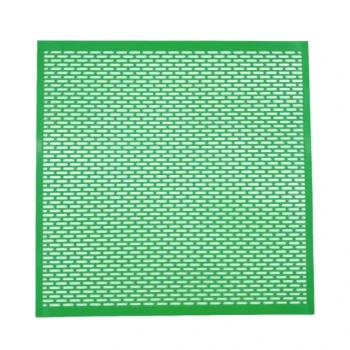
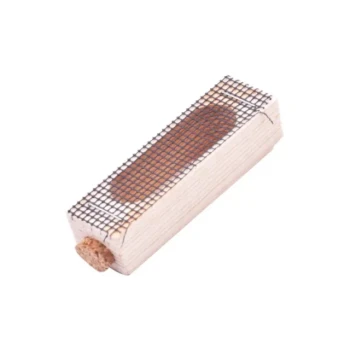
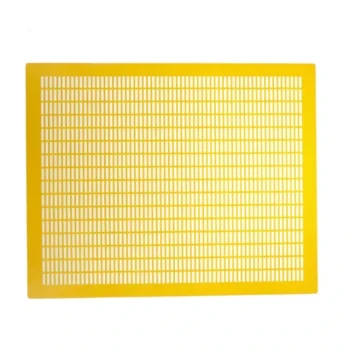
The primary function of horizontal and vertical queen barriers is to isolate two distinct queen bees within a single colony system, preventing lethal physical conflict between them. While standard excluders act as filtration devices to keep honey clean, these barriers serve a structural role in two-queen breeding systems, allowing for colony expansion and massive population growth while permitting worker bees to traverse the entire hive freely.
By maintaining physical separation between queens while integrating their workforce, these barriers enable beekeepers to significantly increase total brood area. This results in a "super-colony" capable of achieving much higher production efficiency for honey and pollen than a standard single-queen unit.
Implementing the Two-Queen System
Preventing Physical Conflict
In a natural setting, multiple queens within a confined space will engage in combat until only one remains.
Horizontal and vertical barriers create distinct, safe zones within the hive. This ensures that both queens can lay eggs simultaneously without the risk of encountering and killing one another.
Enabling Workforce Integration
While the queens are restricted, the colony functions as a single unit regarding resource gathering.
The barrier utilizes a precise grid size that blocks the larger thorax of the queen but allows smaller worker bees to pass through freely. This allows the workforce to service both brood nests and share resources across the entire horizontal or vertical expanse of the hive.
Driving Colony Efficiency
Boosting Brood Capacity
The core objective of using these barriers is to maximize the total brood area.
With two queens laying eggs in parallel, the colony population expands at a rate impossible for a single-queen hive to match. A larger population translates directly to a larger foraging force.
Facilitating Hive Expansion
These barriers allow for flexible structural growth of the apiary setup.
Whether expanding vertically (stacking supers) or horizontally (long hives), the barriers provide the necessary compartmentalization. This structural control is essential for scaling production efficiency in commercial operations.
Understanding the Trade-offs
Contextual Usage: Barrier vs. Excluder
It is critical to distinguish between using this hardware as a "barrier" versus a standard "excluder."
In a standard setup (Supplementary Reference), a queen excluder is used merely to keep the queen out of honey supers to ensure harvest purity. In the context of the Primary Reference, the device is a tool for population engineering and colony intensification, not just filtration.
Management Complexity
Operating a two-queen system introduces higher complexity than standard beekeeping.
The beekeeper must manage two brood nests rather than one. While this boosts production, it requires precise placement of the barriers to ensure neither queen becomes "honey-bound" (running out of space to lay eggs) due to the massive influx of nectar from the combined workforce.
Making the Right Choice for Your Goal
To determine how to utilize partitioning technology in your apiary, consider your primary objective:
- If your primary focus is rapid population growth: Implement horizontal or vertical barriers to establish a two-queen system, doubling your egg-laying capacity.
- If your primary focus is harvest purity: Use the device as a standard excluder above a single brood nest to prevent larvae contamination in your honey supers.
Strategic use of queen barriers transforms a hive from a simple storage unit into a high-efficiency production engine.
Summary Table:
| Feature | Single-Queen System (Excluder) | Two-Queen System (Barrier) |
|---|---|---|
| Primary Goal | Harvest purity & larvae-free honey | Population engineering & colony growth |
| Queen Count | One queen per hive | Two queens isolated in one system |
| Worker Access | Free movement to honey supers | Free movement between both brood nests |
| Production | Standard output | High-efficiency "super-colony" output |
| Management | Low complexity | High complexity (population management) |
Maximize Your Colony Production with HONESTBEE
Are you looking to scale your commercial apiary's efficiency? At HONESTBEE, we specialize in supporting commercial beekeepers and distributors with a full spectrum of professional-grade equipment. From precision-engineered horizontal and vertical queen barriers to advanced honey-filling machines and specialized hardware, our comprehensive wholesale offering is designed to help you build high-performance "super-colonies."
Our value to your business:
- Total Solutions: We supply everything from hive-making machinery to essential industry consumables.
- Commercial Scale: Tailored wholesale support for large-scale operations and global distributors.
- Growth Focused: Our tools are built to enhance brood capacity and production efficiency.
Ready to upgrade your beekeeping infrastructure? Contact us today to explore our wholesale catalog!
References
- Dr. A. A. Ahmed, Mai Monir Fawzy Al- Nabawy El- Zanaty. Studies on modern rearing methods in honeybee colonies. DOI: 10.21608/mjapam.2023.317573
This article is also based on technical information from HonestBee Knowledge Base .
Related Products
- JZBZ Langstroth Queen Rearing Frame for Beekeeping
- JZBZ Style Shipping Cell Protector for Queen Rearing Kit
- JZBZ Style Push-In Cell Protector for Professional Queen Rearing Kits
- Premium Wood Framed Metal Wire Queen Bee Excluder
- High Performance Plastic Queen Excluder for Beekeeping and Apiary Management
People Also Ask
- Why use finishing colonies for queen cell capping? Secrets to Superior Queen Quality and Performance
- How do queen rearing frames and grafting needles function together? Master the Doolittle Method for High-Quality Queens
- What is the purpose of queen rearing frames? Master Controlled Queen Production for Your Apiary
- What are the functions of queen rearing frames and artificial queen cells? Master Bee Genetic Improvement
- What roles do professional queen rearing frames and artificial queen cells play? Scaling Your Queen Bee Production