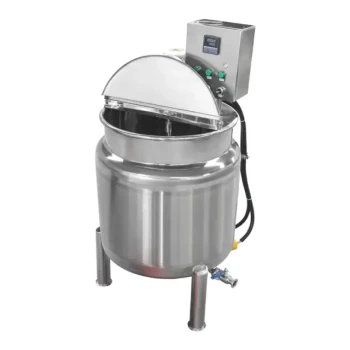
The primary function of industrial ultrasonic cleaners in honey analysis is to de-crystallize the sample and remove air bubbles to ensure measurement accuracy. This process creates a perfectly homogenized specimen, which is essential for obtaining consistent readings of physical and chemical indicators. By eliminating internal air pockets, the equipment prevents interference during light transmittance and absorbance testing in precision colorimeters.
Core Takeaway: Industrial ultrasonic cleaners utilize cavitation to provide a non-thermal solution for honey homogenization and de-gassing. This specialized preparation stage is critical for maintaining sample integrity while ensuring the high-precision results required by modern quality control standards.
Enhancing Analytical Precision Through Cavitation
Effective De-crystallization and Homogenization
Honey naturally crystallizes over time, which can lead to skewed analytical results if the sample is not uniform. Ultrasonic cavitation breaks down these glucose crystals through high-frequency pressure waves, returning the honey to a consistent liquid state.
This homogenization ensures that every sub-sample taken for testing is a true representation of the entire batch. For B2B providers, offering equipment that masters this stage is key to supporting laboratories that demand repeatable, high-accuracy data.
De-gassing for Optical Accuracy
Air bubbles trapped within high-viscosity honey act as physical barriers that scatter light. During colorimetry or spectrophotometry, these bubbles can lead to false absorbance readings and inaccurate color grading.
The ultrasonic process forces these micro-bubbles to the surface and out of the liquid. This de-gassing function ensures the honey is clear and transparent, allowing for the precise measurement of optical properties without the risk of light interference.
Preserving Sample Integrity for Bioactive Testing
Low-Temperature Dissolution of Viscous Samples
Traditional heating methods used to reduce honey viscosity often exceed 40°C, which can degrade heat-sensitive components. Industrial-grade ultrasonic units allow for the rapid dissolution of honey in water at temperatures that remain safe for the sample.
This is vital for analyzing antioxidant activity, as it prevents the destruction of delicate polyphenols. By maintaining low-temperature processing, the ultrasonic cleaner preserves the biological profile that determines the honey's market value.
Accelerating the Recovery of Target Compounds
The sonochemical effect of ultrasonics accelerates molecular diffusion at the solid-liquid interface. This effectively breaks down the honey matrix to promote the transition of phenolic and flavonoid compounds into the solvent.
This "ultrasound-assisted" preparation significantly shortens dissolution time. It improves the recovery rate of target bioactive substances, making it an essential tool for high-throughput testing facilities that prioritize speed and efficiency.
Understanding the Trade-offs
Temperature Management Requirements
While ultrasonic processing is considered a "mild" thermal technique, the kinetic energy of cavitation can naturally increase the liquid's temperature over time. To avoid the accumulation of Hydroxymethylfurfural (HMF)—a marker of heat damage—units must be monitored closely or equipped with cooling systems.
Resellers should emphasize the value of units with integrated temperature controls. This ensures the honey remains below critical thresholds, such as 50°C, to maximize the preservation of enzymes and volatile flavor compounds.
Complementary vs. Standalone Processing
Ultrasonic cleaners are highly effective for homogenization, but they are not a replacement for filtering or centrifugation. While ultrasonics handle molecular and gas-level impurities, industrial centrifuges are still required to settle pollen grains for microscopic examination.
Distributors can provide better value by positioning ultrasonic units as part of a comprehensive equipment portfolio. Combining ultrasonics with high-speed centrifuges and filtration systems offers a complete "one-stop" solution for honey analysis labs.
How to Apply This to Your Inventory Strategy
The demand for honey analysis equipment is driven by increasingly strict food safety regulations and the growing market for high-value bioactive honey.
- If your primary focus is high-end laboratory clients: Prioritize sourcing ultrasonic units with digital frequency sweeps and precise temperature sensors to protect heat-sensitive antioxidants.
- If your primary focus is volume-based resellers: Look for durable, industrial-grade models that offer high-capacity tanks and rapid response times from the manufacturer to ensure fast order fulfillment.
- If your primary focus is value-added service: Leverage your technical expertise to provide "full-spectrum" kits that include both ultrasonic cleaners and centrifugal separators for a complete sample prep workflow.
By integrating these high-precision tools into your portfolio, you empower your clients to maintain the highest standards of food safety and product quality.
Summary Table:
| Key Function | Technical Process | Core Benefit for Analysis |
|---|---|---|
| De-crystallization | Ultrasonic cavitation breaks glucose crystals | Ensures a homogenized, representative sample |
| De-gassing | Forces micro-bubbles to the liquid surface | Eliminates light scattering for optical accuracy |
| Low-Temp Dissolution | Rapid mixing at temperatures below 40°C | Preserves heat-sensitive antioxidants and enzymes |
| Extraction Boost | Accelerates molecular diffusion in solvents | Shortens processing time and improves compound recovery |
Scale Your B2B Portfolio with HONESTBEE
Are you looking to provide your laboratory and apiary clients with the highest standard of honey processing equipment? HONESTBEE is a premier global supplier specializing in a comprehensive, full-spectrum product portfolio designed for commercial apiaries and distributors.
Why Partner with HONESTBEE?
- One-Stop Sourcing: Access a complete range of beekeeping tools, specialized hardware (like hive-making and honey-filling machines), and essential industry consumables.
- Built for Business: We offer competitive wholesale margins, reliable OEM/ODM support, and professional certifications to ensure your inventory meets global standards.
- Efficiency & Reliability: Benefit from our ultra-fast delivery, efficient order fulfillment, and deep industry expertise that helps you stay ahead of market trends.
- Exceptional Support: Experience rapid response times and dedicated customer service tailored to the needs of wholesalers and resellers.
Contact HONESTBEE Today to access our premium wholesale catalog and empower your clients with industry-leading honey analysis and processing solutions!
References
- M. Homrani, M. Carmen Seijo. Botanical Origin, Pollen Profile, and Physicochemical Properties of Algerian Honey from Different Bioclimatic Areas. DOI: 10.3390/foods9070938
This article is also based on technical information from HonestBee Knowledge Base .
Related Products
- Electric Double Wall Honey Filtering Machine Purifier Equipment for Honey Processing Plant
- Professional Wide Blade Honey Scraper for Beekeeping and Honey Processing
- High Quality Honey Dehumidifier Dryer Thickening Machine for Beekeeping
- HONESTBEE 72 Frame Industrial Electric Honey Extractor for Beekeeping
- Honey Concentrating and Filtering Dehumidifier Machine 2T Capacity for Honey
People Also Ask
- What is the process of filtering honey? A Guide to Clean, Pure, and Market-Ready Honey
- What types of equipment are used in honey filtering? Build an Efficient System for Pure, Marketable Honey
- What is the overall importance of using the right equipment in honey filtering? Boost Quality & Marketability
- What are the benefits of drying honey filtering equipment after use? Protect Your Honey Quality & Equipment Investment
- What steps are involved in maintaining honey filtering equipment? A Guide to Protecting Your Honey Quality