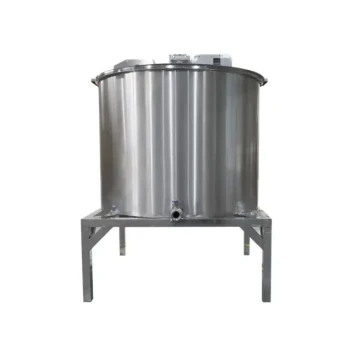
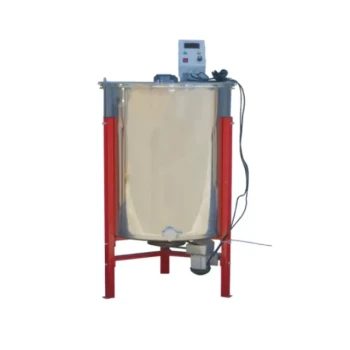
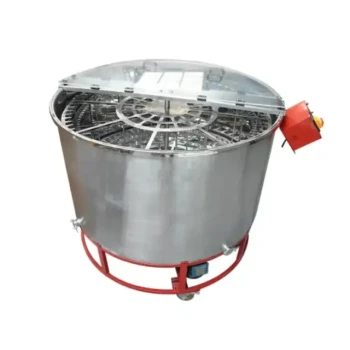
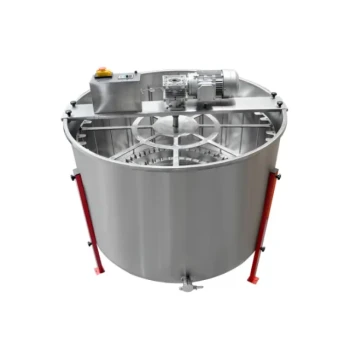
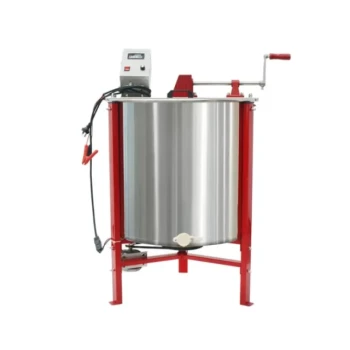
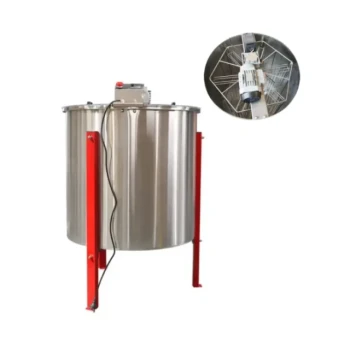
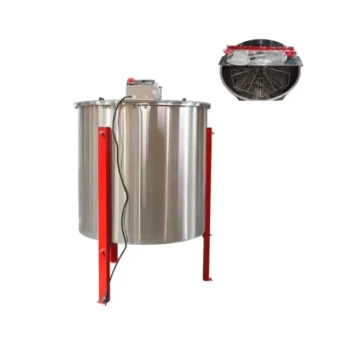
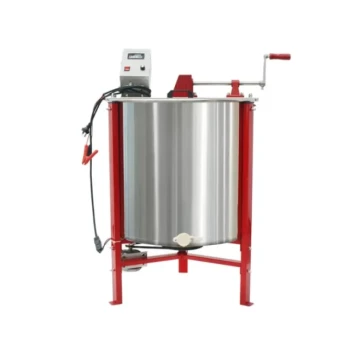
The primary function of large-capacity centrifugal honey extractors is to utilize high-speed rotational force to separate mature honey from the comb while strictly preserving the wax structure. This mechanization is the cornerstone of commercial production, enabling beekeepers to process high volumes rapidly during limited nectar flow periods.
By decoupling honey harvesting from comb destruction, these machines allow for the immediate recycling of wax frames. This eliminates the biological cost of rebuilding honeycombs, allowing colonies to focus entirely on nectar collection and significantly increasing annual yields.
The Mechanics of Commercial Extraction
Non-Destructive Separation
The fundamental principle of these machines is the use of centrifugal force. By spinning frames at high speeds, the extractor pulls liquid honey out of the cells without crushing the delicate wax walls.
High-Volume Throughput
Unlike manual methods, large-capacity extractors are designed for mechanization. They handle massive quantities of frames simultaneously, which is critical during peak harvest seasons when time is a scarce resource.
Shortening the Collection Cycle
Efficiency in the extraction room translates to efficiency in the field. High-speed processing shortens the overall honey collection cycle, ensuring that empty frames are returned to the hives faster to catch the tail end of a bloom.
The Biological Impact on Production
Preserving Colony Energy
Building wax is metabolically expensive for bees; they consume significant amounts of honey and energy to secrete beeswax. By returning intact empty combs to the hive, the extractor removes the need for bees to rebuild.
Increasing Production Turnover
When bees do not have to rebuild infrastructure, they can immediately switch to nectar foraging. This results in a faster turnover rate and a substantial increase in the total annual honey yield per hive.
Maximizing Nectar Flow Utilization
Flowering periods are often short and intense. The speed of large-capacity extractors allows producers to maximize these limited windows, capturing volume that would be lost if the extraction process slowed down the return of supers to the hive.
Understanding the Operational Trade-offs
Equipment Footprint and Investment
While efficient, industrial-grade extractors represent a significant capital expense and require dedicated facility space. They are "core processing tools" that dictate the layout and workflow of the honey house.
Precision vs. Speed
There is a delicate balance between rotation speed and comb integrity. While the goal is rapid extraction, precise control of rotation speeds is required; spinning too fast can collapse the wax structure, negating the primary benefit of the machine.
Making the Right Choice for Your Operations
To leverage large-capacity extraction effectively, align your equipment choice with your specific production bottlenecks.
- If your primary focus is Maximizing Yield: Prioritize extractors with precision speed controls to ensure zero damage to combs, preserving colony energy for nectar collection.
- If your primary focus is Operational Speed: Focus on high-capacity machines that can handle peak volume during the shortest flowering windows to maximize turnover.
Mechanization is not just about speed; it is about protecting the biological assets of your apiary to ensure sustainable, high-volume production.
Summary Table:
| Feature | Primary Benefit | Operational Impact |
|---|---|---|
| Centrifugal Force | Non-destructive honey removal | Preserves wax frames for immediate reuse |
| High-Throughput | Rapid frame processing | Minimizes labor time during peak nectar flow |
| Precise Speed Control | Protects comb integrity | Prevents wax collapse during high-speed rotation |
| Bio-Efficiency | Energy conservation for bees | Allows colonies to focus on foraging over rebuilding |
Scale Your Honey Production with HONESTBEE Professional Equipment
Efficiency in the extraction room is the key to profitability for commercial apiaries and distributors. At HONESTBEE, we specialize in empowering your operations with a comprehensive range of wholesale beekeeping solutions. From high-capacity centrifugal extractors that protect your biological assets to advanced honey-filling and hive-making machinery, we provide the tools needed for sustainable, high-volume production.
Our value to you:
- High-Volume Machinery: Industrial extractors and processing equipment designed for maximum throughput.
- Full Spectrum Supply: A complete portfolio of tools, consumables, and honey-themed merchandise.
- Expert Solutions: Tailored equipment to help you maximize turnover and preserve colony energy.
Ready to upgrade your apiary’s efficiency? Contact our expert team today to explore our wholesale machinery and equipment offerings!
References
- A.M. Ovdiienko, N.M. Korbych. Beekeeping of Ukraine: production and export. DOI: 10.32851/2226-0099.2020.116.2.18
This article is also based on technical information from HonestBee Knowledge Base .
Related Products
- 32 Frame Commercial Electric Honey Extractor for Beekeeping and Honey Production
- electric honey extractor honey centrifuge 3 frame honey extractor stainless steel honey frame extractor
- Manual Hand Crank 4 Frame Honey Extractor Centrifuge for Beekeeping
- Professional 4 Frame Self Reversing Electric Honey Extractor for Beekeeping
- Commercial Electric 12 Frame Honey Extractor Spinner Motorized Honey Extractor
People Also Ask
- What are commercial honey extractors used for? Boost Your Apiary's Efficiency & Profitability
- What is a commercial honey extractor? The Essential High-Volume Solution for Large Apiaries
- Who are commercial honey extractors designed for? Scaling Your Industrial Beekeeping Success
- How is honey extracted commercially? Maximize Your Apiary's Efficiency and Honey Yield
- What are commercial honey extractors and for what scale of beekeeping are they intended? Scale Your 200+ Colony Apiary