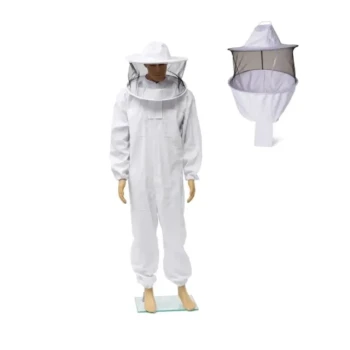
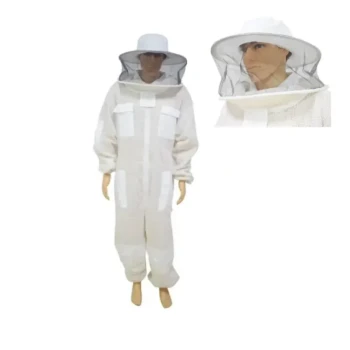
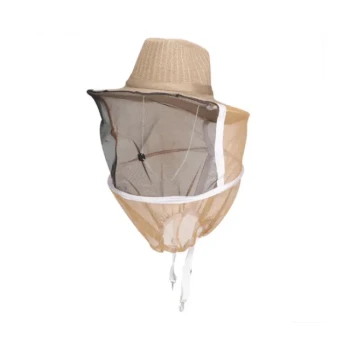
The primary function of a professional beekeeping suit in this context is to act as a comprehensive physical barrier against the highly defensive and proactive aggression of Africanized honey bees (Apis mellifera scutellata). This full-body sealed design is essential for preventing colony attacks during inspections or harvesting, enabling technicians to shift their focus from personal safety to critical tasks like monitoring colony health and maintaining honey production.
Africanized honey bees possess precise targeting capabilities and high crawling ability that render standard protection insufficient. Therefore, the suit must be viewed not merely as clothing, but as a "zero-exposure" safety system that prevents the operational loss of control caused by even a single breach.
The Mechanics of Protection
The Physical Barrier
The core purpose of the suit is to neutralize the defensive behavior of the colony. Africanized bees are known for their intense reaction to disturbance.
The suit creates a wall between the operator and the threat. This allows for safe interaction with the hive, shielding the beekeeper from potentially hundreds of stings during a single session.
Enabling Operational Focus
Beyond simple shielding, the suit serves a functional role in workflow efficiency. Without the distraction of defensive attacks, technicians can concentrate on colony health monitoring.
It creates a controlled environment where precise tasks, such as honey production maintenance, can be executed without haste or error.
Critical Implementation: The Sealing Protocol
Addressing Specific Behavioral Traits
Africanized bees differ from European breeds in their high crawling ability. They actively seek out gaps in protective gear rather than simply flying at the target.
This necessitates a fully enclosed system. A standard suit alone is often insufficient without reinforcing the interfaces between different pieces of gear.
Achieving Zero Exposure
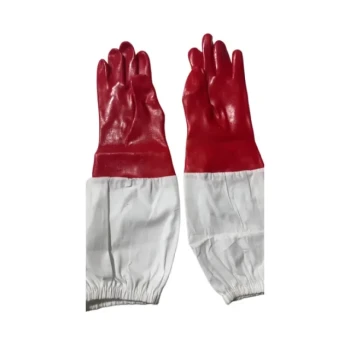
To combat this, operators must employ secondary sealing using duct tape. This is applied at the junctions where pant legs meet boots and where sleeves meet gloves.
This eliminates any gaps in the physical barrier. It ensures a zero-exposure safety standard, which is mandatory when working with stressed colonies to prevent bees from entering the interior of the clothing.
Understanding the Risks and Trade-offs
The Consequence of Breach
The integrity of the seal is binary: it is either perfect, or it is failed. There is little margin for error.
If a gap exists, the entry of even a few bees can cause panic. This can lead to an operational loss of control, endangering the technician and disrupting the management process.
Reliance on Equipment
The suit provides a necessary sense of security, but it requires rigorous maintenance. Reliance on a suit with compromised fabric or poor sealing techniques creates a false sense of safety that can be exploited by the bees' proactive aggression.
Ensuring Operational Safety
To manage Africanized honey bees effectively, you must adapt your gear usage to your specific objective.
- If your primary focus is routine inspection: Ensure your suit is a fully enclosed system that allows you to ignore defensive behavior and focus entirely on data collection and health monitoring.
- If your primary focus is handling high-aggression colonies: You must implement secondary sealing with duct tape at all limb junctions to counteract the bees' crawling ability and achieve a zero-exposure standard.
The effectiveness of your management strategy relies as much on the integrity of your seal as it does on your beekeeping knowledge.
Summary Table:
| Feature | Protection Mechanism | Importance in Africanized Bee Management |
|---|---|---|
| Full-Body Seal | Creates a comprehensive physical barrier | Prevents colony attacks during inspections and harvesting |
| Secondary Sealing | Duct tape at boot/glove junctions | Counteracts high crawling ability and prevents entry into the suit |
| Tactical Focus | Neutralizes defensive behavior | Allows technicians to monitor health and production without distraction |
| Integrity Standard | Zero-exposure safety system | Prevents operational loss of control and potential panic from breaches |
Secure Your Apiary with Professional-Grade Protection
Managing highly defensive colonies requires equipment that leaves no room for error. HONESTBEE specializes in supplying commercial apiaries and distributors with the high-performance gear needed to maintain safety and productivity in demanding environments.
From advanced beekeeping suits and specialized hardware to honey-filling machines and industrial consumables, we provide a comprehensive wholesale portfolio designed for professional success.
Ready to upgrade your safety standards and operational efficiency?
Contact HONESTBEE Today to explore our full spectrum of beekeeping tools and machinery tailored for the global industry.
References
- Enrique Rodríguez Balam, Miguel Pinkus Rendón. Apicultura, entorno y modernidad en localidades de Yucatán, México. DOI: 10.5007/2175-7925.2015v28n3p143
This article is also based on technical information from HonestBee Knowledge Base .
Related Products
- Professional Cotton Beekeeper Suit with Round Veil Design for Commercial Apiaries
- Professional Beekeeper Suit with Square Folding Cotton Veil
- Professional Beekeeping Suit for Kids and Girls Childrens Bee Keeper Suit
- Premium Cotton Beekeeper Suit with Reinforced Fencing Veil
- Beekeeping Jacket with Hood and Veil for Beekeepers
People Also Ask
- What material and design specifications are recommended for a high-quality beekeeper suit? Top Gear Selection Guide
- How to Pre-treat Propolis Stains on Beekeeping Suits? Master Advanced Fabric Care and Soil Removal
- Why is it important to keep a beekeeping suit clean? Essential Safety & Maintenance Tips
- Is it generally safe to wash a beekeeping suit in a washing machine? Maintain Your Safety Gear Properly
- What are the primary functional requirements for a beekeeping suit to ensure user safety? Professional Sourcing Guide