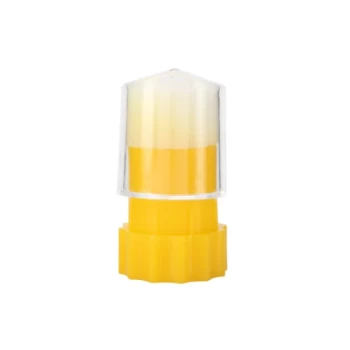
Specialized Marking Pens are precision tools designed to apply durable, high-visibility identifiers to the thorax of honey bees. Their primary function is to enable the systematic tracking of individual bees or specific cohorts over time. By using highly adhesive and wear-resistant ink, these pens allow researchers to classify hundreds of individuals to study genetic backgrounds, emergence dates, and complex labor divisions within the colony.
By providing a reliable method for individual identification, marking pens transform a colony from a collective mass into distinguishable subjects, enabling precise correlation between a bee's identity, age, and its physiological or behavioral role.
The Mechanics of Behavioral Marking
Creating Lasting Identifiers
The fundamental requirement for these pens is the ability to deposit highly adhesive and wear-resistant color.
Because honey bees are active within a hive environment that involves constant friction and grooming, the mark must withstand significant wear.
Technicians apply these marks directly to the thorax, the semi-rigid middle section of the bee, which provides a stable surface that does not interfere with the bee's movement or sensory perception.
Establishing Age Gradients
A critical application described in behavioral protocols involves alternating colors on a weekly basis.
By marking newly emerged workers with a specific color for that week, researchers create a clear age gradient within the colony.
This allows for the immediate visual identification of specific age groups—such as distinguishing a 3-week-old bee from a 4-week-old bee—without needing to recapture and examine every individual closely.
Scientific Applications and Data Integrity
Unlocking Labor Division
The primary scientific driver for using these pens is to provide an identification basis for labor division studies.
Honey bee colonies rely on complex social structures where tasks are often allocated based on age or genetics.
By numbering and classifying individuals, technicians can accurately track which specific bees perform tasks like foraging, nursing, or guarding.
Precision in Physiological Sampling
Accurate marking is essential for studies focused on age-dependent physiological developments.
For example, when studying the growth of the hypopharyngeal glands, researchers must sample bees of a precise age.
The color-coded system ensures that data collected is statistically valid, as it eliminates the guesswork in selecting subjects from the correct cohort.
Understanding the Trade-offs
Application Precision
While effective, this method relies heavily on the manual skill of the technician.
The ink must be applied carefully to the thorax; accidental application to the wings or sensory organs can alter the bee's behavior or cause mortality, potentially skewing study results.
Material Durability vs. Toxicity
There is a balance between adhesion and safety.
The ink must be permanent enough to last through the study period (often the bee's lifespan) but must be formulated—typically using acrylics—to be non-toxic to the insect. If the ink wears off prematurely, the "identification basis" is lost, rendering the data regarding that individual useless.
Making the Right Choice for Your Goal
To maximize the value of marking and tracking, align your method with your specific research objectives:
- If your primary focus is longitudinal age studies: Implement a strict weekly color rotation to build a visual age gradient that simplifies sampling specific cohorts later.
- If your primary focus is individual behavior or genetics: Prioritize numbering and high-contrast colors to track specific genetic backgrounds and emergence dates across hundreds of individuals.
Reliable marking protocols are the bridge between observing general hive activity and understanding specific biological mechanisms.
Summary Table:
| Feature | Description | Benefit for Beekeeping |
|---|---|---|
| Adhesive Ink | Highly durable and wear-resistant acrylic-based ink | Ensures marks last a bee's entire lifespan without fading |
| Color Coding | Weekly alternating color rotations | Establishes visual age gradients for easy cohort identification |
| Thorax Application | Precision marking on the semi-rigid middle section | Does not interfere with movement or sensory perception |
| Non-Toxic Formula | Safe, chemical-conscious composition | Minimizes mortality and maintains natural behavioral data |
Elevate Your Bee Management with HONESTBEE
Maximize your apiary's productivity and research accuracy with professional-grade marking tools. HONESTBEE specializes in serving commercial apiaries and distributors with a comprehensive wholesale range of beekeeping equipment.
Whether you need precision marking pens for labor division studies or large-scale honey-filling machinery and hive-making hardware, we provide the industrial-strength solutions your business requires. Our portfolio covers the full spectrum of industry consumables and honey-themed cultural merchandise to help your brand stand out.
Ready to scale your beekeeping operations? Contact us today to access our wholesale catalog and discover how HONESTBEE can streamline your commercial success.
References
- Benjamin P. Oldroyd, Madeleine Beekman. Effects of Selection for Honey Bee Worker Reproduction on Foraging Traits. DOI: 10.1371/journal.pbio.0060056
This article is also based on technical information from HonestBee Knowledge Base .
Related Products
- Queen Bee Marking Pen POSCA Queen Marking Pens for Beekeeping Bee Markers
- Queen Bee Marking Pen UNI Medium Point for Queen and Bee Marking
- Plastic Long Marker Device for Catching and Marking Bees Queen Bee Marking Tube and Cage
- One Hand Yellow Queen Marking Catcher Tube Cage Beekeeper Tool Accessory for Queen Bee
- Modern Flat-Mount Hive Number Set for Beekeeping
People Also Ask
- What role do specialized marking pens and color-coding systems play in honeybee tracking? Enhance Research Precision
- Why are specialized marking pens used for stingless bee queens? Essential Tools for Large-Scale Breeding Success
- How should a new paint pen be primed before marking a queen bee? Essential Tips for Safe & Clear Markings
- How should a queen bee marking pen tip be properly primed? Master the Art of Safe Queen Marking
- What specifications are required for a high-quality queen bee marking pen? Ensure Safety and Precision for Your Colony