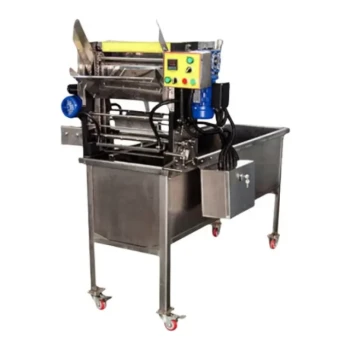
The primary function of the spiral cutter assembly is to rapidly remove the thin layer of wax sealing honeycomb cells through high-precision rotational cutting. By processing both sides of the frame simultaneously, this component automates the critical pretreatment step required to expose honey for extraction.
The spiral cutter assembly transforms uncapping from a labor-intensive manual task into a standardized mechanical process. It applies uniform cutting force to maximize throughput while minimizing the waste of honey associated with irregular manual cutting.
The Mechanics of Automated Uncapping
Simultaneous Dual-Sided Processing
The core advantage of the spiral cutter assembly is its ability to handle the entire frame at once. Unlike manual methods that require flipping the frame, this assembly processes both sides of a honeycomb frame simultaneously.
This capability drastically reduces the time required per frame. It eliminates the bottleneck often found in the uncapping stage of honey production.
High-Precision Rotational Cutting
The assembly utilizes a rotational mechanism rather than a static blade. This allows for high-precision cutting that targets the cappings specifically.
By spinning the cutters, the machine achieves a cleaner cut than dragging a knife across the wax. This precision is essential for removing the wax layer without damaging the underlying cell structure.
Achieving Standardization and Efficiency
Ensuring Uniform Cutting Force
Manual uncapping often results in uneven pressure, leading to deep gouges or missed spots. The spiral cutter assembly applies a uniform cutting force across the entire surface of the comb.
This consistency ensures that every frame is treated identically. It removes the variability inherent in human labor, resulting in a predictable and standardized output.
Minimizing Honey Waste
Efficiency is not just about speed; it is about yield. By controlling the depth of the cut precisely, the assembly removes the beeswax cappings while minimizing honey waste.
Manual methods often slice too deep, removing excess honey along with the wax. The machine’s standardized depth preserves the maximum amount of product for the extraction phase.
Operational Considerations and Trade-offs
The Requirement for Standardization
Because the machine uses fixed mechanical parameters to ensure uniformity, it relies on the input being consistent.
To achieve the best results, the honeycombs and frames themselves must be relatively standard. Heavily warped or irregular frames may pose a challenge for a machine designed for standardized and mechanized processing.
Mechanization vs. Manual Control
While the assembly increases volume, it replaces the nuanced control of a human hand.
In professional production, this is a necessary trade-off. You sacrifice the ability to micro-adjust for unique frame defects in exchange for the high efficiency and volume required for commercial viability.
How to Apply This to Your Project
## Making the Right Choice for Your Production Line
The spiral cutter assembly is the engine of efficiency in modern apiaries. Determining if this technology aligns with your operation depends on your specific production targets.
- If your primary focus is increasing volume: The simultaneous dual-sided processing is essential for removing the bottlenecks caused by manual labor.
- If your primary focus is product yield: The high-precision rotational cutting is critical for standardizing cut depth and minimizing the loss of honey during the uncapping phase.
Ultimately, integrating a spiral cutter assembly is the definitive step toward achieving a fully mechanized, high-throughput honey processing system.
Summary Table:
| Feature | Function & Impact | Benefit |
|---|---|---|
| Dual-Sided Processing | Simultaneously cuts both sides of the frame | Drastically reduces processing time per frame |
| Rotational Mechanism | High-precision rotational cutting | Cleaner wax removal without cell damage |
| Uniform Force | Applies consistent pressure across the comb | Eliminates human error and standardized output |
| Controlled Depth | Precision depth management | Minimizes honey loss and maximizes extraction yield |
Elevate Your Commercial Apiary with HONESTBEE
Transitioning from manual labor to automated efficiency is critical for scaling your honey production. HONESTBEE specializes in supporting commercial apiaries and distributors by providing a comprehensive range of professional-grade beekeeping tools and industrial machinery.
Whether you need high-throughput honey-filling machines, specialized hive-making equipment, or the latest in automatic honey uncapping technology, we deliver the precision and durability required for large-scale operations. Our portfolio also includes essential industry consumables and unique honey-themed cultural merchandise to help your brand stand out.
Ready to streamline your production line and minimize waste?
Contact HONESTBEE Today for Wholesale Solutions
References
- Y. A. Shaaban, A. Ghania. Development and Evaluation of a Honeycomb Uncapping Machine. DOI: 10.21608/jssae.2019.53676
This article is also based on technical information from HonestBee Knowledge Base .
Related Products
- Automatic Honey Frame Uncapper Machine for Beekeeping
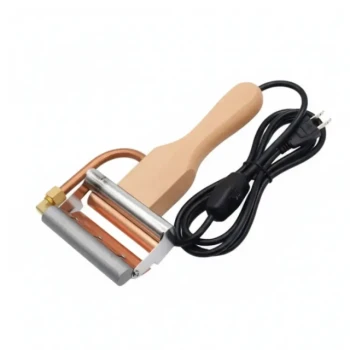
- Electric Adjustable Blade Honey Uncapping Plane
- Professional Honey Uncapping Roller for Efficient Harvesting
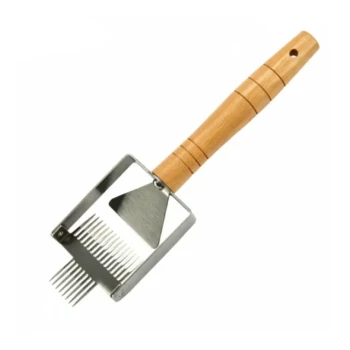
- Adjustable Stainless Steel Honey Uncapping Fork with Scraper for Beekeeping
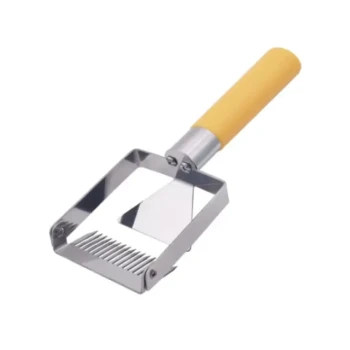
- Adjustable Stainless Steel Honey Uncapping Fork with Scraper Beekeeping Tool
People Also Ask
- What is the primary goal when choosing an uncapping method? Maximize Honey Yield & Comb Integrity
- What is the process of uncapping frames in beekeeping? Master the Best Methods for Maximum Honey Yield
- How are honey frames prepared before extraction? Master the Hive-to-Honey-House Process
- What is the process of uncapping honey frames before extraction? Expert Guide to Efficient Honey Harvesting
- What specialized tools are used to uncap honey frames prior to extraction? Top Uncapping Tools for Efficient Harvesting