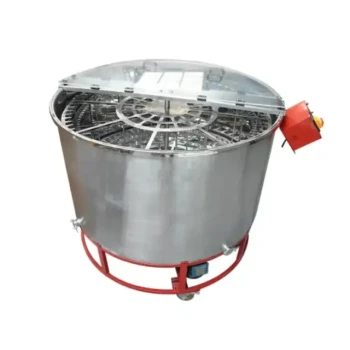
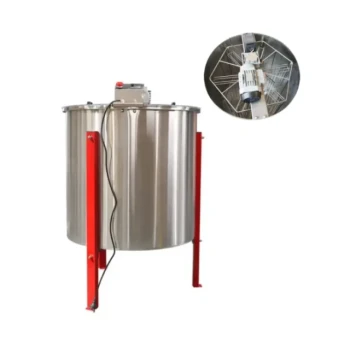
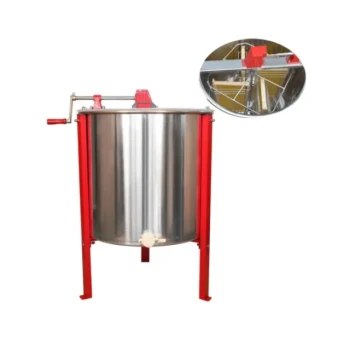
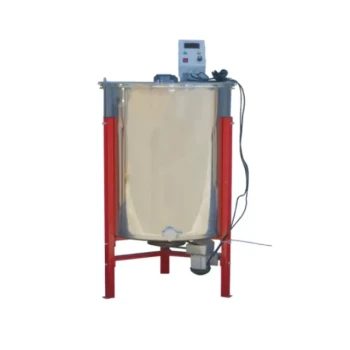
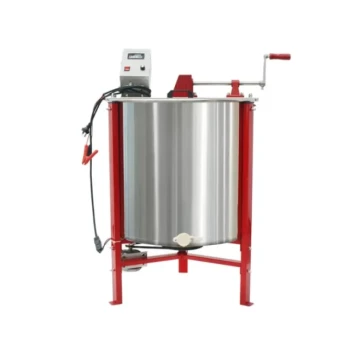
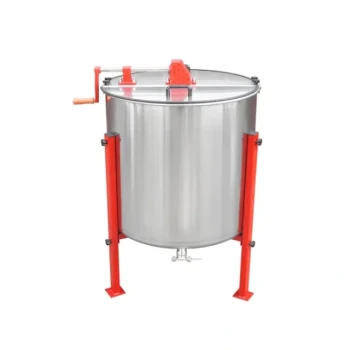
The cornerstone of any honey processing facility is the honey extractor. In a commercial setting, this specific piece of equipment is the operational hub, designed to handle multiple beehive frames simultaneously to extract liquid honey efficiently within a single day.
The honey extractor is the engine of production, bridging the gap between raw apiary frames and liquid honey. While filtration and moisture control are vital for quality, the facility's output volume is directly defined by the capacity of its extractor.
The Heart of the Operation
The Primary Function of the Extractor
The honey extractor is the definitive tool for harvesting within a plant. Its primary purpose is to remove honey from the comb without destroying the structure of the frame.
For large-scale operations, speed and volume are the critical metrics. An industrial extractor processes numerous frames at once, allowing producers to clear the harvest from vast numbers of hives rapidly.
Scaling for Commercial Production
A hobbyist might use a hand-cranked device, but a processing plant requires automation and scale.
The ideal choice for a processing line is a large-scale extractor. This machine is engineered to support the high throughput required by commercial honey producers or cooperatives.
Beyond Extraction: The Processing Ecosystem
Ensuring Purity and Quality
While the extractor harvests the raw product, it does not refine it. The supplementary equipment, such as a honey disintegrator or filter press, is essential immediately following extraction.
These units filter the raw honey collected from the apiary. They remove impurities (like wax or debris) and control moisture levels, transforming raw output into pure, shelf-stable liquid.
Managing Texture and Crystallization
Honey often enters the plant in a crystallized or solidified state, or crystallizes during storage.
A honey melter is critical in these scenarios. It provides a fast, controlled method to liquefy crystals, ensuring the honey is fluid enough for proper filtering and final bottling.
Understanding the Trade-offs
High Capital Investment
A fully equipped honey processing plant is a significant financial commitment. Because these facilities are designed for the highest grade of hygiene and sophistication, they are generally very expensive.
This cost structure typically makes complete processing plants viable only for large commercial producers or farming cooperatives, rather than individual small-scale beekeepers.
Complexity of Operations
Moving from simple extraction to a full processing line introduces complexity. You are no longer just harvesting; you are managing moisture content, sensory quality, and shelf life.
Ignoring the secondary stages (filtration and melting) can result in a product that is impure or difficult to package, regardless of how efficient your extractor is.
Making the Right Choice for Your Goal
To build an effective processing line, you must match your equipment list to your production bottlenecks.
- If your primary focus is maximum throughput: Prioritize a large-scale honey extractor capable of cycling through multiple frames simultaneously to minimize downtime.
- If your primary focus is product purity and shelf life: Invest heavily in a filter press or disintegrator to ensure moisture control and the removal of all particulate matter.
- If your primary focus is handling stored or solid honey: Ensure your line includes a high-capacity honey melter to return the product to a liquid state for processing.
Success in honey processing comes from centering your operation around a high-capacity extractor while supporting it with the necessary filtration to ensure a food-grade finish.
Summary Table:
| Equipment Type | Primary Function | Key Benefit for Commercial Plants |
|---|---|---|
| Honey Extractor | Removes honey from frames | High-volume throughput without damaging combs |
| Filter Press | Removes impurities & wax | Ensures product purity and shelf-stable quality |
| Honey Melter | Liquefies crystallized honey | Prepares stored honey for filtering and bottling |
| Disintegrator | Moisture & particle control | Refines raw honey into a premium food-grade finish |
Elevate Your Honey Production with HONESTBEE
Are you ready to scale your commercial apiary or distribution business? HONESTBEE specializes in providing heavy-duty, industrial-grade honey processing solutions. From large-scale honey extractors that maximize your daily output to honey-filling machines and specialized filtration systems, we supply the full spectrum of tools needed to run a world-class facility.
Why partner with HONESTBEE?
- Comprehensive Wholesale Offering: A one-stop shop for machinery, hardware, and essential consumables.
- Built for Scale: Equipment designed specifically for the rigors of commercial honey production.
- Expert Support: We help you identify the right bottlenecks—whether it's extraction speed or moisture control.
Contact our team today to discuss how our professional honey processing lines can transform your operational efficiency and product quality.
Related Products
- HONESTBEE 72 Frame Industrial Electric Honey Extractor for Beekeeping
- Commercial Electric 12 Frame Honey Extractor Spinner Motorized Honey Extractor
- HONESTBEE 6 Frame Self Reversing Electric Honey Extractor for Beekeeping
- HONESTBEE 3-Frame Manual Acrylic Honey Extractor
- Stainless Steel Manual 8 Frame Radial Honey Extractor Machine for Beehives
People Also Ask
- What is the importance of balancing honeycomb frames within a honey extractor? Ensure Stability and Protect Machinery
- How is honey separated from the frames after they are uncapped? Efficient Extraction Methods for High Yields
- What are the main benefits of using a honey extractor? Maximize Yields and Protect Your Honeycomb
- What are the recommended methods for removing honey from the honeycomb? Top Extraction Techniques for Maximum Efficiency
- How do manual honey extractors compare to electric honey extractors? Choosing the Right Tool for Your Apiary Growth