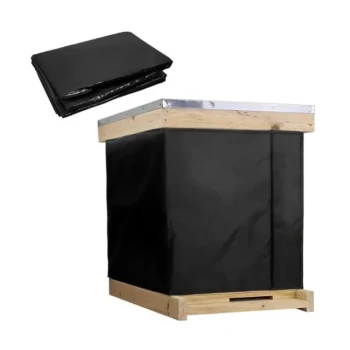
The primary purpose of beehive top cover insulation is to establish a thermal barrier that regulates the colony's internal microclimate. By physically blocking the conduction of external high temperatures into the hive, insulation significantly reduces the energy worker bees must expend to maintain homeostasis, thereby promoting a more stable and established colony.
Core Takeaway Insulation functions as a critical energy-saving device for the colony by dampening the impact of environmental temperature extremes. By stabilizing the internal temperature, it lowers the metabolic demand on worker bees, allowing them to focus resources on survival and productivity rather than fighting the elements.
Regulating the Internal Microclimate
The Thermal Barrier
The roof of a beehive receives the most direct solar radiation. Insulation creates a physical shield that prevents this external heat from conducting downward into the hive body.
Maintaining Homeostasis
Bees strive for "homeostasis," or a stable internal environment. Insulation acts as a buffer, smoothing out the aggressive temperature spikes found in the external environment.
Reducing Energy Consumption
When the hive interior heats up, worker bees must expend significant energy to cool it down. By minimizing heat ingress, insulation lowers this workload, preserving the colony's energy reserves.
Seasonal Adaptability
Protection in Hot and Arid Regions
In high-temperature environments, materials like 10mm high-density plastic insulation boards are particularly effective. They stop the sun's heat from penetrating the hive, ensuring survival rates and productivity remain high despite extreme external fluctuations.
Heat Retention in Cold Weather
Because warm air naturally rises, the top cover is a primary point of heat loss during winter. High-performance insulation traps the warm air mass generated by the bees (or bottom-heating systems) inside the hive.
Conserving Winter Resources
When heat is retained effectively, the colony does not need to generate as much metabolic heat to stay warm. This directly reduces the amount of honey stores the bees must consume during the winter months.
Understanding the Trade-offs
The Moisture Challenge
While insulation traps heat, it can also trap moisture if not managed correctly. In cold, damp conditions, creating a closed-loop system without accounting for humidity can lead to condensation buildup, which is dangerous for the colony.
Ventilation vs. Insulation
There is a balance between insulating against heat and allowing hot air to escape. Features like upper entrances or notched inner covers provide necessary exhaust routes for hot air and moisture, working in tandem with insulation rather than replacing it.
Space Limitations
Not all hive configurations accommodate internal insulation effortlessly. Beekeepers must ensure their specific hive design has the physical clearance to house insulation materials, such as boards placed under the lid, particularly from late October through February.
Making the Right Choice for Your Apiary
The decision to insulate depends largely on your local climate and the specific seasonal stressors your bees face.
- If your primary focus is Summer Stability: Prioritize high-density insulation to block solar radiation and prevent the hive from overheating, reducing the cooling load on your foragers.
- If your primary focus is Winter Survival: Focus on top insulation to trap rising metabolic heat, which will significantly reduce honey consumption and prevent starvation.
By controlling the thermal exchange at the top of the hive, you turn the hive structure from a passive shelter into an active tool for colony health.
Summary Table:
| Feature | Primary Function | Impact on Colony |
|---|---|---|
| Thermal Barrier | Blocks external solar heat conduction | Prevents overheating in hot/arid regions |
| Heat Retention | Traps rising metabolic heat in winter | Reduces honey consumption and starvation risk |
| Microclimate Stability | Dampens external temperature spikes | Lowers metabolic demand on worker bees |
| Homeostasis Support | Maintains a stable internal environment | Improves survival rates and overall productivity |
Maximize Your Apiary Productivity with HONESTBEE
Maintaining the perfect hive microclimate is essential for the health and yield of your colonies. As a premier provider for commercial apiaries and distributors, HONESTBEE delivers a full spectrum of high-performance beekeeping tools and machinery designed for professional success.
From advanced hive-making equipment to precision honey-filling machines and high-density insulation solutions, we supply everything needed to optimize your operations. Whether you are scaling a commercial apiary or stocking your distribution warehouse with premium consumables and cultural merchandise, our wholesale offerings are tailored to your needs.
Ready to upgrade your equipment? Contact us today to discover how HONESTBEE’s comprehensive range of beekeeping hardware and machinery can drive your business forward.
References
- B. U. Ononye, C. A. Chidi. Effect of Improved Hive Cover Designs on Internal Microclimate and Colony Establishment of West African Honeybees (Apis mellifera adansonii L.) in Awka, Nigeria. DOI: 10.9734/jalsi/2023/v26i5614
This article is also based on technical information from HonestBee Knowledge Base .
Related Products
- Professional Insulated Winter Hive Wrap for Beekeeping
- Inner Beehive Cover for Beekeeping Bee Hive Inner Cover
- Professional Insulated Plastic Bee Hives
- Telescopic Beehive Outer Cover Lid Roof with Galvanised Sheeting for Langstroth Hive and Beehive Outer Cover
- HONESTBEE Professional Hive Top Bee Feeder Feeding Solution
People Also Ask
- What are the steps to properly wrap a beehive for winter? Ensure Your Colony Survives the Cold
- When is the best time to wrap a beehive for winter? A Guide to Perfect Winterization Timing
- How do professional insulation wraps provide protection for bee colonies? Optimize Winter Survival & Energy Efficiency
- What are the technical benefits of using winter wraps for beehive insulation? Boost Colony Survival & Hive Health
- What are the benefits of using insulated covers for hives? Ensure Colony Survival and Health