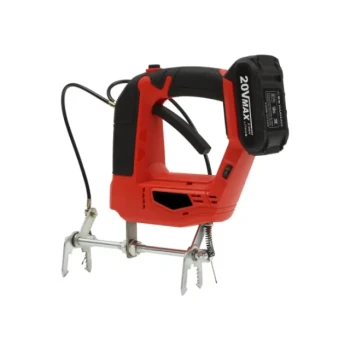
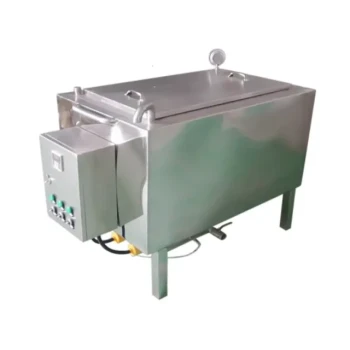
The primary purpose of using an industrial electronic crusher is to maximize extraction efficiency.
This equipment utilizes high-speed mechanical impact to pulverize raw materials—specifically dry propolis, Eucalyptus globulus leaves, or Nigella sativa seeds—into fine particles. By systematically breaking down the physical structure of these materials, the crusher drastically increases their specific surface area, creating the necessary conditions for successful chemical processing.
Core Takeaway While the immediate function of the crusher is size reduction, its strategic value lies in surface area expansion. This physical transformation allows solvents to penetrate the material deeply and evenly, ensuring that bioactive components are fully dissolved rather than remaining trapped inside the raw substrate.
Maximizing Solvent Interaction
Increasing Surface Area
The crushing process transforms dense, irregular blocks of material into a fine, uniform powder.
Whether processing plant seeds or propolis, the mechanical impact exposes the internal structure of the material. This significantly increases the total surface area available for chemical reaction.
Enhancing Dissolution
The direct result of increased surface area is superior contact efficiency.
During the subsequent ethanol extraction phase, the solvent can interact with a larger percentage of the material simultaneously. This ensures that effective substances and bioactive components are fully dissolved and harvested, rather than wasted.
Handling Material Characteristics
Overcoming Irregularity
Raw materials, particularly propolis, often arrive in irregular shapes, sticky blocks, or flakes.
An industrial crusher standardizes these inputs. By reducing the material to a consistent particle size, the equipment facilitates precise weighing and easier handling further down the production line.
Ensuring Uniformity
Consistency in particle size leads to consistency in potency.
When the material is pulverized into a homogenous powder, active ingredients (such as volatile compounds or gallic acid) are released at a predictable rate. This is critical for maintaining quality control in hive applications or laboratory sensitivity tests.
Understanding the Trade-offs
The Temperature Requirement
This process is highly sensitive to the state of the raw material.
Raw propolis is naturally sticky at room temperature, which can foul mechanical grinders. To utilize an electronic crusher effectively, propolis must often be frozen to become brittle or thoroughly dried. attempting to crush moist or room-temperature sticky materials will result in equipment blockages rather than a fine powder.
Mechanical Stress
The process relies on high-speed impact, which is aggressive.
While this is necessary to pulverize hard seeds and frozen resins, it requires robust industrial-grade equipment capable of handling the physical stress. The machinery must be powerful enough to refine hardened materials rapidly to prevent the heat of friction from softening the propolis.
Making the Right Choice for Your Goal
To optimize your processing workflow, align your use of the crusher with your specific end-goals:
- If your primary focus is Extraction Yield: Prioritize achieving the finest possible particle size to maximize solvent penetration and ensure bioactive compounds are thoroughly dissolved.
- If your primary focus is Process Consistency: Focus on the uniformity of the output to ensure accurate weighing, packaging, and reproducible test results.
By mechanically refining raw inputs into a high-surface-area powder, you transform a physical obstacle into a chemical opportunity.
Summary Table:
| Feature | Function & Benefit |
|---|---|
| Primary Mechanism | High-speed mechanical impact for rapid pulverization |
| Core Objective | Maximize surface area to enhance solvent penetration |
| Input Materials | Raw propolis (frozen/dry), plant seeds, and botanical leaves |
| Key Outcome | Full dissolution of bioactive components and uniform potency |
| Processing Requirement | Materials must be brittle (frozen or dried) to prevent sticking |
Scale Your Propolis Processing with HONESTBEE
Maximize your extraction yield and ensure product consistency with professional-grade machinery. HONESTBEE specializes in supporting commercial apiaries and distributors with a comprehensive range of beekeeping tools, industrial crushers, and honey-filling equipment. Whether you are refining raw propolis or scaling up wholesale operations, our high-performance hardware is designed to transform your physical raw materials into high-value chemical opportunities.
Ready to optimize your production line? Contact our specialists today to discover how our wholesale solutions and industrial machinery can enhance your efficiency and market competitiveness.
References
- Wegdan Abass Hussien Nor Algalil, Mohammed E. E. Mahmoud. Bioactivity and Prospects of Using Ethanolic Extracts of Some Plants and Bee Glue (Propolis) to Control the Greater Wax Moth Galleria mellonella (L) (Lepidoptera: Pyralidae). DOI: 10.15377/2409-9813.2022.09.8
This article is also based on technical information from HonestBee Knowledge Base .
Related Products
- High Performance Cordless Electric Bee Shaker for Beekeeping
- Electric Commercial Beeswax Melter for Factory Use
People Also Ask
- Why is the use of a bee shaker and alcohol wash necessary? Master Accurate Varroa Mite Monitoring
- What role do efficient auxiliary tools play in managing labor resources? Maximize Apiary Output & Labor Efficiency
- What should be done with the bee sample after conducting a varroa mite count with a shaker? Post-Test Care Guide
- What is an electric bee smoker? A Guide to Automated Hive Management
- What is the function of a high-performance bee smoker in commercial apiary management? Maximize Safety & Efficiency