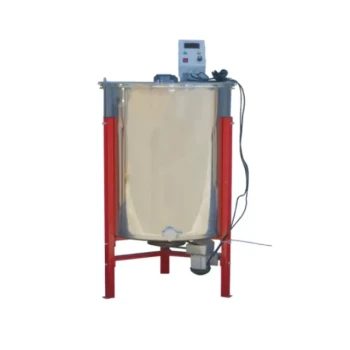
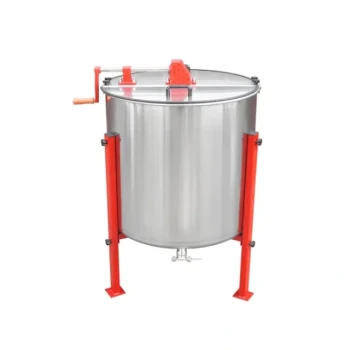
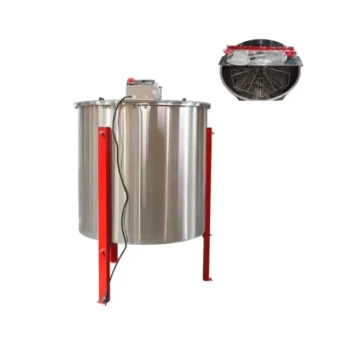
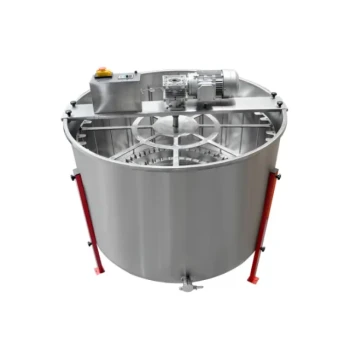
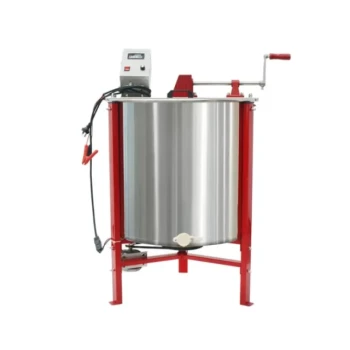
The primary purpose of a centrifugal honey extractor in the preparation phase of controlled beekeeping experiments is to create a biological "blank slate." By utilizing high-speed rotation, researchers thoroughly evacuate pre-existing honey stores from honeycombs, ensuring that the hive is free from past environmental variables before the study begins.
Core Takeaway To isolate the impact of specific feeds on hive products like royal jelly, you must eliminate interference from uncontrolled nectar sources. The centrifugal extractor mechanically resets the hive's nutritional inputs, guaranteeing that subsequent chemical analysis reflects only the specified experimental diet.
Establishing Experimental Control
Eliminating Component Interference
The scientific validity of a beekeeping experiment relies on isolating variables.
If a hive retains honey from previous foraging, the chemical composition of products produced later—specifically royal jelly—will be contaminated by those unknown nectar sources.
Using a centrifugal extractor removes these pre-existing stores. This ensures that the colony’s output is influenced solely by the specified experimental feeds, such as pure honey or sucrose syrup, rather than random environmental forage.
Defining the Baseline
For researchers analyzing component transfer, a clean baseline is non-negotiable.
By emptying the combs completely, you ensure that the metabolic processes of the bees are fueled exclusively by the inputs you provide.
This creates a controlled environment where cause-and-effect relationships between diet and royal jelly composition can be accurately measured.
Operational Efficiency and Hive Health
Preserving Structural Integrity
While the primary goal is chemical isolation, the method of extraction is equally critical to the experiment's timeline.
Centrifugal extractors use rotational force to remove fluids without crushing the wax structure.
This preservation allows researchers to return the exact same frames to the hive, maintaining the physical consistency of the experimental setup.
Reducing Energy Expenditure
Bees consume significant energy and resources to build wax honeycombs.
By using an extractor that keeps the comb intact, you allow the colony to reuse the empty frames immediately via multifunctional loading boxes.
This shortens the production cycle, as bees can direct their energy toward processing the experimental feed rather than rebuilding wax structures.
Understanding the Trade-offs
Balancing Force and Preservation
The effectiveness of this preparation phase hangs on a delicate balance provided by the extractor's motor and design.
The device must generate enough torque and centrifugal force to thoroughly remove high-viscosity fluids to prevent data contamination.
However, excessive speed poses a risk of damaging the comb, which defeats the purpose of reusing the frame for a seamless experiment start.
Mechanical Reliance
Success depends on the reliability of the motorized equipment.
Manual extraction is often inconsistent, while electric models provide the constant high-speed rotation necessary for a "clean" extraction.
Any failure to completely empty the cells due to mechanical inefficiency introduces residual variables that can subtly skew analytical data.
Making the Right Choice for Your Goal
To ensure your experiment yields publishable, valid data, apply the extraction process with your specific endpoints in mind.
- If your primary focus is Chemical Analysis: Ensure the extractor is run for sufficient duration to remove all traces of pre-existing nectar, guaranteeing that royal jelly composition is derived strictly from your experimental feed.
- If your primary focus is Colony Productivity: Prioritize the careful modulation of the extractor's speed to preserve the comb structure, allowing bees to immediately focus on uptake of the new feed without energy loss.
Precise extraction is not just a cleaning step; it is the foundation of data integrity in apicultural research.
Summary Table:
| Feature | Benefit in Experimental Research | Impact on Data |
|---|---|---|
| Variable Isolation | Removes pre-existing nectar and honey stores | Eliminates chemical interference and contamination |
| Baseline Creation | Establishes a nutritional 'blank slate' | Ensures royal jelly analysis reflects only experimental feed |
| Comb Preservation | Maintains wax structure integrity | Reduces colony energy waste and speeds up production |
| Rotational Control | Consistent high-speed mechanical extraction | Provides uniform results superior to manual methods |
Elevate Your Apiary with HONESTBEE Precision Equipment
To achieve publishable research data and maximum production efficiency, you need equipment designed for precision. HONESTBEE is a leading global supplier for commercial apiaries and distributors, offering a comprehensive wholesale range of professional beekeeping tools.
From high-torque centrifugal honey extractors and honey-filling machines to specialized hive-making machinery, we provide the industrial-grade solutions required to scale your operations. Whether you are conducting controlled experiments or managing a large-scale commercial honey business, our hardware and essential consumables ensure your success.
Ready to upgrade your beekeeping infrastructure? Contact us today to explore our wholesale catalog and see how HONESTBEE can streamline your production cycle.
References
- Ying Wang, Baohua Xu. Effects of Sucrose Feeding on the Quality of Royal Jelly Produced by Honeybee Apis mellifera L.. DOI: 10.3390/insects14090742
This article is also based on technical information from HonestBee Knowledge Base .
Related Products
- electric honey extractor honey centrifuge 3 frame honey extractor stainless steel honey frame extractor
- Manual Hand Crank 4 Frame Honey Extractor Centrifuge for Beekeeping
- Professional 4 Frame Self Reversing Electric Honey Extractor for Beekeeping
- 24 Frame Honey Extractor Commercial Radial Honey Frame Extraction Machine
- Electric 4 Frame Tangential Honey Extractor
People Also Ask
- What are the characteristics of electric honey extractors? Boost Your Apiary Efficiency with Automated Technology
- What are the disadvantages of using an electric honey extractor? Weighing Cost, Power, and Comb Safety
- What are the advantages of an electric honey extractor? Boost Efficiency and Scale Your Honey Production
- What are the technical advantages of electric honey extractors? Maximize Yield and Protect Your Bee Colony
- How does an electric honey extractor affect the quality of honey? Preserve Flavor & Purity with Precision Extraction