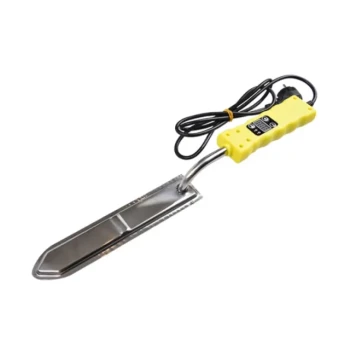
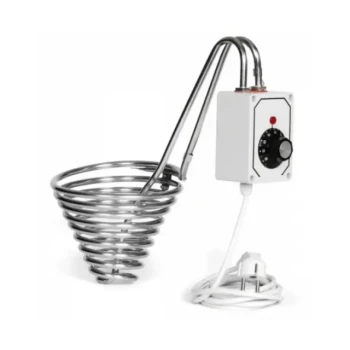
The primary purpose of using constant temperature heating equipment at 125°C is to simulate the rigorous sterilization environment required in industrial comb foundation production. This process is critical for verifying that the chemical structure of beeswax withstands the heat necessary to eliminate pathogens without degrading.
In industrial processing, beeswax must be heated between 120°C and 140°C for sterilization. Testing at 125°C confirms that the wax's spectral characteristics remain stable, ensuring that quality control methods like infrared spectroscopy remain valid even after high-temperature treatment.
The Necessity of High-Temperature Processing
Meeting Sterilization Standards
Industrial comb foundation production requires strict hygiene protocols. To effectively kill pathogens, beeswax must undergo high-temperature sterilization, typically within a range of 120°C to 140°C.
Simulating Industrial Conditions
Researchers use constant temperature heating equipment to maintain a precise temperature of 125°C. This allows them to replicate the thermal stress the material will face during actual manufacturing, providing a controlled environment to assess material behavior.
Validating Chemical Stability
Monitoring Functional Groups
The core objective of this study is to determine if high heat triggers chemical changes. Specifically, analysts look for the degradation of characteristic functional groups within the beeswax molecular structure.
Confirming Spectral Consistency
The study checks for "spectral shifts"—changes in how the material interacts with light. Research confirms that beeswax maintains its original spectral characteristics under these conditions, proving that the sterilization process does not fundamentally alter the wax.
Implications for Quality Control
Establishing Testing Validity
Because the chemical "fingerprint" of the wax remains stable at 125°C, manufacturers can rely on specific analytical tools. This stability validates the use of infrared spectroscopy as a consistent method for quality assurance.
Detecting Adulteration
Since the heat treatment does not distort the beeswax spectrum, any anomalies detected later can be attributed to foreign substances rather than heat damage. This ensures that infrared spectroscopy can effectively monitor for adulteration throughout the entire industrial processing chain.
Understanding the Trade-offs
The Thermal Window
While 125°C is proven safe for the material's integrity, it exists within a specific sterilization window (120°C–140°C). Deviating significantly above this range could risk actual degradation, while falling below it may fail to eliminate pathogens.
Reliance on Spectral Stability
The validity of post-processing quality control relies entirely on this stability. If the heating process were to alter the spectral data, standard methods for detecting fake or adulterated wax would yield false positives or inaccurate results.
Making the Right Choice for Your Goal
To apply these findings to your industrial or research context, consider the following:
- If your primary focus is Hygiene and Safety: Ensure your processing equipment can maintain the 120°C–140°C range to effectively neutralize pathogens without exceeding the material's thermal limits.
- If your primary focus is Quality Assurance: You can confidently use infrared spectroscopy to test finished comb foundations, knowing that the sterilization heat has not distorted the baseline data used to detect adulterants.
This verification of thermal stability provides the scientific confidence needed to balance rigorous sterilization with accurate quality control.
Summary Table:
| Parameter | Standard/Requirement | Purpose in Production |
|---|---|---|
| Sterilization Range | 120°C - 140°C | Elimination of pathogens for hygiene standards |
| Testing Temperature | 125°C | Simulating industrial thermal stress conditions |
| Chemical Stability | Functional group integrity | Ensuring the wax molecular structure remains intact |
| QA Method | Infrared Spectroscopy | Validating the spectral fingerprint to detect adulteration |
Upgrade Your Industrial Beekeeping Production with HONESTBEE
Maintaining precision in beeswax sterilization is critical for the integrity of your final product. At HONESTBEE, we specialize in supporting commercial apiaries and distributors with the high-performance machinery and tools needed to maintain these rigorous standards.
Our comprehensive wholesale portfolio includes:
- Advanced Machinery: Hive-making and honey-filling machines designed for durability.
- Beekeeping Equipment: A full spectrum of specialized hardware for large-scale operations.
- Essential Consumables: Reliable supplies to keep your production line running smoothly.
- Cultural Merchandise: Unique honey-themed products to expand your market reach.
Whether you are scaling your manufacturing or optimizing your quality control, HONESTBEE provides the industrial-grade solutions you need. Contact us today to discuss your wholesale requirements!
References
- Lidija Svečnjak, Ivana Tlak Gajger. An Approach for Routine Analytical Detection of Beeswax Adulteration Using FTIR-ATR Spectroscopy. DOI: 10.1515/jas-2015-0018
This article is also based on technical information from HonestBee Knowledge Base .
Related Products
- Steam Beeswax Melter Wax Warmer for Wax Processing
- Beeswax Melter for Candle Making Honey Bee Wax Melter
- Electric Commercial Beeswax Melter for Factory Use
- Electric Beeswax Foundation Machine With Operating Tray and Wax Foundation Roller
- Electric Beeswax Flat Sheet Machine with Operating Tray for Wax Processing
People Also Ask
- How does a steam wax melter work? A Fast, Efficient Method for High-Quality Wax
- How does a professional steam wax melter optimize the recovery of beeswax? Maximize Yield & Hygiene for Your Apiary
- What are the steps to use a steam wax melter? Master Safe & Efficient Wax Rendering
- How do steam wax melters function in the disinfection of apiary equipment? Achieve Chemical-Free Organic Sterilization
- How do you operate a steam wax melter? Master Efficient Wax Extraction and Frame Sterilization