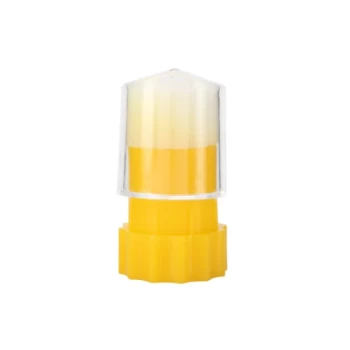
Precision tracking of honeybee age cohorts is the primary reason for using professional colored marking paint on newly emerged bees. By applying weather-resistant enamel to the thorax of one-day-old workers, researchers and commercial apiarists can accurately identify specific age groups months later, ensuring that physiological, molecular, and behavioral data correspond precisely to the insect's actual lifespan.
The use of professional-grade marking paint transforms a chaotic colony into a structured data set, allowing for the longitudinal tracking of specific bee cohorts across their entire life cycle, including critical overwintering periods.
The Vital Role of Age Synchronization in Bee Research
Facilitating Known-Age Tracking Studies
Honeybee physiology and gene expression change rapidly as they transition from nurse bees to foragers. Professional marking paint allows for the rapid identification of specific age cohorts within a large colony, which is essential for synchronized sampling.
By marking "newly emerged" bees, you establish a definitive "Day 0" for that group. This allows researchers to harvest 18-21 day-old foragers or overwintering bees with absolute chronological certainty, improving the reproducibility of transcriptomic and behavioral analysis.
Enhancing Overwintering Observation
One of the greatest challenges in apiculture is monitoring colony health through the winter. High-quality, weather-resistant paint ensures that markings remain intact on the thorax for several months.
This long-term adhesion allows for the accurate recovery of target samples after the colony emerges from its winter cluster. It provides a clear window into how specific batches of bees survive and age under environmental stress.
Commercial and Management Applications
Streamlining Queen Management and Identification
In professional apiary management, marking is not limited to worker cohorts; it is a critical tool for queen verification. Applying a specific color to a queen’s thorax—often paired with wing-clipping—allows beekeepers to quickly locate her during routine inspections.
This practice is essential for verifying the queen’s identity as the original mated queen. It also helps monitors detect instances of supersedure or queen replacement, ensuring the continuity of genetic data within the managed colony.
Classification for Pathogen and Genetic Sampling
Marking paint serves as a high-visibility tool for distinguishing between bees of different genetic sources or treatment groups. This is particularly useful in large-scale studies involving auxiliary sampling for spore proliferation or other pathogens.
By using a spectrum of professional colors, technicians can quickly classify groups for laboratory biochemical analysis. This visual system removes the need for complex optical identification, significantly increasing the efficiency of order fulfillment in research settings.
Understanding the Trade-offs and Technical Requirements
The Necessity of Professional-Grade Materials
Standard paints are often unsuitable for biological applications because they lack the necessary adhesion and non-toxicity. Professional enamel marking pens are specifically formulated to bond with the bee's thorax without interfering with its normal physiological activities.
If the paint is too heavy or emits toxic fumes, it can alter the bee's behavior or cause premature mortality. This would invalidate any longitudinal data, making the quality of the marking tool a non-negotiable factor for success.
Application Precision and Timing
Applying paint to newly emerged bees requires a high degree of precision to avoid covering the wing joints or head. Furthermore, the timing must be exact; marking must occur within the first 24 hours of emergence to guarantee age accuracy.
Failure to use fast-drying, high-visibility pigments can lead to smeared markings. This results in "lost" data points, which can be costly for commercial distributors and research institutions relying on large-scale cohort studies.
Making the Right Choice for Your Goal
As a distributor or wholesaler, selecting the right marking tools depends on the specific needs of your B2B clients, whether they are focused on academic research or industrial hive management.
- If your primary focus is Scientific Research: Prioritize ultra-durable, weather-resistant enamel paints that can withstand the friction of the hive for 6-12 months for overwintering studies.
- If your primary focus is Commercial Queen Rearing: Focus on high-visibility, international color-coded pens (based on the year of the queen's birth) to facilitate rapid identification during high-volume hive inspections.
- If your primary focus is Large-Scale Pathogen Monitoring: Source a full-spectrum portfolio of colors to allow for complex multi-group classification and rapid field sampling.
Investing in a professional-grade marking system ensures the technical integrity of apiary data and the long-term health of the colony.
Summary Table:
| Application Type | Primary Purpose | Key Benefit |
|---|---|---|
| Research Tracking | Synchronize age cohorts | Absolute chronological certainty for data |
| Queen Management | Visual identification | Rapid verification of identity and age |
| Pathogen Sampling | Group classification | Increased efficiency in high-volume sampling |
| Winter Monitoring | Longitudinal tracking | Weather-resistant adhesion for long-term study |
Elevate Your Beekeeping Supply Chain with HONESTBEE
Are you looking to streamline your B2B sourcing with premium, professional-grade equipment? HONESTBEE serves commercial apiaries and global distributors with a comprehensive one-stop wholesale offering. From precision marking tools and essential consumables to specialized hardware like hive-making and honey-filling machines, our portfolio is designed to meet every industry need.
Why Partner with Us?
- Comprehensive Portfolio: Full-spectrum supply of tools, machinery, and cultural merchandise.
- Operational Excellence: Ultra-fast delivery and efficient order fulfillment to keep your business moving.
- Deep Expertise: Benefit from our professional industry knowledge and rapid response times.
- B2B Focused: We prioritize profit margins and supply reliability for wholesalers and resellers.
Ready to enhance your product lineup and provide superior value to your clients?
References
- Olga Frunze, Hyung Wook Kwon. The effect of seasonal temperatures on the physiology of the overwintered honey bee. DOI: 10.1371/journal.pone.0315062
This article is also based on technical information from HonestBee Knowledge Base .
Related Products
- Queen Bee Marking Pen POSCA Queen Marking Pens for Beekeeping Bee Markers
- Queen Bee Marking Pen UNI Medium Point for Queen and Bee Marking
- Professional Engraved Round Hive Number Tags for Beekeeping
- Professional Large-Format Hive Number Set for Beekeeping
- Plastic Long Marker Device for Catching and Marking Bees Queen Bee Marking Tube and Cage
People Also Ask
- What role do specialized marking pens and color-coding systems play in honeybee tracking? Enhance Research Precision
- Why are specialized marking pens used for stingless bee queens? Essential Tools for Large-Scale Breeding Success
- How should a new paint pen be primed before marking a queen bee? Essential Tips for Safe & Clear Markings
- How should a queen bee marking pen tip be properly primed? Master the Art of Safe Queen Marking
- What specifications are required for a high-quality queen bee marking pen? Ensure Safety and Precision for Your Colony