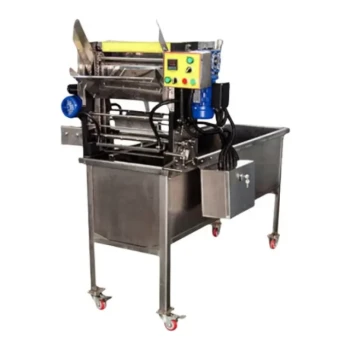
Automated honey-filling machines act as the critical gateway between raw honey processing and commercial market entry. Their primary role is to execute accurate dosing and sterile packaging, which simultaneously increases production efficiency and extends the shelf life of the final product.
The Core Takeaway While these machines increase speed, their deeper value lies in standardization. Automated filling is the prerequisite for obtaining quality certifications like Geographical Indication (GI), transforming honey from a variable agricultural product into a consistent, branded commodity.
Ensuring Hygiene and Product Stability
The Role of Sterile Packaging
The primary reference highlights that automated machines provide sterile packaging environments. By operating in fully enclosed systems, these machines drastically reduce the need for human intervention. This isolation is critical for preventing secondary contamination during the bottling process.
Extending Shelf Life
Honey is shelf-stable naturally, but improper handling can introduce moisture or contaminants that lead to fermentation. Automated systems utilize sealing technologies that ensure airtight closures immediately after filling. This process locks in quality and guarantees the stability of the product from the factory to the consumer.
Standardization as a Market Strategy
Enabling Quality Certifications
To achieve high-level certifications, such as Geographical Indication (GI) or organic standards, consistency is non-negotiable. Automated packaging ensures that every unit meets the specific physical and volume standards required by these certifying bodies. Manual filling often lacks the uniformity necessary to pass these rigorous audits.
From Bulk to Brand
Automation facilitates the transition from selling honey as a bulk wholesale ingredient to a differentiated retail product. By supporting consistent labeling and professional packaging appearances, these machines allow producers to build a brand identity. This capability is essential for entering high-value consumer markets like supermarkets and international export channels.
Precision and Operational Efficiency
High-Precision Dosing
Automated fillers use advanced technologies, such as piston-style or weighing-based systems, to deliver exact quantities. This ensures that the net content of every jar complies strictly with label specifications. High-precision metering protects the producer from legal liability regarding weight discrepancies.
Minimizing Material Loss
Manual filling frequently results in spills and drips, which equates to lost revenue over time. Automated machines differ by employing no-drip filling nozzles and precise flow controls. This technology minimizes raw material waste and ensures the bottle neck remains clean for a perfect seal.
Understanding the Trade-offs
While automation offers significant advantages, it introduces specific operational constraints compared to manual processing.
Flexibility vs. Consistency
Manual filling allows for rapid changes between widely varying container shapes or sizes on the fly. Automated systems prioritize consistency but often require setup time to switch between different bottle formats. Producers must commit to standardized packaging dimensions to maximize the machine's efficiency.
Maintenance and Complexity
Moving from manual labor to industrial automation introduces a requirement for technical maintenance. The precision of piston systems and sensors requires regular calibration to maintain accuracy. The "cost" of automation is not just financial; it requires a shift in workforce skills from manual handling to machine operation and oversight.
Making the Right Choice for Your Goal
- If your primary focus is Obtaining Quality Certifications (GI/Organic): Prioritize machines with high-precision dosing and enclosed sterile environments to ensure the consistency required by auditors.
- If your primary focus is Retail Market Entry: Focus on systems with reliable capping and no-drip nozzles to ensure the professional appearance and hygiene required by supermarkets.
Ultimately, automated filling is not just about moving faster; it is the infrastructure required to turn a raw harvest into a trusted consumer brand.
Summary Table:
| Key Feature | Role in Post-Processing | Business Impact |
|---|---|---|
| Sterile Packaging | Enclosed systems prevent secondary contamination. | Extends shelf life and ensures product safety. |
| Precision Dosing | Delivers exact honey volumes via piston/weighing systems. | Reduces material waste and ensures legal compliance. |
| Standardization | Maintains uniform quality and packaging appearance. | Essential for GI and Organic quality certifications. |
| Brand Transition | Enables professional retail-ready packaging. | Moves product from bulk wholesale to high-value retail. |
Scale Your Honey Production with HONESTBEE
Transitioning from raw harvest to a premium retail brand requires the right infrastructure. HONESTBEE caters to commercial apiaries and distributors with a comprehensive wholesale offering designed to maximize your efficiency and market value.
Our portfolio provides everything you need to succeed:
- Advanced Machinery: From high-precision honey-filling machines to durable hive-making hardware.
- Full Spectrum Support: We supply the complete array of beekeeping tools, equipment, and essential industry consumables.
- Market Growth: Our solutions help you meet rigorous quality standards and professionalize your brand identity.
Ready to upgrade your processing line and protect your product's integrity?
Contact Our Experts Today to discover how our specialized beekeeping equipment can transform your operations.
References
- Marcelo Fernandes Pacheco Dias, Eliane Macedo Sobrinho Santos. Beekeeping and Meliponiculture: A Sweet Look At The Women of The Jequitinhonha River Valley. DOI: 10.24857/rgsa.v19n4-026
This article is also based on technical information from HonestBee Knowledge Base .
Related Products
- Fully Automatic Honey Filling Packaging Machine for Processing Line
- Automatic Honey Filling and Filtering Machine for Beekeeping Bottle Filling
- Precision Durable Efficient HONESTBEE Rotary Honey Filling Machine
- Precision Automated Packaging Turntable Honey Spoon Filling Sealing Packing Machine
- Automatic Single-Dose Snap & Squeeze Honey Sachets Packing Machine
People Also Ask
- Why are fully automatic honey filling and packaging lines essential? Boost Your Honey's Market Value and Quality
- What is a fully-automatic honey filler? Streamline Your Production with High-Precision Automation
- How do automated honey filling and packaging machines affect profitability? Boost Margins with HONESTBEE Technology
- How do automated honey filling and packaging machines contribute to the market value of honey products? Maximize Your ROI
- How do industrial-grade automated honey filling and packaging machines mitigate the risk of physical contamination?