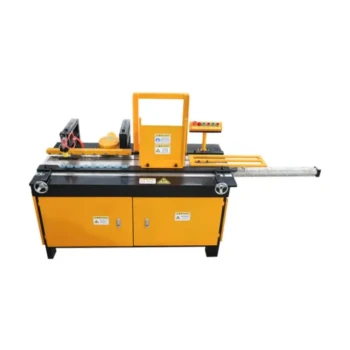
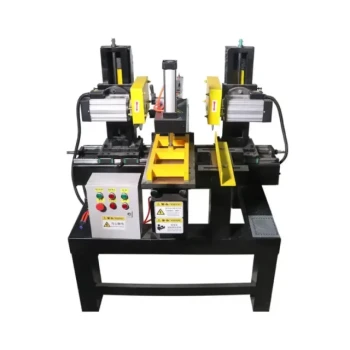
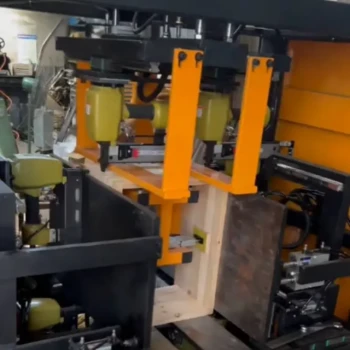
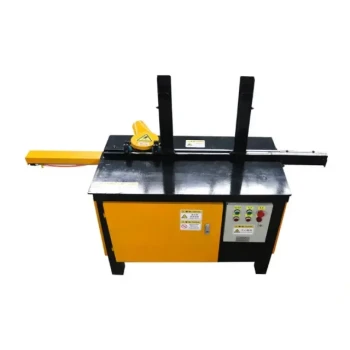
Industrial-grade hive-making machinery serves as the technological backbone for large-scale beekeeping by automating the production of standardized, high-precision hive components. Unlike traditional manual methods, these machines ensure that every hive body and frame meets exact specifications, providing the structural integrity and uniformity required for modern commercial operations.
The primary value of this machinery lies in total standardization. It transforms hive construction from a variable craft into a precise industrial process, creating the necessary hardware foundation for scientific colony management, migratory logistics, and long-term operational scalability.
The Power of Precision and Standardization
Achieving Absolute Uniformity
In large-scale operations, variability is a liability. Industrial machinery utilizes high-precision mechanical processing to manufacture components with exact dimensions.
This ensures that every box, frame, and lid is identical to the millimeter. Such precision eliminates the gaps and irregularities common in hand-built hives, resulting in tightly sealed structures that protect the colony from external elements.
Guaranteeing Interchangeability
Standardization creates a system of interchangeable parts across the entire apiary. A frame or super from one hive will fit perfectly into any other hive in the operation.
This interchangeability drastically reduces management complexity. Beekeepers can replace damaged parts immediately without customization, streamlining maintenance and reducing the time spent on individual hive inspections.
Enhancing Operational Efficiency
Facilitating Migratory Beekeeping
Cross-regional pollination requires hives to be transported frequently over long distances. Industrial machinery produces durable, uniform components that stack securely and withstand the physical stress of transport.
The tightly sealed structures produced by these machines also prevent bees from escaping during transit. This structural reliability is critical for the logistics of modern migratory beekeeping.
Enabling Mechanized Management
Modern beekeeping increasingly relies on auxiliary equipment, such as uncapping machines and automated extractors. These technologies require hives to adhere to strict dimensional standards to function correctly.
By ensuring compatibility with modern equipment, hive-making machinery allows apiaries to transition from manual labor to mechanized production lines, significantly increasing output.
Economic and Biological Impact
Improving Colony Resilience
The precise manufacturing process results in superior thermal insulation and sealing. This creates a stable nesting environment that improves the biological resilience of the bee colony.
Furthermore, a standardized physical environment is fundamental for biosecurity. Smooth, well-fitted components minimize crevices where pests or diseases can harbor, aiding in disease transmission control.
Reducing Long-Term Costs
While the initial investment in machinery is significant, it lowers the unit cost of hive production over time. It allows operations to produce equipment in-house using local materials, reducing reliance on external suppliers.
This self-sufficiency supports a circular economy model. It minimizes infrastructure depreciation costs and protects the operation from supply chain volatility.
Understanding the Trade-offs
Capital Expenditure vs. Operational Savings
Implementing industrial machinery requires a substantial upfront capital investment compared to purchasing finished hives or using hand tools. The return on investment is realized through volume; it is most effective for apiaries planning significant expansion.
Maintenance Requirements
Unlike simple carpentry tools, industrial machinery requires specialized maintenance and calibration to retain its precision. An operation must have the technical capability to maintain the equipment to prevent production downtime.
Making the Right Choice for Your Goal
To determine if industrial hive-making machinery fits your operation, consider your specific strategic objectives:
- If your primary focus is rapid expansion: The machinery provides the speed and low unit cost necessary to scale colony numbers quickly without procurement bottlenecks.
- If your primary focus is migratory pollination: The value lies in producing structurally sound, tightly sealed hives that can survive the rigors of frequent transport.
- If your primary focus is operational efficiency: The priority is the interoperability of parts, allowing for faster inspections and compatibility with automated extraction lines.
Ultimately, this technology is not just about cutting wood; it is about establishing the precise infrastructure required to transition a beekeeping operation from a traditional practice to a scientifically managed industrial enterprise.
Summary Table:
| Key Role | Primary Benefit | Operational Impact |
|---|---|---|
| Standardization | Absolute Uniformity | Guarantees interchangeability of parts and seamless maintenance. |
| Efficiency | Mechanized Compatibility | Enables the use of automated extraction lines and uncapping tools. |
| Logistics | Structural Integrity | Facilitates safe and secure transport for migratory beekeeping. |
| Economy | Reduced Unit Cost | Lowers long-term infrastructure expenses and supply chain risks. |
| Biological | Improved Insulation | Enhances colony resilience through superior sealing and biosecurity. |
Revolutionize Your Beekeeping Operation with HONESTBEE
At HONESTBEE, we specialize in empowering commercial apiaries and distributors with the industrial tools needed for global-scale success. From high-precision hive-making machinery and honey-filling lines to a complete spectrum of beekeeping hardware and consumables, we provide the infrastructure your business needs to thrive.
Ready to scale your production and achieve industrial-grade efficiency? Contact our expert team today to discuss your wholesale needs
References
- K. Samanta, Rakesh Das. Role of honey bees as beneficial insects: Significance and challenges. DOI: 10.33545/26174693.2024.v8.i4sc.964
This article is also based on technical information from HonestBee Knowledge Base .
Related Products
- High-Efficiency Pneumatic Bee Hive Making Machine for Rapid Box Assembly
- Beehive Handle and Frame Rest Cutting Machine: Your Specialized Hive Machine
- Beehive Machine Double End Saw for Precision Hive Component Manufacturing
- Automatic High-Speed Bee Hive Box Stapling Machine
- Mini Desktop Bee Hive Frame Forming Making Machine
People Also Ask
- How does the introduction of professional beehive-making machinery benefit sustainable beekeeping? Scale Your Apiary
- Why is specialized beehive-making machinery critical for low-defense breeding? Enhance Selection with Precision Tools
- How does the introduction of specialized beehive making machinery contribute to increasing the scale of regional beekeeping industries?
- What is the importance of specialized beehive making machinery in a circular bio-economy? Build Local Sustainability
- Why is specialized beehive-making machinery essential? Scale Your Apiary with Precision Industrial Standards