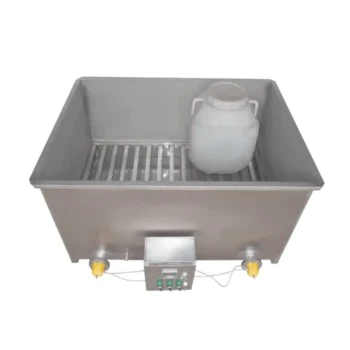
Specialized honey storage and ripening equipment functions as a critical environmental control system that actively regulates temperature and humidity to stabilize the product. By maintaining strictly controlled conditions during the dehydration and ripening phases, this technology prevents fermentation and preserves essential nutritional components, ensuring the final honey meets the rigorous physical and chemical indicators required for high-quality standards.
The core value of this equipment lies in its ability to counter honey's natural hygroscopic and acidic properties through precise climate regulation and chemically inert containment. By managing moisture levels and preventing contamination, these systems transform unstable raw harvests into durable, commercial-grade products without sacrificing medicinal value.
The Science of Environmental Control
Regulating the Dehydration Phase
The primary role of ripening equipment is to facilitate the optimal dehydration of raw honey. Systems utilizing constant temperature and humidity control ensure that excess moisture is removed efficiently. This process is vital for transitioning honey from a raw state to a stable, ripe product.
preventing Fermentation
Honey is naturally hygroscopic, meaning it readily absorbs moisture from the surrounding air. If moisture levels rise too high, yeast naturally present in the honey will trigger fermentation, leading to spoilage. Specialized storage environments maintain low humidity to physically prevent this chemical degradation.
Preserving Bioactive Components
Temperature fluctuations can degrade the enzymes and nutritional compounds that give honey its medicinal value. Specialized facilities provide a stable thermal environment. This consistency ensures that the honey retains its full nutritional profile and bioactive properties during the ripening process.
Material Integrity and Contamination Protection
The Necessity of Chemically Inert Vessels
Honey is acidic, which can cause it to react with standard metal or plastic containers. High-quality storage vessels are manufactured from chemically inert, food-grade materials. This prevents chemical leaching, ensuring the purity, flavor profile, and safety of the stored product.
Protection from Oxidation
Specialized vessels provide superior sealing capabilities that isolate the honey from external air. This isolation is critical for preventing oxidation, which can darken the honey and alter its taste over time. A hermetic seal also blocks external odors, which honey can easily absorb.
Physical Clarification and Purity
Beyond storage, processing equipment such as settling tanks and filtration devices play a key role in quality. These systems physically remove wax debris, larval fragments, and other impurities introduced during harvesting. This clarification improves transparency and purity, which are direct factors in determining the product's market grade and price.
Common Pitfalls and Risks
The Consequence of Poor Sealing
Using non-specialized containers often leads to seal failure during transport or storage. Because honey attracts moisture so aggressively, even a minor breach can lead to increased water content and subsequent fermentation. This spoilage renders the product unfit for commercial sale.
Infrastructure Vulnerabilities
General-purpose storage facilities often lack the specific pest-proofing and moisture barriers required for apiary products. Without specialized infrastructure, expensive extraction equipment can suffer damage, and stored honey faces risks from environmental fluctuations. This can lead to rapid crystallization or contamination, destroying the asset value.
Making the Right Choice for Your Goal
To select the appropriate equipment, you must align your infrastructure with your specific quality objectives.
- If your primary focus is Commercial Grading: Prioritize filtration and settling equipment to maximize transparency and purity, as these directly influence the final selling price.
- If your primary focus is Long-Term Stability: Invest in chemically inert, hermetically sealed storage vessels to prevent oxidation and moisture absorption during extended storage.
- If your primary focus is Nutritional Integrity: Ensure your facility utilizes active temperature and humidity control systems to preserve bioactive enzymes and prevent fermentation during ripening.
investing in specialized preservation technology is not merely about storage; it is the fundamental step in guaranteeing the chemical stability and market value of the final product.
Summary Table:
| Feature | Function | Impact on Honey Quality |
|---|---|---|
| Climate Control | Regulates dehydration & humidity | Prevents fermentation & spoilage |
| Thermal Stability | Maintains constant temperature | Preserves enzymes & bioactive compounds |
| Inert Materials | Uses food-grade, acid-resistant vessels | Prevents chemical leaching & preserves flavor |
| Hermetic Sealing | Isolates honey from external air | Prevents oxidation & moisture absorption |
| Clarification Tools | Filters wax and physical debris | Improves transparency and market grade |
Maximize Your Harvest Value with HONESTBEE
Transitioning from raw harvest to premium commercial-grade honey requires the right infrastructure. HONESTBEE specializes in supporting commercial apiaries and distributors with high-performance beekeeping tools, honey-filling machinery, and specialized storage equipment.
Whether you need to maintain the medicinal integrity of your honey or scale up production with automated machinery, we provide the full spectrum of industry essentials. Let us help you safeguard your assets and enhance your market competitiveness.
Connect with our wholesale experts today to optimize your apiary operations.
References
- Мар’яна Сеньків, А. П. Шевчук. Geography and Current State of Apitourism in Ukraine and Slovenia. DOI: 10.31866/2616-7603.3.2.2020.221276
This article is also based on technical information from HonestBee Knowledge Base .
Related Products
- Stainless Steel Honey Storage and Settling Tank with Double Strainer
- Professional Honey Storage Tank with Agitation System
- Stainless Steel Honey Storage Tank with Lid for Honey
- 0.5T Capacity Honey Dehumidifier Dryer with Vacuum Heating and Thickening Filtering Machine
- Small Honey Filling Machine Sachet Packing Equipment Single Nozzle
People Also Ask
- What economic role do honey storage tanks play? Boost Your Revenue Through Strategic Inventory Management
- What roles do industrial honey storage tanks and filtration meshes play in processing? Ensure Purity & Consistency
- What is the purpose of a honey storage tank? Streamline Your Honey Processing for Quality & Efficiency
- What role do settling tanks play in honey production? Achieve Pure, High-Clarity Honey Naturally
- Why are large settling tanks used in the honey clarification process? Achieve Natural Purity & Batch Consistency