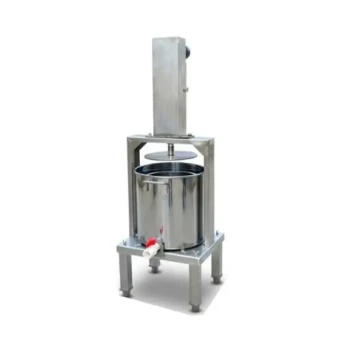
Operating a honey press relies on patience and gradual pressure, not brute force. To begin, break the honeycomb into small pieces and fill the perforated basket almost to the top. Turn the handle to compress the comb, but crucially, you must pause whenever resistance increases to allow the honey to drain before tightening further.
The secret to efficient extraction is recognizing that honey flow cannot be rushed. If the handle becomes difficult to turn, pausing for one or two minutes allows the viscous liquid to escape the pressed wax, preventing mechanical failure and ensuring maximum recovery.
Preparation and Loading
Timing the Extraction
For optimal results, perform the pressing operation as soon as possible after harvesting the honeycomb. Honey flows most freely when it retains the residual warmth from the hive.
Breaking the Structure
Before loading the press, physically break or crush the honeycombs into smaller pieces. This disrupts the comb structure and exposes the honey, making the mechanical pressing significantly more effective.
Filling the Chamber
Load the crushed comb into the press basket (the perforated cylinder). According to standard operating procedures, you should fill the basket almost full to maximize the efficiency of the pressure plate.
The Pressing Technique
Engaging the Mechanism
Begin turning the handle, which drives the pressure plate (clump) downwards into the loading chamber. This mechanical pressure squeezes the comb matrix, forcing the honey out through the perforations in the basket.
The "Pause and Press" Method
As you wind the press down, you will eventually encounter significant resistance. Do not force the handle at this stage. Instead, pause for one or two minutes.
Gradual Extraction
During this pause, the pressure allows the honey to slowly drain out of the compressed wax cake. Once the pressure alleviates slightly, make a couple more turns on the handle and repeat the waiting process.
The Final Squeeze
The final stage of extraction is inherently slow. Continue the cycle of applying pressure and pausing until the honey stops flowing completely.
Maximizing Yield and Quality
Managing Volume
You may need to add more comb material multiple times—often up to three cycles—before removing the compressed dry wax. This ensures you utilize the full capacity of the press before resetting.
Post-Extraction Filtering
Once the honey collects in the container below the overflow outlet, it will contain small particles of wax. You must filter this raw honey through a suitable filter cloth or strainer to ensure it is ready for bottling.
Warmth and Settling
After pressing, the honey is often warmed in a water bath to facilitate final straining. This helps separate any remaining impurities or air bubbles introduced during the crushing process.
Common Pitfalls to Avoid
Over-Torquing the Handle
The most common error is trying to squeeze the comb too quickly. Forcing the handle when resistance is high does not speed up the flow; it risks damaging the screw mechanism or the basket.
Delaying the Process
Waiting too long to press after harvesting allows the honey to cool and thicken. Cold honey is significantly harder to press and results in lower extraction rates compared to warm, fresh comb.
Making the Right Choice for Your Goal
Efficiency in honey pressing is a balance between mechanical pressure and fluid dynamics.
- If your primary focus is Equipment Longevity: Prioritize the "pause" method, waiting 1-2 minutes whenever resistance is felt to avoid stripping the screw threads.
- If your primary focus is Maximum Yield: Ensure you break the comb thoroughly before loading and allow the final pressing stage to run slowly until all dripping ceases.
True efficiency comes from allowing the press to do the work over time, rather than forcing the results.
Summary Table:
| Step | Action | Key Consideration |
|---|---|---|
| 1. Preparation | Break honeycomb into small pieces | Disrupts structure to expose honey for easier flow |
| 2. Loading | Fill perforated basket almost full | Optimizes pressure plate efficiency |
| 3. Initial Press | Turn handle until resistance is felt | Use gradual pressure rather than brute force |
| 4. The Pause | Wait 1-2 minutes | Allows viscous honey to drain from the wax cake |
| 5. Final Squeeze | Repeat cycles until dripping stops | Ensures maximum recovery and equipment longevity |
| 6. Processing | Filter and settle | Removes wax particles for a professional finish |
Elevate Your Apiary's Efficiency with HONESTBEE
Are you looking to scale your honey production? HONESTBEE specializes in supporting commercial apiaries and distributors with premium-grade beekeeping solutions. From high-durability honey presses and specialized hive-making machinery to honey-themed cultural merchandise, we provide the full spectrum of equipment and consumables needed for professional success.
Partner with us for:
- Wholesale access to professional-grade extraction machinery.
- A comprehensive range of beekeeping tools and essential industry consumables.
- Expert equipment tailored for large-scale commercial operations.
Contact HONESTBEE today to discuss your wholesale needs!
Related Products
- Stainless Steel Manual Honey Press with Guard for Pressing Honey and Wax
- Stainless Steel Honey Press Wax Press with Tank
- Easy Use Manual Stainless Steel Honey Press for Honey Comb
- Electric Honey Press Machine for Squeezing Honey Comb Press Equipment
- 10L Stainless Steel Electric Honey Press Machine
People Also Ask
- What other functions can a honey press serve besides honey extraction? Discover Versatile Multi-Purpose Uses
- How does the honey press preserve the quality of honey during extraction? Maintain Pure Enzymes and Flavor
- What materials are used to construct the honey press? Choose Durable, Food-Grade Solutions for Your Apiary
- What are the fundamental differences between manual honey presses and centrifugal honey extractors? A Guide for Pros
- What are some general features of a honey press? Maximize Your Yield with Durable Extraction Tools