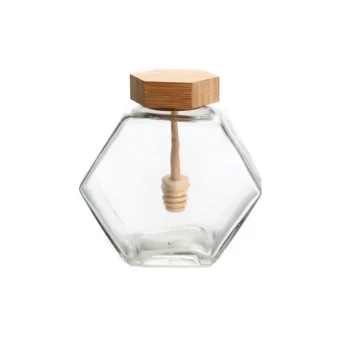
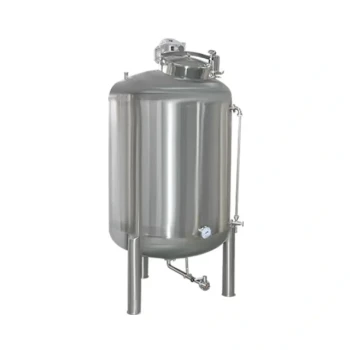
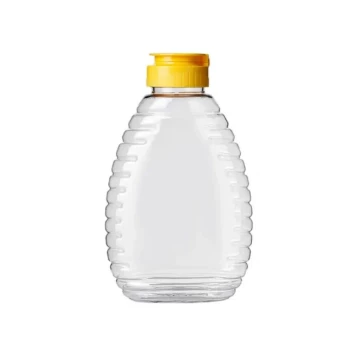
Specialized settling containers with side nozzles act as a primary mechanism for physical stratification. They utilize gravity-based sedimentation to separate liquid honey from lighter impurities like beeswax and debris. By allowing for a specific pouring angle, the side nozzles enable the extraction of cleaner honey from the vessel without disturbing the layer of waste material floating at the top.
By leveraging the physics of density, these containers passively separate the harvest into distinct layers. This pre-treatment step significantly reduces the burden on subsequent filtration systems, ensuring higher final purity with less mechanical intervention.
The Mechanics of Gravity-Based Sedimentation
Achieving Physical Stratification
The core function of these containers is to create an environment where the differing densities of the harvest components work in your favor.
Honey is significantly denser than beeswax, larval debris, and other fine particles found in the raw mixture.
Given adequate standing time, gravity causes the heavier liquid honey to settle at the bottom while lighter contaminants rise to form a surface crust.
The Precision of Side Nozzles
Standard pouring methods often re-mix separated layers, undoing the work of sedimentation.
Side nozzles solve this by enabling a controlled pouring angle that taps into the stratified layers.
This allows the operator to drain the clarified liquid honey from beneath the debris layer, leaving the impurities trapped in the container.
Strategic Role in the Filtration Workflow
Critical Pre-treatment
These containers do not replace fine filtration; they serve as a preparatory stage to optimize it.
By removing the bulk of the larger wax fragments and debris through gravity, the mixture that enters the next phase is already partially clarified.
This prevents the rapid clogging of fine wire mesh or muslin cloth, extending the operational life of your physical filters.
Enhancing Commercial Value
The ultimate goal of this phase is to meet the aesthetic and purity standards required for the commercial market.
High clarity and a lack of visible sediment are primary indicators of quality for consumers.
Effective use of settling containers ensures the final product achieves this transparency, thereby increasing its marketability.
Understanding the Trade-offs
The Requirement of Standing Time
While effective, gravity-based separation is not an instantaneous process.
To achieve clear stratification, the mixture requires significant "standing time" for the physics of sedimentation to occur.
Operators must balance the need for high purity against the time constraints of their production cycle; rushing this stage renders the side nozzles ineffective.
Optimizing Your Filtration Strategy
To get the most out of specialized settling containers, align your usage with your specific production goals.
- If your primary focus is Maximum Purity: Allow extended standing periods to ensure complete stratification before engaging the side nozzles.
- If your primary focus is Workflow Efficiency: Use the container as a "rough pass" to remove only the largest debris, preventing bottlenecks at your fine mesh filters.
The specialized settling container is not just a storage vessel; it is the foundational tool for transforming a raw harvest into a refined product.
Summary Table:
| Feature | Function & Commercial Benefit |
|---|---|
| Gravity Sedimentation | Uses density to naturally separate heavy honey from light wax and debris. |
| Side Nozzle Design | Allows extraction of clarified honey without disturbing the surface waste crust. |
| Strategic Pre-treatment | Reduces the burden on fine filters, preventing clogging and extending equipment life. |
| Standing Time | Required phase for physical stratification to ensure maximum clarity and value. |
Scaling Your Honey Production with HONESTBEE
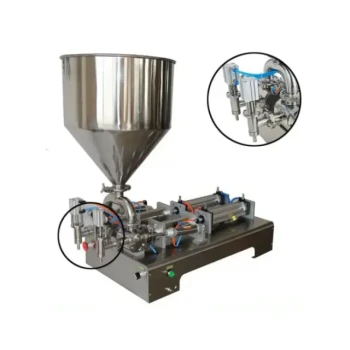
At HONESTBEE, we specialize in supporting commercial apiaries and distributors with a robust wholesale offering designed for industry success. From specialized settling containers and honey-filling machines to hive-making equipment and essential consumables, we provide the full spectrum of tools required for high-volume processing. Our solutions ensure maximum purity and operational efficiency, helping you deliver premium products to the market.
Ready to upgrade your workflow? Contact our team today to explore our wholesale equipment and learn how we can bring more value to your beekeeping business!
References
- Mona Hassan Ahmed Sawy. Honey consumption and utilization in Late Antique Egypt. DOI: 10.21608/jguaa2.2024.262656.1167
This article is also based on technical information from HonestBee Knowledge Base .
Related Products
- Stainless Steel Honey Storage and Settling Tank with Double Strainer
- Classic Round Glass Honey Jar with Lid
- Stainless Steel Honey Storage Tank with Lid for Honey
- Hexagonal Glass Honey Jar with Wooden Lid Integrated Dipper Elegant Functional Storage
- Modern Square Glass Honey Jar with Twist Off Lid
People Also Ask
- What economic role do honey storage tanks play? Boost Your Revenue Through Strategic Inventory Management
- What roles do industrial honey storage tanks and filtration meshes play in processing? Ensure Purity & Consistency
- What is the purpose of a honey storage tank? Streamline Your Honey Processing for Quality & Efficiency
- What role do settling tanks play in honey production? Achieve Pure, High-Clarity Honey Naturally
- Why are large settling tanks used in the honey clarification process? Achieve Natural Purity & Batch Consistency