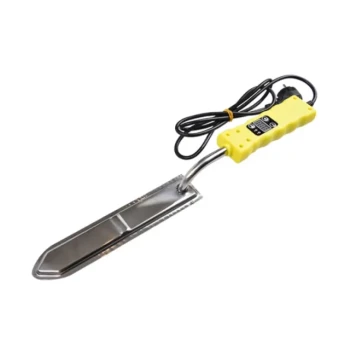
Temperature control equipment serves as a critical biosecurity checkpoint by simulating specific environmental stress conditions to neutralize pathogens. Its primary role in international trade is to significantly reduce the viability of Nosema apis spores, ensuring that honey and beeswax exports meet strict sanitary standards without spreading disease.
By subjecting bee products to targeted thermal treatments—specifically at -12°C, 20°C, or 33°C—exporters can effectively deactivate microscopic pathogens, transforming temperature control from a simple processing step into a mandatory safety protocol for global market access.
Mitigating Biological Risks in Global Trade
To export bee products successfully, you must address the hidden biological threats that physical inspection might miss.
Targeting Pathogen Survival
The primary safety function of this equipment is to combat Nosema apis, a microsporidian parasite that affects honey bees.
If left untreated, these spores can remain viable in hive products, posing a contamination risk to importing countries.
Simulating Environmental Stress
Temperature control equipment is not merely for storage; it is used to actively simulate environmental stress.
Research indicates that maintaining products at specific temperatures—specifically -12°C, 20°C, or 33°C—drastically reduces the survival rate of these spores.
By utilizing these precise thermal windows, the infectivity of the pathogen is decreased, rendering the product biologically safe for transport.
Enhancing Product Compliance and Value
While thermal treatment addresses biological safety, it functions best when paired with broader processing standards to ensure total regulatory compliance.
Physical Purity and Clarity
Beyond pathogen control, professional processing equipment aids in filtration and settling.
These processes ensure that honey and beeswax achieve the physical state required for commercial competition, removing particulate impurities that could cause rejection at customs.
Value-Added Processing for Beeswax
For beeswax specifically, equipment that manages heating, melting, and pressure-filtering is essential for converting raw material (like old combs) into pure beeswax blocks.
This creates a secondary revenue stream by ensuring the wax is free of physical contaminants and safe for use in cosmetics or pharmaceuticals.
Understanding the Trade-offs
Applying temperature treatments requires a delicate balance between sterilization and preservation.
The Risk of Nutritional Damage
While high temperatures effectively kill pathogens, excessive heat can degrade the nutritional content of honey.
You must ensure that the "stress conditions" applied to kill spores do not inadvertently destroy the enzymes and antioxidants that give honey its value.
Precision Over Intensity
The goal is not simply to heat or freeze the product, but to hit the exact therapeutic targets (e.g., 33°C).
Equipment that lacks precision may fail to kill the spores (if the temperature is too mild) or damage the product quality (if the temperature fluctuates too high).
Making the Right Choice for Your Goal
To secure international contracts, you must demonstrate both biological safety and product quality.
- If your primary focus is Biosecurity and Disease Control: Prioritize equipment capable of holding precise stress temperatures (-12°C or 33°C) to document the neutralization of Nosema apis spores.
- If your primary focus is Commercial Appeal and Purity: Integrate filtration and pressure-filtering systems with your thermal equipment to ensure the product is visually clear and free of physical impurities.
Precise temperature control is the definitive technical method for bridging the gap between raw hive production and secure international distribution.
Summary Table:
| Pathogen Treatment Goal | Target Temperature | Biological Effect |
|---|---|---|
| Freezing Stress | -12°C | Deactivates Nosema apis spores via extreme cold |
| Ambient Stress | 20°C | Reduces spore viability over targeted durations |
| Therapeutic Stress | 33°C | Neutralizes pathogens while maintaining honey enzymes |
| Physical Purity | Melting Point Var. | Facilitates filtration of particulate impurities |
Secure Your Global Supply Chain with HONESTBEE Professional Equipment
At HONESTBEE, we understand that for commercial apiaries and distributors, biological safety is the key to international market access. Our precision-engineered honey-processing machinery and hive-making equipment are designed to hit exact therapeutic targets, ensuring your honey and beeswax are pathogen-free without compromising nutritional value.
From industrial honey-filling machines to specialized filtration hardware, we provide the full spectrum of tools needed to scale your operations. Partner with us to transform your raw hive production into export-ready, premium commodities. Contact our wholesale experts today to optimize your production line.
References
- Igor Stojanov, Ivan Pušić. CONTROL AND VIABILITY OF BEE NOSEMOSES. DOI: 10.46784/eavm.v14i2.288
This article is also based on technical information from HonestBee Knowledge Base .
Related Products
- Professional Electric Honey Uncapping Knife with Heated Digital Temperature Control for Beekeeping
- Electric Hot Honey Uncapping Knife with Thermostat
- HONESTBEE AC Powered Wire Embedder with Alligator Clips
- Automatic Continuous Heat Sealing Machine
- Professional Thermostatic Conical Honey Melter
People Also Ask
- Why are electric honey uncapping knives essential? Boost Efficiency & Preserve Comb for Professional Honey Extraction
- What is an electric uncapping knife and how is it used? Master Faster Honey Extraction with Heat
- What are the advantages and disadvantages of using an electric knife for uncapping honey frames? Boost Extraction Speed
- What are the drawbacks of using an electric knife for uncapping honey frames? Cost and Power Constraints Explained
- How should an electric uncapping knife be utilized? Master Efficient Honey Extraction with Heated Precision