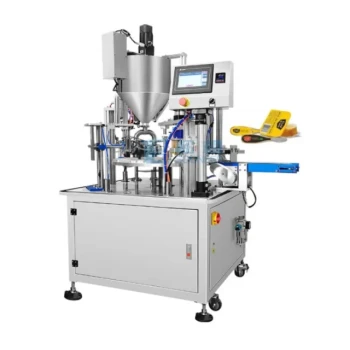
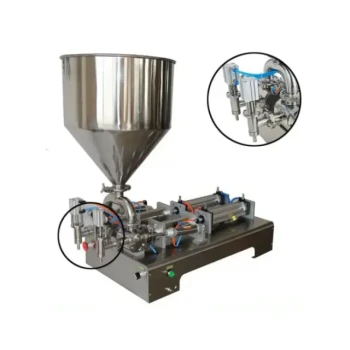
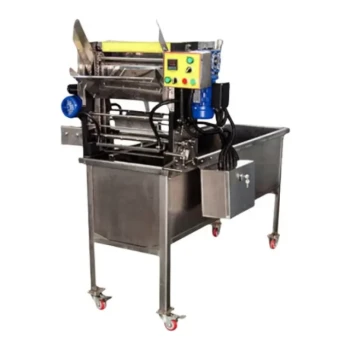
Automatic honey-filling machines are the linchpin of modern large-scale honey production, serving as the critical bridge between raw forest harvest and the commercial market. These systems provide the industrial capacity necessary to process thousands of tons of honey, ensuring that the final product is precisely measured, sealed under sterile conditions, and standardized for global distribution.
The Core Takeaway While their primary function is packaging, the true strategic value of automatic filling machines lies in standardization and preservation. By operating in a closed, sterile loop, they transform a variable natural resource into a consistent, stable commercial product that meets strict international safety standards without sacrificing the honey's delicate sensory profile.
Preserving the Integrity of Forest Honey
Eliminating Secondary Contamination
Large-scale honey production involves significant risks regarding hygiene. Automatic filling machines solve this by executing the packaging process in a fully enclosed environment.
This isolation is critical for preventing secondary contamination, which often occurs during manual handling. By removing direct human contact, these machines ensure the product meets rigorous food safety standards, such as those required by the EU.
Protecting Sensory and Chemical Quality
Forest honeys, such as Chestnut or Honeydew, are high-value products defined by their unique aromas and chemical composition. Automatic fillers play a vital role in minimizing air exposure during the packaging phase.
This precision reduces the loss of volatile aroma compounds and prevents oxidation, which can alter the honey's color. Furthermore, the speed and seal quality prevent moisture absorption, preserving the honey's natural quality and market positioning.
Achieving Industrial Scale and Efficiency
Precision Metering and Waste Reduction
In a wholesale operation, even minor overfilling per bottle adds up to massive material loss over thousands of units. Automatic machines utilize high-precision metering pumps to guarantee exact quantitative packaging.
This ensures consistent net content for every unit, satisfying legal commercial requirements. It also significantly reduces material loss, directly impacting the operation's bottom line.
High-Volume Throughput
Processing thousands of tons of honey requires speed that manual labor cannot match. These machines automate the filling and sealing stages, drastically accelerating the production rate.
By replacing manual labor with automated systems, producers can achieve the high volume necessary for large-scale supply chains. This scalability lowers unit costs, making the operation commercially viable.
Facilitating Global Commerce
Ensuring Stability for Transport
For honey intended for export, physical stability is paramount. Automatic lines integrate professional sealing equipment that creates an airtight barrier.
This is essential for maintaining the product's physical and chemical stability during transoceanic transport. It prevents leakage and spoilage, ensuring the product arrives at international distributors with its premium value intact.
Standardization for Retail
Global markets demand uniformity. Automatic fillers convert high-value, multi-floral honey into standardized commercial products.
This consistency in appearance, volume, and packaging quality is a prerequisite for entering major retail chains. It builds brand reliability and consumer trust, which are difficult to maintain with semi-automated or manual processes.
Understanding the Operational Prerequisites
The Necessity of Upstream Processing
It is important to recognize that an automatic filling machine cannot function effectively in isolation. The references highlight that these machines are part of a broader ecosystem including industrial-grade filtration and dehydration.
To achieve the "high-precision" promised by the filling gear, the honey must first be properly filtered and dehydrated. Attempting to run raw, unprocessed honey with high particulate matter through precision metering pumps can lead to equipment clogs and inconsistencies.
The Trade-off of Standardization
While automation guarantees consistency, it rigidly enforces a "standardized" output. This is excellent for large-scale wholesale and export but requires strict adherence to process parameters.
Unlike manual packing, where adjustments can be made on the fly, automated lines require the input honey to be uniform. This places a heavier burden on the pre-processing stages to ensure the honey flowing into the filler is already consistent in viscosity and purity.
Making the Right Choice for Your Goal
- If your primary focus is Global Export: Prioritize machines with advanced sealing capabilities to ensure airtight integrity for transoceanic shipping and compliance with EU safety standards.
- If your primary focus is Premium Brand Positioning: Focus on equipment with enclosed, low-oxygen filling environments to prevent aroma loss and oxidation, preserving the high value of specific forest varietals.
- If your primary focus is Cost Reduction: distinct machines that emphasize high-speed metering pumps to minimize material waste (overfilling) and reduce reliance on manual labor.
Ultimately, automatic honey-filling machines are not just packaging tools; they are the essential guarantors of quality, safety, and scalability in the modern honey supply chain.
Summary Table:
| Feature | Strategic Impact on Supply Chain | Key Benefit |
|---|---|---|
| Enclosed Filling | Eliminates secondary contamination | Meets global food safety standards |
| Precision Metering | Minimizes material waste and overfilling | Increases profit margins for wholesalers |
| Airtight Sealing | Ensures chemical and physical stability | Facilitates long-distance export/transport |
| High-Volume Speed | Replaces manual labor at scale | Reduces unit costs & increases throughput |
| Standardization | Consistent volume and appearance | Builds brand trust in retail markets |
Scale Your Honey Business with HONESTBEE
Transitioning from manual production to a high-capacity industrial supply chain requires the right partner. HONESTBEE specializes in empowering commercial apiaries and international distributors with professional-grade solutions.
We provide a comprehensive wholesale portfolio, including:
- Advanced Machinery: Precision honey-filling machines, hive-making equipment, and industrial-grade filtration systems.
- Complete Equipment: A full spectrum of beekeeping tools and essential industry consumables.
- Market Growth: Honey-themed cultural merchandise to enhance your brand presence.
Whether you are looking to optimize your production line for global export or reduce operational waste, our expert team is ready to assist.
Contact HONESTBEE Today to Enhance Your Production Efficiency
References
- I Samsonova, Vladimir I. Beljaev. Bioresource potential of forest lands as the source of honey yield in steppe area of the river Don. DOI: 10.1088/1755-1315/316/1/012057
This article is also based on technical information from HonestBee Knowledge Base .
Related Products
- Fully Automatic Honey Filling Packaging Machine for Processing Line
- Automatic Honey Filling and Filtering Machine for Beekeeping Bottle Filling
- Precision Durable Efficient HONESTBEE Rotary Honey Filling Machine
- Automatic Single-Dose Snap & Squeeze Honey Sachets Packing Machine
- Semi Automatic Small Honey Bottle Filling Machine Honey Filler
People Also Ask
- Why are fully automatic honey filling and packaging lines essential? Boost Your Honey's Market Value and Quality
- What is a fully-automatic honey filler? Streamline Your Production with High-Precision Automation
- How do automated honey filling and packaging machines affect profitability? Boost Margins with HONESTBEE Technology
- How do automated honey filling and packaging machines contribute to the market value of honey products? Maximize Your ROI
- How do industrial-grade automated honey filling and packaging machines mitigate the risk of physical contamination?