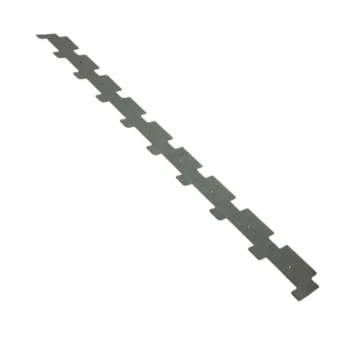
Honey super chambers are modular upper hive sections designed specifically to segregate surplus honey production from the colony's reproductive center. By confining commercial honey storage to the top of the vertical structure, these chambers allow beekeepers to harvest yields during peak nectar flows—such as those from rapeseed or sunflower crops—without disrupting the critical brood rearing occurring below.
The core significance of the honey super is the functional separation of "production" and "reproduction." By creating a designated vertical space for surplus honey, the design protects the queen and larvae in the lower brood chamber while streamlining commercial harvesting operations.
The Operational Logic of Vertical Separation
The honey super is not merely a box for storage; it is a tool for biological compartmentalization.
Protecting the Reproductive Core
The lower portion of the hive, known as the brood chamber, is dedicated exclusively to the colony's continuity. This is where the queen lays eggs and where larvae develop.
The Role of the Upper Chamber
The honey super sits above this reproductive center. It provides a standardized, modular zone specifically for worker bees to deposit surplus resources. This vertical hierarchy mimics the colony's natural tendency to store reserves above the brood nest.
Efficiency in Commercial Management
For commercial operations, the separation provided by honey supers is essential for scalability and speed.
Non-Invasive Harvesting
Because honey is stored in a distinct upper chamber, beekeepers can remove and extract these frames without intruding on the brood nest. This ensures that the harvesting process does not accidentally injure the queen or damage developing larvae.
Capitalizing on Peak Flows
Commercial success relies on capturing ephemeral resource spikes, such as rapeseed or sunflower blooms. Honey supers provide the immediate, expandable volume required to capture these intense nectar flows, turning a biological surplus into a harvestable commodity.
Understanding the Trade-offs
While honey supers are critical for production, their use requires precise timing and management.
The Constraint of Seasonality
Honey supers are effective only during specific windows of resource abundance. They are tools for managing surplus, meaning their utility is tied directly to peak nectar flows.
Management Complexity
The modular nature of the hive requires the beekeeper to actively manage vertical space. Placing supers too early or too late can impact the colony's efficiency, as the separation of functions relies on the colony having enough population and resources to utilize the upper space effectively.
Making the Right Choice for Your Management Strategy
The use of honey supers is about balancing the colony's biological needs with your production targets.
- If your primary focus is Commercial Yield: Prioritize the timely addition of supers during specific crop blooms (like sunflower) to capture maximum surplus without crowding the brood.
- If your primary focus is Colony Health: Utilize the vertical separation to ensure that your inspection and harvesting activities never disturb the queen’s laying cycle or the larval development in the lower chamber.
Ultimately, the honey super transforms a beehive from a simple shelter into a segmented factory that protects the colony’s future while maximizing current production.
Summary Table:
| Feature | Purpose | Impact on Commercial Operations |
|---|---|---|
| Vertical Separation | Segregates surplus honey from the brood nest | Protects the queen and larvae during harvesting |
| Modular Design | Expandable storage for peak nectar flows | Allows for rapid scaling during sunflower or rapeseed blooms |
| Non-Invasive Harvest | Removal of upper frames only | Reduces colony stress and prevents accidental queen injury |
| Operational Efficiency | Standardized zones for workers and keepers | Streamlines the extraction process for high-volume yield |
Elevate Your Commercial Apiary with HONESTBEE
At HONESTBEE, we understand that efficiency and colony health are the dual pillars of a successful beekeeping enterprise. We cater specifically to commercial apiaries and distributors, offering a comprehensive wholesale range designed to streamline your operations and maximize your seasonal yields.
From modular hive-making equipment and precision honey-filling machines to a full spectrum of high-quality tools and consumables, we provide the hardware you need to turn every nectar flow into a harvestable commodity.
Ready to scale your production? Our expert team is here to supply your business with the specialized machinery and durable equipment required for modern, large-scale beekeeping.
Contact HONESTBEE today for specialized wholesale solutions.
References
- Fabrice Réquier, Vincent Bretagnolle. The carry‐over effects of pollen shortage decrease the survival of honeybee colonies in farmlands. DOI: 10.1111/1365-2664.12836
This article is also based on technical information from HonestBee Knowledge Base .
Related Products
- Heavy Duty Castellated Iron Frame Spacer for Honey Supers
- Durable 16 Way Circular Bee Escape for Efficient Honey Harvesting
- High-Efficiency Diamond Maze Bee Escape for Clearing Supers
- Circular Labyrinth Bee Escape for Efficient Hive Management
- Plastic Honey Comb Frames Cassette Box for Honey
People Also Ask
- What are honey super frames and what foundation options are available? Choose the Best Support for Your Bees
- What are the reasons and drawbacks of using nine frames in a ten-frame honey super? Boost Extraction Speed Today
- What are honey super frames and how many are needed per box? A Beekeeper's Essential Guide
- What are honey super frames and their foundation options? Choose the Best Support for Your Hive's Honey Production
- Why might a beekeeper use fewer than the standard number of frames in a honey super? Boost Extraction Efficiency