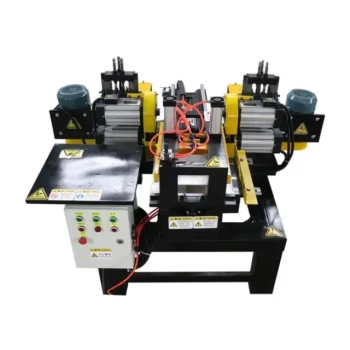
Specialized hive-making machinery serves as the technical foundation for transforming traditional beekeeping into a scalable commercial enterprise. By utilizing high-precision manufacturing to ensure exact specifications—specifically the critical "bee space" required for colony health—these machines create the standardized infrastructure necessary to replicate scientific beekeeping processes across large-scale operations. When integrated with non-lethal harvesting tools and protective gear, this technology lowers the barrier to entry and stabilizes economic returns by enabling uniform industrial workflows.
Core Insight: Successful large-scale apiculture is not about managing individual hives, but about managing a system. Specialized machinery creates a standardized physical environment that allows beekeepers to treat hundreds of colonies as uniform production units, making scientific management replicable and economically viable.
The Role of Precision in Standardization
Maintaining Critical Biological Requirements
The primary function of specialized machinery is to achieve high-precision standardization. In beekeeping, dimensions must be exact to maintain the correct "bee space"—the specific gap bees need to move freely without building excess comb or sealing gaps with propolis.
Ensuring Component Interchangeability
Industrial-grade machinery ensures that every frame and hive body produced is identical. This allows for complete interchangeability between different batches and apiary sites, removing the logistical nightmare of matching specific parts to specific hives.
Optimizing Internal Microclimates
Standardized manufacturing provides superior dimensional control, which improves weather resistance and internal airflow. This consistency helps maintain a stable microclimate within the hive, reducing environmental stress on the bees and optimizing humidity management for specific bee species.
Operational Efficiency at Scale
Enabling Industrial Workflows
Standardization is a fundamental prerequisite for moving from small-scale craft to specialized operations managing 150 or more colonies. Uniform equipment allows for the implementation of mechanized handling and unified management protocols, vastly increasing the number of hives a single operator can manage.
Streamlining Migration and Transport
For commercial operations, particularly those involved in pollination services, mobility is key. Standardized hives guarantee structural stability during long-distance transport, ensuring that colonies can be safely moved to follow bloom cycles without equipment failure.
Facilitating Rapid Inspection and Extraction
When physical specifications are consistent, tasks such as colony inspection and honey extraction become significantly faster. Frames can be removed, harvested, and replaced using mechanized lines without the risk of jamming or damaging the equipment.
Economic and Strategic Implications
Lowering Technical Barriers
By pairing specialized manufacturing with non-lethal harvesting tools and protective equipment, the industry lowers the technical threshold for new entrants. Operators can rely on established, standardized protocols rather than needing decades of artisanal experience to achieve stability.
Reducing Long-Term Costs
While the initial investment in machinery is higher, in-house production of standardized components reduces long-term procurement and maintenance costs. Broken components can be swapped out instantly from inventory, minimizing downtime and labor costs.
Supporting Systematic Improvements
Standardization provides a uniform baseline for data collection. This consistency is essential for implementing systematic disease monitoring and breed improvement programs, as it eliminates equipment variables when comparing colony health across different sites.
Understanding the Trade-offs
Capital Investment vs. Operational Yield
Implementing specialized hive-making machinery requires a significant upfront capital investment. This approach is generally only economically justifiable for operations targeting industrial scales (typically 150+ colonies), where the efficiency gains outweigh the initial equipment costs.
Dependence on Landscape Health
While standardized equipment optimizes the internal environment, it cannot compensate for external environmental degradation. For example, even with optimized equipment, honey yields can drop by up to 60 percent in regions dominated by monocultures like soybean. High-tech equipment must be paired with strategic site management to ensure bees have access to diverse forage.
Making the Right Choice for Your Goal
To maximize the value of specialized apiculture technology, align your investment with your operational scale:
- If your primary focus is Scalability (150+ Colonies): Prioritize machinery that guarantees 100% component interchangeability to enable mechanized handling and migration.
- If your primary focus is Colony Health: Utilize precision manufacturing to ensure exact bee space and superior weather resistance, reducing biological stress on the insects.
- If your primary focus is Economic Stability: Adopt standardized tools and protective gear to implement uniform, low-risk industrial workflows that reduce reliance on specialized labor.
Standardization is not merely a convenience; it is the structural prerequisite that allows apiculture to function as a predictable, scalable industry rather than a variable craft.
Summary Table:
| Feature | Key Benefit | Significance for Scale |
|---|---|---|
| High-Precision Manufacturing | Exact "Bee Space" | Reduces biological stress and excess comb building |
| Component Interchangeability | Uniform Parts | Enables mechanized handling and seamless part replacement |
| Dimensional Consistency | Optimized Microclimate | Improves weather resistance and internal airflow control |
| Standardized Infrastructure | Systematic Management | Supports rapid inspection, extraction, and migration |
| Technical Automation | Lower Barriers | Reduces reliance on artisanal labor through uniform workflows |
Scale Your Apiary with HONESTBEE Precision
Transition from craft beekeeping to a high-yield industrial operation with HONESTBEE. As a premier partner for commercial apiaries and global distributors, we provide the full technical foundation needed for scalable success. Our comprehensive wholesale catalog includes:
- Specialized Machinery: Industrial hive-making and honey-filling machines for 100% component interchangeability.
- High-Performance Tools: A full spectrum of beekeeping hardware and non-lethal harvesting equipment.
- Essential Consumables: Every item required to maintain colony health and operational flow.
- Honey Culture Merchandise: Expand your market reach with our honey-themed cultural assets.
Maximize your operational efficiency and stabilize your returns today. Contact HONESTBEE for a wholesale consultation and let us supply the tools to build your beekeeping empire.
References
- Adam Ebert. Nectar for the Taking: The Popularization of Scientific Bee Culture in England, 1609-1809. DOI: 10.3098/ah.2011.85.3.322
This article is also based on technical information from HonestBee Knowledge Base .
Related Products
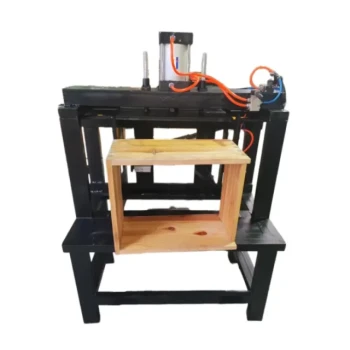
- High-Efficiency Pneumatic Bee Hive Making Machine for Rapid Box Assembly
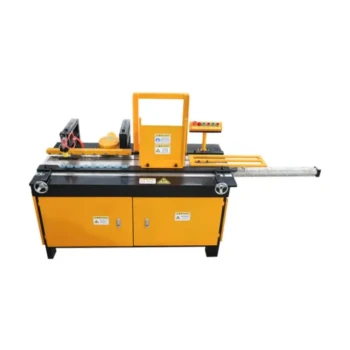
- Beehive Handle and Frame Rest Cutting Machine: Your Specialized Hive Machine
- Mini Desktop Bee Hive Frame Forming Making Machine
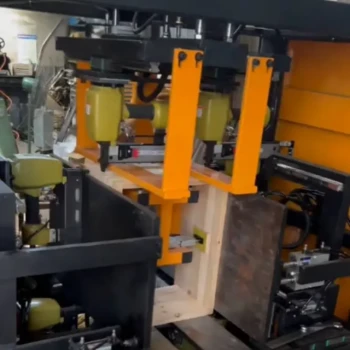
- Automatic High-Speed Bee Hive Box Stapling Machine
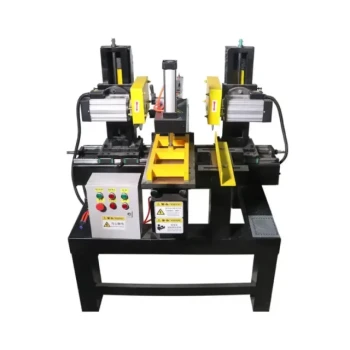
- Beehive Machine Double End Saw for Precision Hive Component Manufacturing
People Also Ask
- How does the introduction of professional beehive-making machinery benefit sustainable beekeeping? Scale Your Apiary
- Why is specialized beehive-making machinery critical for low-defense breeding? Enhance Selection with Precision Tools
- How does the introduction of specialized beehive making machinery contribute to increasing the scale of regional beekeeping industries?
- What is the importance of specialized beehive making machinery in a circular bio-economy? Build Local Sustainability
- Why is specialized beehive-making machinery essential? Scale Your Apiary with Precision Industrial Standards