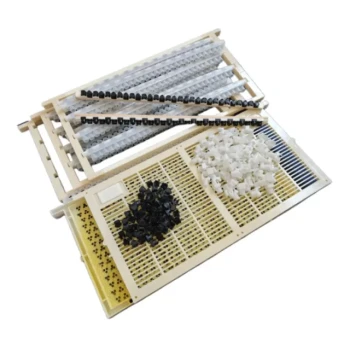
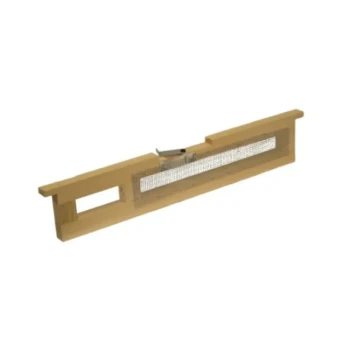
The strategic application of queen rearing equipment is the primary method for stabilizing a honeybee colony’s defensive capabilities. By facilitating the scheduled replacement of aging queens, these tools allow beekeepers to maintain a young, vigorous population that exhibits consistent defensive instincts. This process removes the unpredictability of natural colony decline, ensuring that any assessment of Defense Efficiency (DE)—such as the ability to repel hornets or resist absconding—is based on a healthy, standardized biological unit.
Core Takeaway Queen rearing is not merely about reproduction; it is a mechanism for quality control. By standardizing the age and genetics of the queen, you eliminate the variable of "queen failure," ensuring the colony maintains the population density and aggression levels required for effective defense.
The Impact of Queen Vitality on Colony Defense
Eliminating the Variable of Aging
Queen rearing equipment facilitates the periodic, manual replacement of queen bees. This is essential because an aging queen leads to a decline in brood production and overall colony vigor.
By introducing young queens on a schedule, you prevent the natural weakening of the colony. A vigorous colony is a prerequisite for high Defense Efficiency (DE), as a weak population lacks the numbers to effectively defend against predators.
Ensuring Consistent Defensive Instincts
A colony's defensive behavior is directly linked to the queen's condition. "Spontaneous" or inconsistent defense often stems from underlying issues with the queen's health.
Standardized rearing procedures ensure that the colony's defensive reactions remain predictable. This allows beekeepers and researchers to accurately measure how the colony responds to threats without the data being skewed by a failing queen.
Genetic Selection and Trait Management
Selecting for Superior Genetics
Supplementary tools used in queen rearing allow for the isolation and propagation of specific genetic traits. The quality of the queen dictates the defensive strength of the entire hive.
By selecting breeding stock with proven resistance and optimal defensive aggression, you can increase the colony's natural resilience. This reduces the rate of colony loss and improves survival rates against parasitic mites and other biological threats.
Controlling Colony Multiplication
Specialized tools enable rapid colony multiplication. This is vital for replacing losses quickly and maintaining a critical mass of active hives in an apiary.
High population density across the apiary contributes to "group defense" dynamics. It ensures that individual colonies are not isolated and overwhelmed by pests or predators due to a lack of numbers.
Monitoring and Identification
Tracking Queen Turnover
Techniques such as wing-clipping and color-marking are essential components of the queen rearing protocol. These identifiers provide immediate visual evidence of the queen's status.
If an unmarked queen or one with intact wings is discovered, it indicates a natural replacement (supersedure) or a swarming event has occurred.
Evaluating Mortality Factors
Identifying whether a queen is the original or a replacement is crucial for data analysis. It allows you to correlate colony mortality or defense failure with specific queen events.
This distinction helps isolate whether a defensive failure was caused by external pressure (like hornets) or internal instability (queen failure).
Understanding the Operational Trade-offs
The Risk of Variable baselines
Without the use of rearing equipment to standardize queens, colonies effectively become random variables. Natural queen replacement is unpredictable and often occurs after the colony has already weakened significantly.
Reliance on natural processes makes it nearly impossible to scientifically measure Defense Efficiency. You cannot determine if a colony failed to defend itself because of a lack of instinct or simply a lack of capable workforce due to an old queen.
Resource Investment vs. Stability
Implementing these procedures requires specific consumables and labor. However, this investment is the baseline requirement for commercial viability.
The "cost" of rearing is offset by the prevention of Colony Collapse Disorder (CCD) and the reduction of colony absconding. Neglecting this standardization often results in higher long-term costs due to colony mortality.
Making the Right Choice for Your Goal
To maximize the effectiveness of your apiary, align your queen rearing practices with your specific management objectives:
- If your primary focus is Scientific Research or Data Collection: Prioritize strict replacement schedules to ensure all colonies in your study group have queens of the same age and genetic lineage for standardized DE measurements.
- If your primary focus is Commercial Production: Focus on genetic selection tools to breed queens specifically for high honey yield and mite resistance to minimize economic loss.
- If your primary focus is Colony Survival: Utilize marking and clipping techniques to constantly monitor for queen failure, allowing for immediate intervention before the colony becomes too weak to defend itself.
Consistent defense begins with a consistent queen; without managed rearing, you are leaving your colony's survival to chance.
Summary Table:
| Key Feature | Benefit to Colony Defense | Operational Impact |
|---|---|---|
| Scheduled Queen Replacement | Eliminates population decline from aging | Maintains high workforce density and vigor |
| Genetic Selection | Propagates traits for resistance and aggression | Enhances natural resilience against predators |
| Marking & Identification | Monitors queen status and turnover | Enables early intervention before defense failure |
| Standardized Procedures | Removes biological variables | Provides reliable data for Defense Efficiency (DE) |
| Rapid Multiplication | Prevents apiary-wide isolation | Ensures group defense dynamics and critical mass |
Elevate Your Apiary’s Resilience with HONESTBEE
At HONESTBEE, we understand that a consistent queen is the heartbeat of a thriving hive. We provide commercial apiaries and distributors with a comprehensive wholesale range of professional queen rearing equipment, hive-making machinery, and essential beekeeping tools designed to standardize your production and maximize colony defense.
Whether you need precision hardware for honey processing or high-quality consumables for genetic management, our portfolio is built to support your growth and operational efficiency. Partner with us to secure the future of your honey production—contact us today to explore our wholesale solutions!
References
- Sanjaya Bista, Sunil Aryal. Incidence and predation rate of hornet (Vespa spp.) on European honeybee (Apis mellifera L.) apiary at mid-hill areas of Lalitpur district, Nepal. DOI: 10.3126/janr.v3i1.27105
This article is also based on technical information from HonestBee Knowledge Base .
Related Products
- Retractable Chinese Queen Rearing Grafting Tools Equipment
- No Grafting Queen Rearing Kit: System for Royal Jelly Production and Queen Rearing
- Premium Nicot Style Queen Rearing Kit with Hair Roller Bee Cages
- Nicot Queen Rearing Kit for Beekeeping and Grafting in Nicot System
- Stainless Steel Beekeeping Queen Grafting Tool for Honey Bee Rearing
People Also Ask
- Which specialized tools are necessary for implementing standardized queen rearing? Scale Your High-Yield Apiary
- Why are specialized queen rearing tools necessary to mitigate winter hive losses? Boost Apiary Survival and Recovery
- How do queen-rearing tools facilitate the sustainability and expansion of a commercial apiary? Drive Scalable Growth
- In what ways do modern queen rearing equipment and grafting tools improve competitiveness? Boost Breeding Success Rate
- What role do specialized queen rearing tools and consumables play in modern large-scale apiculture? Drive Production & Scale