The crush and strain method is a straightforward, manual process designed to extract honey without the need for expensive centrifugal machinery. For micro-harvests, this involves cutting honeycomb pieces directly into a mason jar, crushing them thoroughly with a spoon, and securing a piece of cheesecloth over the opening. The jar is then inverted over a second, empty container, allowing gravity to filter the honey through the cloth while retaining the wax.
Core Takeaway: Ideally suited for beekeepers managing only one or two hives, this method relies on simple kitchen tools and gravity to separate honey from wax, though it requires the destruction of the honeycomb structure in the process.
Execution: The Two-Jar Technique
Preparing the Honeycomb
Begin by cutting the comb directly from the frame or bar. Place these pieces into a standard mason jar.
Crushing the Structure
Use a sturdy spoon to crush the comb pieces inside the jar. This mechanical action breaks the wax cells, releasing the honey stored inside to make room for additional pieces.
The Straining Assembly
Once the jar is full of crushed comb and honey, cover the opening with a piece of cheesecloth or screen. Secure this filter tightly with a rubber band to ensure no wax slips through.
Gravity Filtration
Invert the full jar over an empty one. Allow the honey to drip slowly through the cheesecloth into the bottom container, leaving the wax debris behind.
Optimizing the Process
Scaling Up with Buckets
If you are processing more than a few frames, the method can be adapted using larger containers. Scrape the comb into a bucket, crush it with a large wooden spoon or spatula, and pour the mixture through a sieve into a separate tub.
The Importance of Warmth
Honey viscosity is highly dependent on temperature. Perform this task in a warm room to increase the flow rate and ensure more honey separates from the wax.
Managing the Environment
Honey extraction is inherently messy. It is advisable to cover your work surfaces and floors with cardboard or plastic sheeting to catch sticky drips and wax flakes.
Understanding the Trade-offs
Destruction of Drawn Comb
The most significant disadvantage of this method is that it destroys the wax comb. Unlike centrifugal extractors that spin honey out and leave the comb intact, crushing requires the bees to expend energy building new wax for future production.
Time and Efficiency
This is a slow process that often requires leaving the setup to strain overnight. It is efficient for very small volumes, but becomes labor-intensive and time-consuming as your apiary grows.
Making the Right Choice for Your Goal
This method is not universally applicable; it depends entirely on the scale of your operation and your budget.
- If your primary focus is low cost and simplicity: Use the crush and strain method to harvest high-quality honey using tools already found in your kitchen.
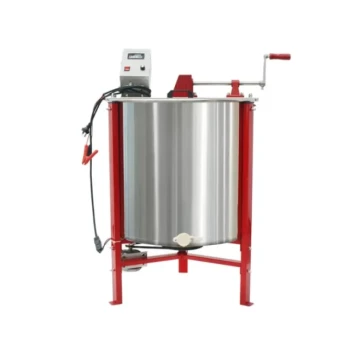
- If your primary focus is maximum yield and speed: Invest in a centrifugal extractor to preserve the drawn comb, allowing bees to refill frames immediately rather than rebuilding wax.
By accepting the loss of the wax comb, you gain an accessible, low-barrier entry point into honey processing.
Summary Table:
| Feature | Crush and Strain Method | Centrifugal Extraction |
|---|---|---|
| Equipment | Mason jars, cheesecloth, spoon | Centrifugal extractor, uncapping tools |
| Cost | Minimal (Household items) | High (Specialized machinery) |
| Comb Impact | Destroys wax comb | Preserves drawn comb |
| Speed | Slow (Gravity-dependent) | Fast (Mechanical) |
| Best For | 1-2 hives / Hobbyists | Commercial apiaries / Scaling up |
Elevate Your Honey Production with HONESTBEE
Transitioning from manual techniques to professional-grade efficiency? HONESTBEE is the dedicated partner for commercial apiaries and distributors seeking to optimize their harvest. We provide a comprehensive wholesale range of beekeeping equipment designed to save time and maximize yield.
Our portfolio includes:
- High-Performance Machinery: From precision honey-filling machines to durable hive-making equipment.
- Professional Tools: A full spectrum of beekeeping hardware and essential industry consumables.
- Value-Added Goods: Unique honey-themed cultural merchandise to expand your brand's reach.
Whether you are scaling your operation or supplying the next generation of beekeepers, we deliver the quality and expertise you need. Contact HONESTBEE today to explore our wholesale offerings and professional solutions!
Related Products
- Stainless Steel Double Layer Honey Strainer Sieve Filters
- HONESTBEE 3-Frame Manual Acrylic Honey Extractor
- Electric 4 Frame Tangential Honey Extractor
- Stainless Steel 3 Frame Manual Honey Extractor Spinner for Bee Honey Extraction
- electric honey extractor honey centrifuge 3 frame honey extractor stainless steel honey frame extractor
People Also Ask
- What are some typical mesh size combinations found in double sieve honey strainers? Expert Guide to Honey Filtration
- How is a double-layer honey filter used for monitoring Varroa mite infestation? Achieve Precise Pest Control Data
- How do double-layer honey filters and white blotting paper function together in Varroa mite detection? Expert Guide
- What is the function of honey sieves, strainers, and filters in processing? Master the 3 Stages of Honey Purity
- What mesh sizes are commonly used in double sieve honey strainers? Achieve Clean, Raw Honey Efficiently