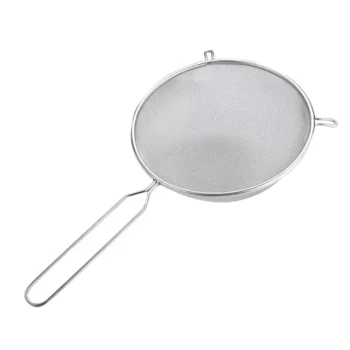
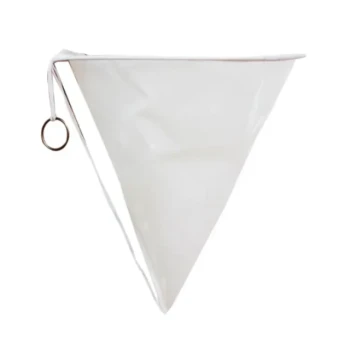
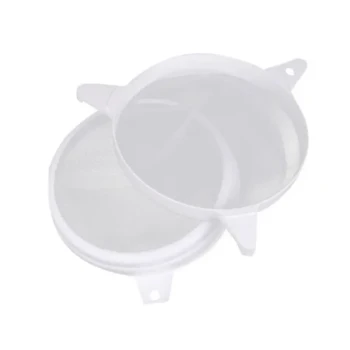
Precision microfiltration systems are primarily used to purify diluted honey solutions to ensure accurate spectrophotometric analysis of melanoidin levels. By employing 0.45 µm microporous membranes, these systems remove suspended impurities that would otherwise scatter light and skew absorbance readings, enabling a precise calculation based on the difference in absorbance at 450nm and 720nm.
The core value of this application is optical clarity: filtration isolates dissolved melanoidins from particulate matter, allowing for an objective assessment of honey quality, antioxidant properties, and storage degradation caused by the Maillard reaction.
The Role of Microfiltration in Sample Preparation
Eliminating Particulate Interference
Honey naturally contains suspended particles such as pollen, wax, and dust. These impurities cause light scattering, which interferes with precise optical measurements.
The 0.45 µm Standard
To address this, diluted honey is passed through a 0.45 µm microporous membrane. This specific pore size is critical for achieving "ultra-fine filtration," yielding a clear liquid that represents the chemical composition of the honey without the physical debris.
Quantifying Melanoidins via Spectrophotometry
Dual-Wavelength Calculation
Once filtered, the clear honey solution is analyzed using a spectrophotometer. The melanoidin content is quantified by measuring the difference in absorbance between two specific wavelengths: 450nm and 720nm.
Why These Wavelengths Matter
The reading at 450nm captures the absorption typical of brown pigments (melanoidins), while the reading at 720nm serves as a baseline correction. Subtracting the two isolates the specific contribution of melanoidins to the sample's optical density.
Monitoring the Maillard Reaction
Melanoidins are products of the Maillard reaction, a chemical process that occurs during honey storage. By accurately measuring these compounds, you are effectively monitoring the darkening of the honey and the evolution of its antioxidant properties over time.
Understanding the Trade-offs
Preparation Time vs. Data Accuracy
While visual inspection is fast, it is subjective and prone to error. Microfiltration adds a step to the process—requiring dilution and physical filtration—but it trades speed for objective, quantitative data that eliminates human error.
Specificity of Analysis
This method focuses specifically on dissolved compounds. If your goal is to analyze total turbidity or physical contaminants (like pollen count), this filtration step would be counterproductive as it removes the very particles you might intend to study.
Making the Right Choice for Your Goal
To apply this technical process effectively, consider your specific analytical objective:
- If your primary focus is Chemical Quality Control: Prioritize the 450nm/720nm differential measurement after filtration to track the Maillard reaction and antioxidant potential.
- If your primary focus is Commercial Color Grading: You may opt for general spectrophotometric readings (e.g., at 635 nm) to determine Pfund millimeter units, as this correlates with standard color classification.
Precise filtration is the bridge between a raw, cloudy sample and a scientifically accurate chemical profile.
Summary Table:
| Feature | Precision Microfiltration (0.45 µm) | Impact on Honey Analysis |
|---|---|---|
| Primary Goal | Remove suspended solids (pollen, wax) | Eliminates light scattering for clear readings |
| Key Wavelengths | 450nm (Brown pigments) & 720nm (Baseline) | Measures precise melanoidin concentration |
| Chemical Focus | Maillard Reaction products | Tracks storage degradation and antioxidant levels |
| Core Benefit | Optical Clarity | Converts subjective inspection into objective data |
Elevate Your Honey Processing Quality with HONESTBEE
At HONESTBEE, we understand that precision is the foundation of a successful honey business. Whether you are a commercial apiary or an equipment distributor, our professional-grade solutions are designed to optimize your operations from the hive to the final package.
We provide a comprehensive wholesale portfolio including:
- Advanced Machinery: Hive-making systems and precision honey-filling machines.
- Beekeeping Essentials: High-quality tools, industrial equipment, and consumables.
- Value-Added Goods: Honey-themed cultural merchandise to expand your market reach.
Partner with HONESTBEE to access industry-leading hardware and technical expertise that enhances your product quality and operational efficiency. Contact us today to explore our wholesale offerings and see how we can help your business thrive!
References
- Ewa Majewska, Paulina Pakosz. Comparison of Antioxidant Properties and Color of Selected Polish Honeys and Manuka Honey. DOI: 10.3390/foods13172666
This article is also based on technical information from HonestBee Knowledge Base .
Related Products
- Precision Honey Refractometer Instrument for Quality Assessment
- Honey Concentrating and Filtering Dehumidifier Machine 2T Capacity for Honey
- Digital Honey Refractometer for Precision Measurement of Optimal Honey Quality
- Professional Honey Filter with Tripod Support Stand
- Conical Nylon Honey Strainer Filter Bag for Beekeeping and Honey Filtration
People Also Ask
- How do professional scientific instruments contribute to honey quality testing? Ensure Purity and Market Compliance
- What environmental conditions are suitable for operating a honey refractometer? Expert Tips for High Accuracy
- What are the main benefits of using a honey refractometer? Ensure Honey Quality & Market Compliance
- How is a honey refractometer utilized? Master Sugar and Moisture Measurement for Premium Quality Honey
- What properties can be measured with a honey refractometer? Master Honey Quality & Stability