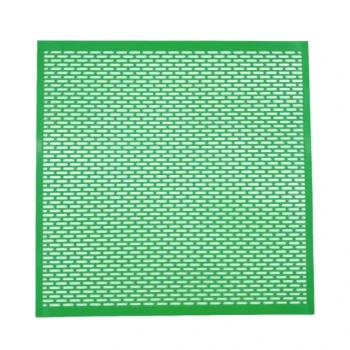
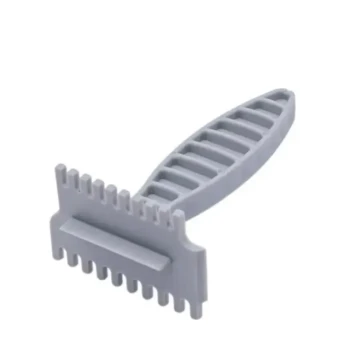
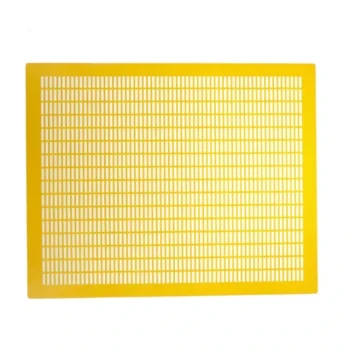
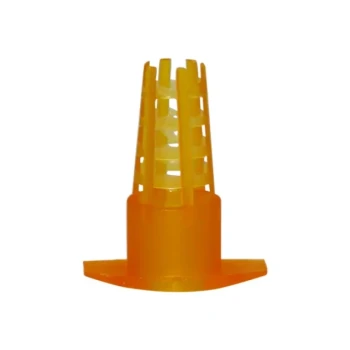
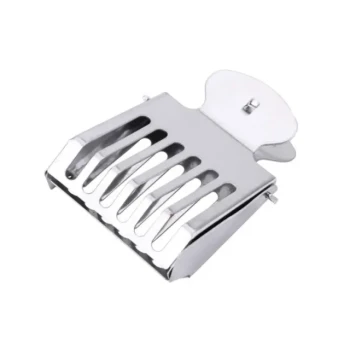
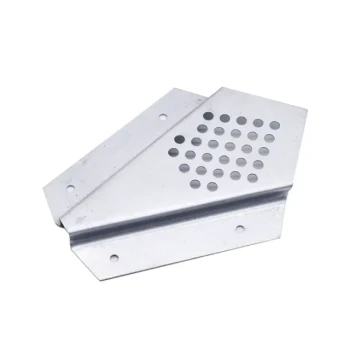
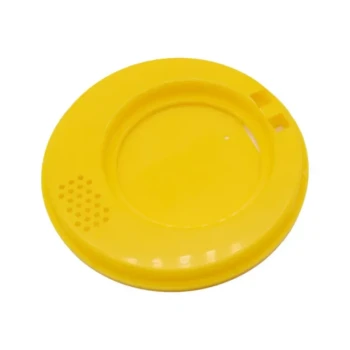
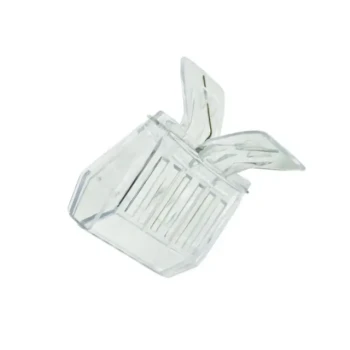
In a queenright rearing configuration, the queen excluder functions primarily as a selective security barrier. Its specific role is to physically segregate the laying queen in the lower chamber from the developing queen cells in the upper chamber, preventing her from destroying them while allowing the rest of the colony to function normally.
Core Takeaway: The queen excluder allows a beekeeper to maintain a "dual-state" hive. It keeps the colony strong and "queenright" (with a laying queen below) while simultaneously creating a protected, quasi-queenless environment above where nurse bees can safely raise new queens without interference.
The Mechanics of Queenright Rearing
Protecting the Royal Cells
The primary reference establishes that the physical barrier is the most critical function of the excluder in this context.
If a laying queen encounters developing queen cells (the "daughters"), her instinct is to view them as rivals. Without the excluder, she would access the rearing frame and destroy the cells to eliminate competition. The excluder guarantees the safety of the graft.
Permitting Resource Flow
While the queen is blocked, the excluder is designed to allow nurse bees to pass through freely.
Developing queen cells require immense amounts of resources, specifically royal jelly. The grid size ensures that the smaller worker bees can move from the brood nest below to the rearing frame above, maintaining the continuous feeding schedule required for high-quality queens.
The Physiological Environment
Creating a "Queenless" Illusion
Beyond simple physical blocking, the excluder assists in spatial management to alter the colony's behavior.
By separating the queen from the upper box, the concentration of her pheromones (queen substance) is reduced in the upper chamber. This creates a physiological environment where workers perceive a need to raise a new queen, inducing them to accept and finish the grafted cells, even though the colony remains queenright.
Maintaining Colony Strength
Unlike queenless rearing methods, where a colony might dwindle over time, the excluder allows the queen to continue laying eggs in the bottom chamber.
This ensures a constant supply of young bees. These young bees eventually migrate through the excluder to become the nurse bees that tend to the queen cells, creating a sustainable rearing loop.
Understanding the Trade-offs
Drone Entrapment
A common pitfall involves drones (male bees). Drones are larger than workers and cannot pass through the excluder.
If drones are present in the upper rearing chamber or hatch there, they will be trapped and unable to exit for cleansing flights. This can lead to dead drones clogging the excluder or stressing the colony.
The "Honey Barrier" Effect
While essential for rearing, excluders can sometimes act as a psychological barrier to workers.
In some configurations, if the excluder is perceived as too restrictive, workers may be reluctant to move up into the rearing chamber effectively. This requires the beekeeper to ensure the population density is high enough to force interaction across the barrier.
Making the Right Choice for Your Goal
To maximize the effectiveness of a queen excluder in a queenright system:
- If your primary focus is Cell Survival: Ensure the excluder is free of any warping or defects; even a single bent wire allows the queen to pass and destroy the entire batch.
- If your primary focus is Cell Quality: Bait the upper chamber with open brood frames to draw a heavy density of nurse bees through the excluder before introducing your grafted cells.
The excluder is the linchpin of the queenright method, transforming a single hive into both a nursery and a factory simultaneously.
Summary Table:
| Function | Mechanism | Benefit |
|---|---|---|
| Physical Protection | Blocks the queen from the upper chamber | Prevents the laying queen from destroying developing queen cells. |
| Worker Mobility | Allows worker and nurse bees to pass | Ensures larvae receive constant feeding and care with royal jelly. |
| Pheromone Control | Increases distance from queen substance | Induces the "queenless" illusion needed for cell acceptance. |
| Colony Continuity | Maintains egg-laying in bottom box | Ensures a sustainable supply of young bees for long-term rearing. |
Elevate Your Apiary's Production with HONESTBEE
As a professional in the beekeeping industry, your success depends on the precision and durability of your equipment. HONESTBEE specializes in supporting commercial apiaries and distributors with high-quality wholesale solutions. Whether you need precise queen excluders, advanced hive-making machines, or large-scale honey-filling equipment, our comprehensive portfolio is designed to optimize your operations.
From essential industry consumables to specialized beekeeping tools and honey-themed cultural merchandise, we provide everything you need to scale your business efficiently. Let us help you transform your hive management into a high-yield factory.
Ready to upgrade your equipment? Contact us today to discuss your wholesale needs!
References
- Risto Raimets, Reet Karise. Translocation of Tebuconazole between Bee Matrices and Its Potential Threat on Honey Bee (Apis mellifera Linnaeus) Queens. DOI: 10.3390/insects13010045
This article is also based on technical information from HonestBee Knowledge Base .
Related Products
- High Performance Plastic Queen Excluder for Beekeeping and Apiary Management
- Lightweight Durable Plastic Queen Excluder Scraper for Beekeeping
- Premium Wood Framed Metal Wire Queen Bee Excluder
- Professional Plastic Queen Excluder for Modern Beekeeping
- Metal Queen Bee Excluder for Beekeeping
People Also Ask
- What are the characteristics of a plastic queen excluder? Key Benefits for Cost-Effective Beekeeping
- What are the operational and cost advantages of using plastic queen excluders over metal or wire excluders in commercial hive management? Discover how they reduce labor, prevent wing damage, and lower total costs.
- What types of queen excluders are available for beekeepers? Choose the Right Tool for Your Hive
- Why are standardized hive frames and queen excluders essential for maintaining honey purity and quality? Scale Your Purity
- Do plastic queen excluders work? A Cost-Effective Solution for Modern Apiaries