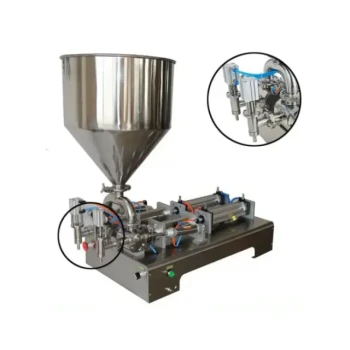
To clean a honey bottling machine effectively, you must follow a rigorous cycle of disassembly, soaking, and sanitization rather than a simple surface wipe-down. Start by disconnecting the power and disassembling key parts like nozzles and hoppers, then soak and scrub them with food-safe agents to eliminate sticky residue and bacteria.
Core Takeaway: Proper maintenance of honey bottling equipment requires a full disassembly and sanitization cycle to ensure food safety. Neglecting to remove and soak internal components leads to sugar crystallization and microbial growth, which compromises both the machine's mechanics and the quality of your honey.
Phase 1: Preparation and Disassembly
Secure the Machine and Workspace
Before touching any components, ensure the machine is completely unplugged from its power source to prevent accidental activation. Simultaneously, gather all necessary cleaning supplies, ensuring you have food-safe cleaners, soft brushes, and a food-grade disinfectant ready.
Remove Detachable Components
Consult the manufacturer’s manual to identify which parts are designed to be removed. Carefully disassemble these components, specifically focusing on nozzles and hoppers, as these areas have the highest contact with the honey and are prone to buildup.
Phase 2: Washing and Sanitizing
The Soaking Process
Once the parts are removed, submerge them in a solution of warm water and a food-safe detergent. Allow the components to soak for a sufficient period; this step is critical for loosening crystallized honey or sticky residue that is difficult to remove by scrubbing alone.
Scrubbing Stubborn Residue
After soaking, use soft brushes to manually scrub the components. Focus on crevices and threads where honey tends to accumulate, ensuring all visible buildup is removed and then rinse every part thoroughly with clean water.
Applying Sanitizer
Cleaning removes the soil, but sanitizing kills the bacteria. Apply a food-grade disinfectant to all cleaned surfaces and components. This step is non-negotiable for maintaining food safety standards and preventing fermentation or spoilage in future batches.
Phase 3: Drying and Reassembly
Complete Air Drying
Do not rush the reassembly process. Allow all parts to air dry completely in a clean environment. Reassembling wet components can trap moisture inside the machine, leading to corrosion (rust) or creating an environment conducive to microbial growth.
The Final Inspection
Perform a visual inspection of every part to ensure no residue or moisture remains. Once verified, reassemble the machine according to the manual, ensuring all parts are securely fastened and properly aligned for the next operation.
Common Pitfalls to Avoid
The Trap of Residual Moisture
A common error is reassembling the machine while parts are still damp to save time. This often leads to internal corrosion or mold growth, which can ruin the machine and contaminate the next batch of honey.
Using Abrasive Tools
Avoid using steel wool or harsh scrapers on your bottling machine. These can scratch polished surfaces, creating microscopic grooves where bacteria can hide and making future cleaning significantly more difficult.
Making the Right Choice for Your Goal
How to Apply This to Your Project
- If your primary focus is Equipment Longevity: Prioritize the Air Drying step to ensure zero moisture remains, protecting metal parts from rust and corrosion.
- If your primary focus is Food Safety: Double-check the Sanitization step, ensuring the disinfectant used is food-grade and applied to every surface that touches the honey.
Your commitment to a thorough cleaning process is the single best investment you can make in the consistency and safety of your final product.
Summary Table:
| Cleaning Phase | Key Action Items | Tools/Materials Required |
|---|---|---|
| 1. Preparation | Power off, disassemble nozzles and hoppers | Manufacturer's manual, wrenches |
| 2. Washing | Soak in warm water, scrub crevices | Food-safe detergent, soft brushes |
| 3. Sanitizing | Apply disinfectant to all contact surfaces | Food-grade sanitizer |
| 4. Reassembly | Complete air drying, visual inspection | Clean, dry environment |
| Avoid | Metal scrapers, reassembling while wet | Steel wool, abrasive cleaners |
Elevate Your Apiary Operations with HONESTBEE
Maintaining your honey bottling machine is just one step in running a successful commercial honey business. At HONESTBEE, we specialize in empowering commercial apiaries and distributors with the high-performance tools and machinery needed to scale production efficiently.
From advanced honey-filling machines designed for easy cleaning to a full spectrum of beekeeping hardware and essential consumables, we provide everything you need to maintain the highest food safety standards and product quality.
Ready to upgrade your equipment or stock up on wholesale supplies?
Contact our specialists today to learn how our comprehensive wholesale offerings can streamline your business and maximize your honey yield.
Related Products
- Semi Automatic Small Honey Bottle Filling Machine Honey Filler
- Manual Honey Filling Machine Bottling Machine for Honey
- Economy Small Honey Filling Machine Honey Bottle Filler Packaging Machine
- Precision Durable Efficient HONESTBEE Rotary Honey Filling Machine
- Automatic Honey Filling and Filtering Machine for Beekeeping Bottle Filling
People Also Ask
- What is a semi-automatic honey filler? Scale Your Honey Production with Precision and Efficiency
- What does the honey packaging process in a factory typically involve? A Step-by-Step Guide to Quality Honey Production
- What challenges can arise from packaging honey without a suitable filling machine? Optimize Your Production Today
- What are the different types of honey filling machines based on automation level? A Guide for Apiaries & Distributors
- What technical advantages do honey filling and packaging machines provide? Optimize Your Large-Scale Production