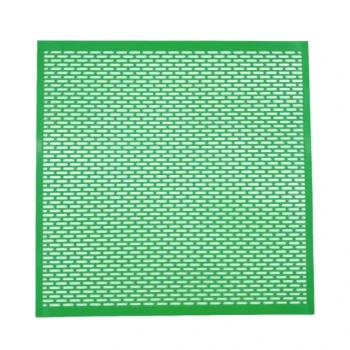
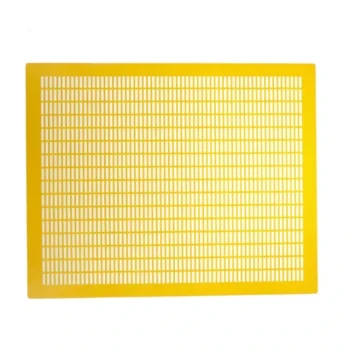
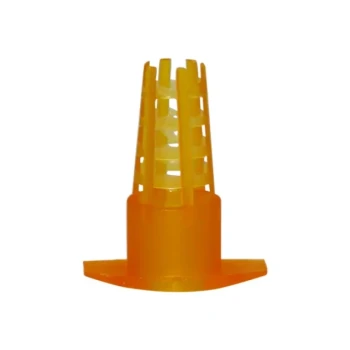
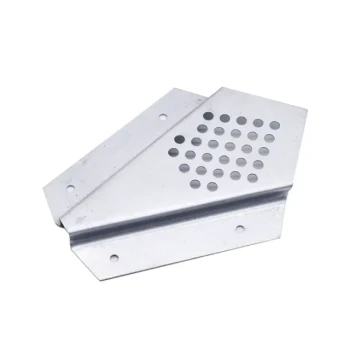
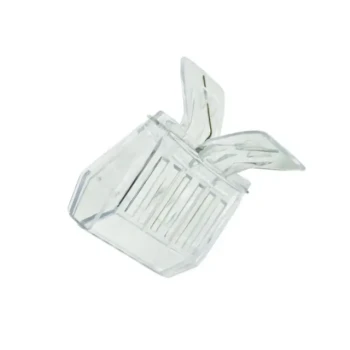
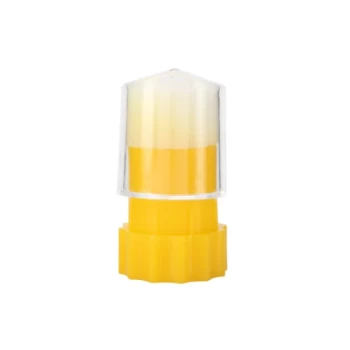
A queen excluder is a precision filtration device designed to segregate the queen bee from specific areas of the hive based on physical size. By utilizing a grid with openings sized precisely between the thorax width of a worker bee and a queen bee, it allows workers to pass through freely while physically confining the queen to the brood chamber.
Core Takeaway The queen excluder is the primary control mechanism for separating the colony's reproductive efforts from its resource storage. By confining egg-laying to the lower boxes, it guarantees that honey harvested from the upper "supers" remains free of larvae, biological impurities, and brood cocoons.
The Mechanics of Hive Segmentation
The Size-Exclusion Principle
The technical function relies entirely on the biological dimorphism between castes. The grid openings are calibrated to be passable by smaller worker bees but impassable by the larger, gravid queen.
This creates a semi-permeable barrier within the hive stack. It effectively designates a "reproductive zone" (brood box) and a "storage zone" (honey super) without inhibiting the flow of resources or worker traffic.
Ensuring Product Quality and Integrity
Preventing Contamination During Extraction
The most critical commercial function of the excluder is the prevention of brood rearing in honey supers. If a queen lays eggs in honey frames, the subsequent extraction process becomes hazardous to the product's quality.
Centrifuging frames containing larvae can release larval fluids into the honey. Using an excluder eliminates this risk, ensuring the final product meets purity standards.
Protecting Wax Infrastructure
Honeycomb used for brood rearing eventually contains cocoons left behind by hatching bees. These cocoons are highly attractive to wax moths, a significant pest in stored equipment.
By excluding the queen, the wax in honey supers remains "virgin" (free of cocoons). This results in cleaner wax that is easier to store and less susceptible to pest damage during the off-season.
Operational Management Applications
Streamlining Colony Inspections
In large commercial operations, locating a single queen among thousands of workers is time-consuming. An excluder serves as a diagnostic tool to verify the queen's location.
By placing an excluder between two hive bodies and waiting three days, a beekeeper can identify which box contains the queen by checking for the presence of newly laid eggs. This significantly reduces the time required for hive management.
Preventing Colony Absconding
During critical phases such as initial colony transfer or large-scale breeding, the excluder functions as a security gate.
By physically locking the queen within the hive, the device prevents her from leading the colony to abscond (flee). This ensures successful colonization and stability when establishing new hives in a specific area.
Operational Considerations
The Necessity of Exclusion
While the excluder restricts the queen, it is a vital component for scalable honey production. Without it, fall management becomes complicated as brood becomes scattered throughout the stack.
However, it is a restriction device. Beekeepers must ensure the brood chamber below the excluder provides sufficient space for the queen to lay, otherwise, the colony's growth rate may be artificially capped.
Making the Right Choice for Your Goal
When integrating queen excluders into your apiary workflow, consider your primary objective:
- If your primary focus is Maximum Honey Purity: Use excluders on all production hives to guarantee honey supers are 100% free of larvae and biological debris during extraction.
- If your primary focus is Swarm Control & Colonization: Utilize excluders temporarily during transfers to lock the queen in place and prevent the colony from absconding.
- If your primary focus is Efficiency in Inspections: Employ excluders as a temporary divider to isolate the queen's location based on egg presence, reducing search time.
The queen excluder transforms the hive from a chaotic biological organism into a structured, compartmentalized production unit.
Summary Table:
| Technical Feature | Commercial Benefit | Operational Impact |
|---|---|---|
| Size-Exclusion Grid | Prevents queen entry to supers | Guarantees larvae-free, pure honey extraction |
| Caste Segregation | Isolates reproductive zone | Maintains virgin wax and reduces pest attraction |
| Physical Barrier | Confines queen to brood box | Simplifies queen finding and prevents absconding |
| Flow Optimization | Allows worker passage | Enables scalable honey production and storage |
Maximize Your Apiary Productivity with HONESTBEE
At HONESTBEE, we understand that commercial success in beekeeping relies on precision and reliability. As a dedicated partner to commercial apiaries and distributors, we provide a comprehensive wholesale range of professional-grade beekeeping tools, from precision-calibrated queen excluders to high-capacity honey-filling and hive-making machinery.
Whether you are scaling your honey production or stocking essential consumables, our portfolio is designed to enhance your operational efficiency and product integrity. Contact us today to discover how our premium equipment and industry expertise can support your growth and deliver superior results for your business.
References
- Aniketa Horo, J.M. Singh. An Economic Analysis of Stationary Beekeeping in the Northern States of India. DOI: 10.55446/ije.2023.1136
This article is also based on technical information from HonestBee Knowledge Base .
Related Products
- High Performance Plastic Queen Excluder for Beekeeping and Apiary Management
- Professional Plastic Queen Excluder for Modern Beekeeping
- Lightweight Durable Plastic Queen Excluder Scraper for Beekeeping
- Metal Queen Bee Excluder for Beekeeping
- Premium Wood Framed Metal Wire Queen Bee Excluder
People Also Ask
- What are the characteristics of a plastic queen excluder? Key Benefits for Cost-Effective Beekeeping
- What are the operational and cost advantages of using plastic queen excluders over metal or wire excluders in commercial hive management? Discover how they reduce labor, prevent wing damage, and lower total costs.
- What types of queen excluders are available for beekeepers? Choose the Right Tool for Your Hive
- Why are standardized hive frames and queen excluders essential for maintaining honey purity and quality? Scale Your Purity
- Do plastic queen excluders work? A Cost-Effective Solution for Modern Apiaries