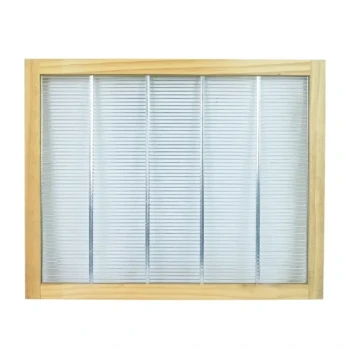
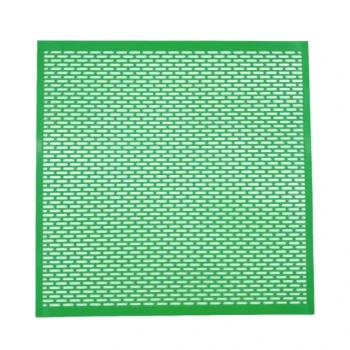
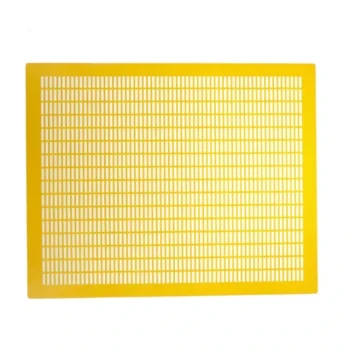
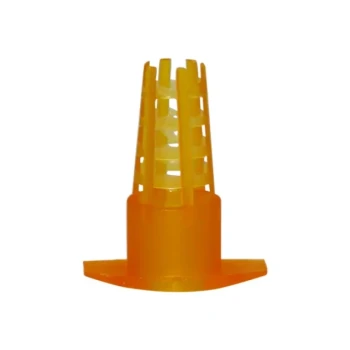
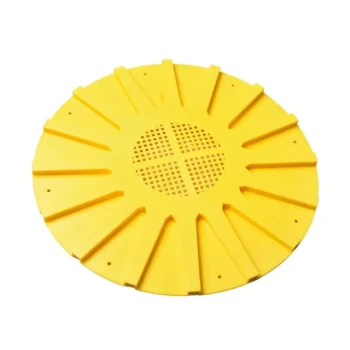
A vertical queen excluder functions as a precise biological filter within the hive's architecture. Its primary technical role is to serve as a physical barrier that confines the queen to a designated brood zone, preventing her from laying eggs in the honey storage areas. This restriction creates a clean, mechanical separation between reproductive activities and resource accumulation.
By enforcing a strict boundary between the brood nest and honey supers, the excluder standardizes cell usage. This guarantees that honey cells remain uncontaminated by larvae, enabling the independent and accurate sampling of worker, drone, and honey cells.
The Mechanics of Cell Differentiation
Establishing Zonal Integrity
The excluder physically divides the beehive into two distinct functional areas: the brood chamber and the honey storage zone.
Without this barrier, the queen would naturally expand the brood nest into the honey supers. The excluder forces a rigid organization where specific frames are dedicated exclusively to biological development or resource storage.
Restricting Reproductive Output
The device works by exploiting the size difference between the queen and worker bees.
The grid allows smaller worker bees to pass through to store nectar but is too narrow for the larger queen. This ensures that no eggs are deposited in the upper chambers, effectively "locking" the cell type in that zone to honey storage only.
Enabling Accurate Sampling and Data
Ensuring Sample Purity
For technical analysis, it is critical that samples are not cross-contaminated.
By preventing the queen from entering the storage zone, the excluder ensures the honey cells remain free of larvae. This allows technicians to trust that a cell selected from the storage zone contains only honey, not developing brood.
Independent Cell Sampling
The primary technical benefit of this separation is the ability to differentiate and sample specific cell types.
Because the zones are distinct, researchers and technicians can perform independent sampling of worker cells, drone cells, and honey cells. There is no ambiguity regarding the contents of the cells in the supers, making data collection systematic and repeatable.
Facilitating Economic Analysis
Beyond biological sampling, this differentiation supports precise measurement of production.
Technicians can use weighing methods to measure honey production at each stage of management. Because the honey supers contain no brood weight, the data reflects pure resource accumulation, providing essential inputs for accurate economic analysis.
Understanding the Trade-offs
The Requirement for Proper Placement
The efficacy of the excluder relies entirely on its correct position within the vertical stack.
It must be placed precisely between the brood chambers and the honey supers. If the barrier is bypassed or misplaced, the differentiation fails, and the data regarding cell types becomes unreliable.
Reliance on Physical Exclusion
The system depends on the physical inability of the queen to pass through the barrier.
While highly effective, this is a binary control method. It does not influence the behavior of the bees, but rather imposes a physical constraint that dictates the function of the hive's architecture.
How to Apply This to Your Project
To maximize the utility of a vertical queen excluder, align its use with your specific data requirements:
- If your primary focus is biological sampling: Rely on the excluder to create a contamination-free zone where worker, drone, and honey cells can be isolated and studied independently.
- If your primary focus is economic analysis: Use the excluder to ensure honey supers are free of brood, allowing for the precise weighing of surplus honey production without biological variables.
The vertical queen excluder is not just a barrier; it is a tool for standardization that turns a dynamic hive into a measurable, segmented system.
Summary Table:
| Feature | Technical Function | Benefit to Apiary Management |
|---|---|---|
| Physical Barrier | Restricts queen movement via grid size | Prevents egg-laying in honey supers |
| Zonal Integrity | Divides hive into brood & storage areas | Ensures uncontaminated honey cell sampling |
| Size Selection | Allows workers through, blocks queen/drones | Maintains pure honey cells for economic analysis |
| Standardization | Creates a segmented, measurable system | Enables systematic data collection and weighing |
Elevate Your Commercial Beekeeping with HONESTBEE
As a leading partner for commercial apiaries and global distributors, HONESTBEE understands that precision is the key to profitability. Our high-quality vertical queen excluders are engineered to ensure strict zonal integrity, allowing you to maximize pure honey yields and streamline biological sampling.
From advanced hive-making and honey-filling machinery to a full spectrum of durable beekeeping tools and essential consumables, we provide the comprehensive wholesale solutions your business needs to scale.
Ready to optimize your production and reduce contamination risks? Contact HONESTBEE today for a wholesale quote and discover how our specialized hardware and industry expertise can drive your success.
References
- Shunhua Yang, Kun Dong. Evaluating and Comparing the Natural Cell Structure and Dimensions of Honey Bee Comb Cells of Chinese Bee, <i>Apis cerana cerana</i> (Hymenoptera: Apidae) and Italian Bee, <i>Apis mellifera ligustica</i> (Hymenoptera: Apidae). DOI: 10.1093/jisesa/ieab042
This article is also based on technical information from HonestBee Knowledge Base .
Related Products
- Premium Wood Framed Metal Wire Queen Bee Excluder
- High Performance Plastic Queen Excluder for Beekeeping and Apiary Management
- Lightweight Durable Plastic Queen Excluder Scraper for Beekeeping
- Professional Dual Action Queen Excluder Scraper for Beekeeping
- Wooden Queen Bee Excluder for Beekeeping
People Also Ask
- What types of queen excluders are available for beekeepers? Choose the Right Tool for Your Hive
- Why are standardized hive frames and queen excluders essential for maintaining honey purity and quality? Scale Your Purity
- How does a queen-bee excluder function as a defense against Small Hive Beetles? Protect Your Honey with Resource Denial
- What is the purpose of an entrance queen excluder? Prevent Absconding and Stabilize Your New Honeybee Colony
- What is the function of a queen excluder? Maximize Honey Yield and Ensure Data Integrity for Your Apiary