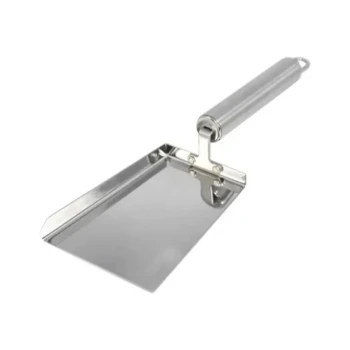
The technical justification for grinding dried pollen pellets is to significantly increase the surface area of the individual particles prior to mixing. This mechanical breakdown is the prerequisite for creating a homogenous "bee bread" matrix when the pollen is subsequently combined with honey. Without this reduction in particle size, it is impossible to achieve a uniform distribution of nutritional supplements or additives throughout the diet.
Core Takeaway Grinding is a critical homogenization step, not just a textural preference. By maximizing surface area, you ensure that additives disperse evenly, preventing dangerous concentration spikes and guaranteeing reliable nutritional consistency for the colony.
The Mechanics of Homogenization
Maximizing Surface Area
Dried pollen pellets are naturally coarse and resistant to absorption. Grinding them breaks these dense structures into fine particles.
This drastic increase in surface area allows the pollen to interact more effectively with viscous binders like honey. It prepares the physical substrate to accept and hold liquid components evenly.
Creating a Unified Matrix
The goal is to create a seamless bee bread matrix. Large pellets create voids and inconsistencies within the mixture.
A ground powder ensures that the pollen and honey fuse into a single, cohesive substance. This structural integrity is essential for the physical stability of the artificial diet.
Why Consistency Matters
Preventing Localized Concentration Spikes
When adding nutritional supplements to a diet, safety is paramount. If the pollen carrier is too coarse, additives may clump rather than disperse.
Grinding ensures these additives are spread thinly and evenly. This prevents "hotspots" or localized spikes where the concentration of an additive could become toxic or overwhelming to an individual bee.
Ensuring Dietary Homogeneity
Every bee feeding on the diet should receive the exact same nutritional formulation.
Homogeneity guarantees that there are no nutritional deficits in one section of the feed and surpluses in another. It ensures the scientific validity of the diet formulation is reflected in what the bees actually consume.
Common Pitfalls to Avoid
The Risk of Under-Processing
The most significant error in this process is insufficient grinding. Leaving the pollen in a semi-coarse state negates the benefits of the mixture.
If the particle size remains too large, the honey will coat the pellets rather than integrating with them. This leads to separation and inconsistent dosage of any added supplements.
Making the Right Choice for Your Goal
To ensure your artificial diet effectively supports your apiary, apply the following principles based on your specific objectives:
- If your primary focus is safety: Prioritize a fine grind to prevent additive clumping and avoid toxic concentration spikes in the feed.
- If your primary focus is nutritional consistency: Ensure the pollen is ground to a powder that allows for a perfectly homogenous mix with the honey binder.
Reliable artificial diets depend on the mechanical uniformity of their base ingredients.
Summary Table:
| Process Step | Technical Objective | Key Benefit |
|---|---|---|
| Particle Size Reduction | Break down dense pellets into fine powder | Maximizes surface area for honey absorption |
| Homogenization | Create a unified "bee bread" matrix | Ensures seamless integration of pollen and binders |
| Additive Dispersion | Prevent clumping and concentration spikes | Eliminates toxic hotspots and ensures feed safety |
| Consistency Control | Maintain uniform nutrient distribution | Guarantees every bee receives the same formulation |
Elevate Your Apiary's Nutritional Standards with HONESTBEE
At HONESTBEE, we understand that precision is the backbone of successful commercial beekeeping. Whether you are a large-scale apiary or a specialist distributor, our comprehensive range of wholesale beekeeping machinery and equipment—including high-performance grinding and mixing solutions—is designed to help you produce superior artificial diets and honey products.
From industrial-grade hive-making machines to precision honey-filling systems and essential consumables, we provide the tools you need to achieve perfect homogeneity and scientific consistency in your operations.
Ready to scale your production with industry-leading equipment?
Contact our expert team today to discuss your wholesale needs
References
- Franziska Böhme, Klaus Wallner. From field to food—will pesticide-contaminated pollen diet lead to a contamination of royal jelly?. DOI: 10.1007/s13592-017-0533-3
This article is also based on technical information from HonestBee Knowledge Base .
Related Products
- Heavy-Duty Ergonomic Stainless Steel Pollen Shovel
- Heavy-Duty Ergonomic Grip Galvanized Pollen Shovel
- Stainless Steel Pollen Shovel with Wooden Handle
- Plastic Bee Pollen Trap Strips Comb Catcher Collector
- High Performance Cordless Electric Bee Shaker for Beekeeping
People Also Ask
- How is pollen cleaned after it has been dried? Master Efficient Separation for Pure Bee Pollen
- What methods are used to clean harvested bee pollen? Scale Your Beekeeping Operations with the Right Technique
- How can harvested bee pollen be cleaned to remove impurities? Efficient Methods for Commercial and Hobbyist Beekeepers
- How do bee pollen collection tools affect the quality of bee pollen used in functional dairy ice cream production?
- What is the technical significance of using specialized cutting tools for propolis? Master Precision Pollen Harvesting