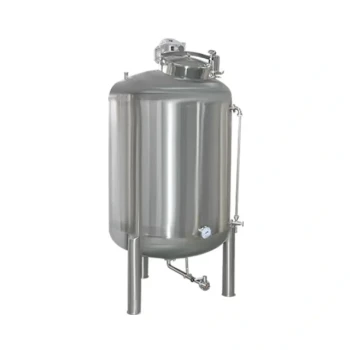
Standardized honey processing facilities are the industrial control centers of the apiary supply chain. They function as controlled environments designed to transform raw, variable apiary output into stable, commercial-grade products through specific technical processes like extraction, filtration, dehydration, and packaging. By utilizing specialized machinery to meet strict hygiene standards, these facilities serve as the mandatory technical gateway for beekeepers to obtain quality certifications and access high-end regulated markets.
Standardized processing facilities act as the critical "stabilization layer" in honey production, converting raw biological material into a consistent, safe commodity by controlling moisture, removing impurities, and ensuring regulatory compliance without degrading nutritional value.
Core Technical Functions
Moisture Stabilization and Dehydration
Raw honey often contains high water content, which creates a significant risk of fermentation and spoilage. The primary technical role of the processing facility is moisture control.
Through industrial dehydration and concentration techniques, these facilities stabilize the honey’s water content. This prevents fermentation, extends shelf life, and ensures the product remains chemically stable during storage and transport.
Impurity Removal and Clarity
Honey extracted directly from the hive contains micro-impurities, wax, and debris that affect clarity and texture. Processing facilities utilize multi-stage filtration systems to purify the liquid.
This process removes physical contaminants to improve the visual appeal and physical quality of the honey. Crucially, advanced systems do this while attempting to preserve the honey's natural characteristics, preparing it for retail standards.
Precision Extraction and Packaging
Standardized facilities replace manual, fragmented handling with automated machinery. This includes specialized equipment for extraction and filling.
Industrial filling machines ensure uniform product specifications and consistent output volume. This automation is essential for meeting the volume requirements of large-scale commercial buyers and retail chains.
Standardization as a Quality Gateway
Ensuring Food Safety Compliance
The facility serves as a physical implementation of safety protocols. By adopting HACCP (Hazard Analysis and Critical Control Points) management systems, these facilities actively prevent contamination.
This controlled environment is a prerequisite for entering international markets. It provides the documented hygiene chain required by regulators, shifting honey from a raw agricultural product to a certified food item.
Chemical and Nutritional Consistency
Beyond hygiene, these facilities house quality testing equipment. They monitor physical-chemical indicators, such as glucose and fructose ratios.
This testing addresses the "quality instability" often found in fragmented or small-scale processing. It builds consumer trust, particularly for honey intended for medical or healthcare applications where chemical purity is non-negotiable.
Understanding the Trade-offs
Processing vs. Nutritional Preservation
While processing ensures safety and stability, it introduces a risk to the honey's biological activity. The technical challenge is using precise temperature control to filter and dehydrate the honey without destroying heat-sensitive enzymes and nutrients.
Improperly managed industrial processing (excessive heating) can sterilize the honey too aggressively, stripping it of the unique value that commands higher prices.
Capital Intensity vs. Scalability
Standardized facilities require significant investment in specialized hardware (filtration units, dehydration tanks, testing labs).
While this machinery increases efficiency and compensates for raw material shortages through automation, it raises the barrier to entry. It shifts the production model from low-cost artisanal methods to a high-overhead industrial model that demands consistent volume to be viable.
Making the Right Choice for Your Goal
Whether you are a local cooperative or an export-focused enterprise, the role of the processing facility changes based on your target market.
- If your primary focus is International Export: You must prioritize facilities with HACCP-certified hardware and dehydration capabilities to meet strict border regulations and prevent spoilage during shipping.
- If your primary focus is High-End Medical/Health Markets: You must focus on facilities with advanced laboratory testing and precise temperature controls to guarantee chemical purity and preserve active nutritional components.
- If your primary focus is Local Retail Scalability: You should leverage automated filling and packaging machinery to ensure uniform product appearance and increase production efficiency.
Ultimately, the standardized processing facility is not just a factory; it is the technical validation engine that turns raw nature into a trusted, marketable asset.
Summary Table:
| Technical Function | Description | Key Benefit |
|---|---|---|
| Moisture Control | Industrial dehydration and concentration | Prevents fermentation; extends shelf life |
| Multi-stage Filtration | Removal of wax, debris, and impurities | Enhances clarity and meets retail standards |
| Automated Filling | Precision extraction and packaging machinery | Ensures uniform volume and high-speed output |
| Quality Testing | Chemical indicator monitoring (e.g., glucose) | Guarantees nutritional consistency and safety |
| Temperature Control | Precise heat management during processing | Preserves vital enzymes and biological activity |
Scale Your Honey Production with HONESTBEE Professional Solutions
Transitioning from artisanal methods to a standardized industrial model requires the right technical partner. HONESTBEE empowers commercial apiaries and honey distributors with the professional-grade tools needed to dominate the global market.
From high-capacity honey-filling machines and specialized filtration units to industrial-scale hive-making equipment, we provide the complete hardware spectrum to ensure your honey meets the strictest international standards. Whether you are looking to improve your export compliance or optimize your local retail packaging, our team is ready to deliver the machinery and consumables that drive efficiency.
Ready to upgrade your honey processing facility? Contact HONESTBEE Today for a Professional Consultation
References
- Lidiane Nunes Lima, Wbaneide Martins de Andrade. Cadeia produtiva da apicultura no Nordeste. DOI: 10.14393/rct185270836
This article is also based on technical information from HonestBee Knowledge Base .
Related Products
- Double Wall Honey Heating Stirring Homogenizer Mixing Machine with Various Capacity
- Honey Concentrating and Filtering Dehumidifier Machine 2T Capacity for Honey
- Electric Double Wall Honey Filtering Machine Purifier Equipment for Honey Processing Plant
- 0.5T Capacity Honey Dehumidifier Dryer with Vacuum Heating and Thickening Filtering Machine
- Heavy Duty Stainless Steel Honey Processing Machine Decrystallizing Tank
People Also Ask
- What impact do homogenizers or oscillating equipment have on honey microbial detection? Ensure Testing Accuracy
- Why is thorough mechanical stirring and homogenization emphasized in honey processing? Ensure Sample Accuracy
- How do heating equipment and homogenizers liquefy crystallized honey? Expert Guide to Professional Honey Processing
- How does the honey mixer handle different types of honey? Master Viscosity for Perfect Blends
- What are the main components of the honey mixer? Engineered for Gentle, Efficient Honey Processing