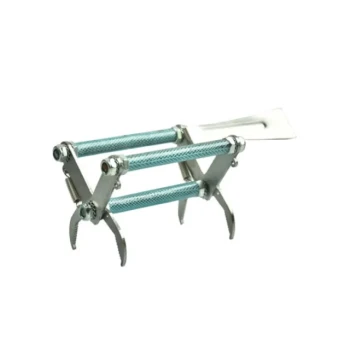
The technical value of an Industrial Crane Scale lies in its ability to capture precise hive mass data non-invasively. By utilizing the lever principle, this tool allows operators to monitor food consumption and insulation performance without breaching the hive's thermal seal or removing protective wraps.
This equipment transforms overwintering management from hazardous guesswork into a data-driven science, enabling the tracking of critical resources while eliminating the severe thermal stress caused by traditional internal inspections.
Preserving Thermal Integrity
The primary risk during winter apiary management is the loss of colony heat.
Eliminating Thermal Shock
Traditional inspections require opening the hive, which immediately releases the warm air bubble the bees have generated.
Industrial Crane Scales eliminate this necessity. By lifting the hive externally using the lever principle, you obtain mass data without exposing the colony to freezing ambient temperatures.
Maintaining Insulation Continuity
Large-scale operations often utilize standardized insulation wrap systems. Removing these for inspection is labor-intensive and disrupts the hive's microclimate.
Using a crane scale allows the insulation to remain completely intact. This ensures that the energy-saving effectiveness of the wrapping system is never compromised for the sake of data collection.
Data-Driven Resource Management
Beyond simple survival, the crane scale provides quantitative data that drives operational efficiency.
Calculating Consumption Rates
The mass of a hive in winter is a direct proxy for food stores. By regularly measuring mass changes, you can calculate the exact rate of food consumption.
This data allows for timely emergency feeding interventions only when necessary, rather than on a preventative schedule that wastes labor and resources.
Scientifically Evaluating Insulation
The primary reference highlights the ability to scientifically evaluate insulation wrap systems.
By comparing mass loss (energy consumption) across different hives, you can empirically determine which insulation methods result in the lowest metabolic cost to the bees. This turns insulation choice into an objective engineering decision.
Operational Scalability
While modern frame hives and industrial manufacturing streamline standard operations like swarming and extraction, winter monitoring remains a bottleneck.
High-Throughput Monitoring
In large-scale apiaries, speed is essential. The crane scale method is significantly faster than physical inspection.
It allows a single operator to log the status of hundreds of colonies in a fraction of the time required for internal checks.
Leveraging Standardization
Industrial hive-making produces hives with precise, uniform specifications.
This standardization ensures that tare weights are consistent across the apiary. Consequently, the data gathered by the crane scale is comparable across the entire operation, reducing variables and increasing data reliability.
Understanding the Trade-offs
While the Industrial Crane Scale is a powerful tool, it is not a "magic bullet" for all colony diagnostics.
External Variables Affecting Mass
The scale measures total mass, not just biology. External factors such as heavy snow load, ice accumulation, or water absorption by wooden components can skew data.
Operators must account for these environmental variables to avoid misinterpreting a heavy hive as "full of food" when it is actually covered in ice.
Indirect Health Monitoring
Mass monitoring is a proxy for food stores, not a direct measure of biological health.
It cannot detect the presence of a queen, brood diseases, or varroa mite levels. It should be viewed as a resource management tool rather than a comprehensive diagnostic of colony pathology.
Making the Right Choice for Your Goal
The utility of an Industrial Crane Scale depends on your specific operational objectives for the winter season.
- If your primary focus is Colony Survival: Use the scale to identify light hives early without breaking the thermal seal, intervening only when mass drops below a critical threshold.
- If your primary focus is Operational Efficiency: Use the scale to A/B test different insulation strategies, selecting the system that results in the lowest food consumption rates.
By integrating precise mass monitoring, you move from reactive crisis management to proactive, temperature-safe stewardship of your apiary.
Summary Table:
| Technical Feature | Benefit to Apiary | Operational Impact |
|---|---|---|
| Non-Invasive Lifting | Eliminates thermal shock and heat loss | High survival rates in winter |
| Precision Mass Data | Calculates exact food consumption rates | Reduced waste and timely feeding |
| Lever-Principle Design | Rapid monitoring of hundreds of hives | Lower labor costs and scalability |
| Scientific Comparison | Empirically tests insulation performance | Objective choice of wrapping systems |
| Standardized Tare | Consistent data across uniform hive units | Increased reliability of analytics |
Maximize Your Colony Survival with HONESTBEE
Transition from guesswork to precision data with industrial-grade beekeeping tools from HONESTBEE. As a premier supplier for commercial apiaries and global distributors, we provide the full spectrum of high-performance machinery—from hive-making and honey-filling systems to the specialized tools needed for large-scale winter management.
Our comprehensive wholesale offering ensures your operation benefits from the latest technical innovations to reduce labor and protect your investment. Partner with us to scale your apiary efficiently.
Contact HONESTBEE Today for Wholesale Solutions
References
- Ashley L. St. Clair, Adam G. Dolezal. Honey bee hive covers reduce food consumption and colony mortality during overwintering. DOI: 10.1371/journal.pone.0266219
This article is also based on technical information from HonestBee Knowledge Base .
Related Products
- Heavy-Duty Lever-Action Frame Grip with Hive Tool
- Heavy-Duty Ergonomic Grip Galvanized Pollen Shovel
- Professional Dual Action Queen Excluder Scraper for Beekeeping
- HONESTBEE AC Powered Wire Embedder with Alligator Clips
- 5 Gallon Pail Opener Bucket Opener Tool for Honey Bucket
People Also Ask
- What is the purpose of using frame grips in beekeeping operations? Elevate Your Apiary Precision & Hive Safety
- What is a frame grip and how is it used? Secure Your Hive Inspections with Ease
- How does the frame lifter hive tool function? Master Safe and Gentle Frame Removal
- What is the specific design and purpose of a frame lifter hive tool? Master Gentle Hive Inspections
- How should Frame Grips be maintained after use? A Guide to Biosecurity and Tool Longevity