To handle the honey extraction process in early summer, you typically require three distinct categories of equipment: uncapping tools (knives or scratchers) to open the cells, extraction machinery (centrifuges) to spin the honey out, and filtration/storage vessels (food-grade pails) to purify and hold the harvest.
Because June is often a peak season, the immediate priority is verifying the functionality of your mechanical extractors and securing a sufficient supply of storage containers before the harvest begins.
Core Takeaway Success in early summer extraction relies not just on owning the tools, but on operational readiness—ensuring machinery is calibrated to preserve the honeycomb structure and that you have ample food-grade capacity to manage the volume of the flow without bottlenecks.
Operational Readiness for Peak Season
Verifying Machinery Functionality
Before a single frame is pulled, you must inspect your extraction machinery. The primary reference emphasizes that June is the critical window to test your honey extractors and uncapping tools.
Ensuring these mechanical components run smoothly prevents downtime during the time-sensitive harvest.
Securing Storage Capacity
You must estimate your yield and secure a sufficient supply of containers.
Crucially, these must be food-grade containers designed specifically for storing and transporting honey. Running out of storage in the middle of a harvest is a common logistical failure point.
Essential Uncapping Tools
Manual Precision Tools
For the initial phase, you need tools to remove the wax operculums (cappings) that seal the honey.
A specialized honey harvest knife (often a cold knife) allows for clean, flat incisions. This precision minimizes physical damage to the internal structure of the comb and limits disturbance to the colony. An uncapping scratcher is also essential for reaching low spots the knife might miss.
Mechanized Uncappers
For larger operations, mechanized uncapping equipment is used to strip the wax layer.
This machinery increases throughput and allows for the efficient separation of beeswax. This wax can then be collected as a high-value industrial byproduct rather than being discarded as waste.
The Extraction Machinery
The Role of the Centrifuge
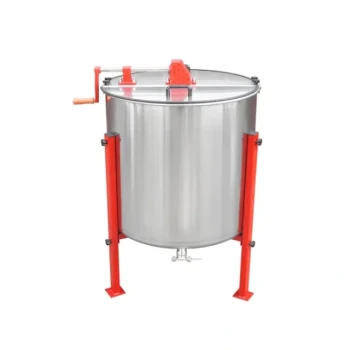
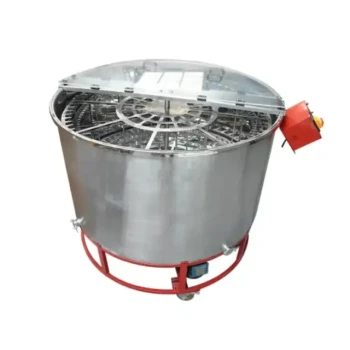
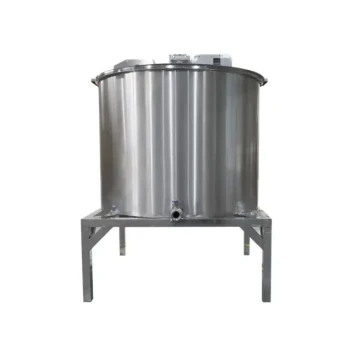
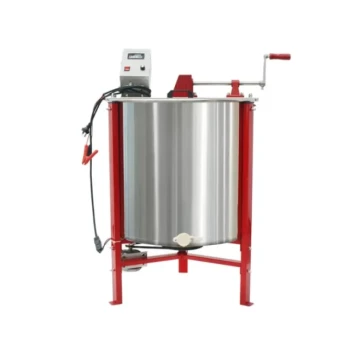
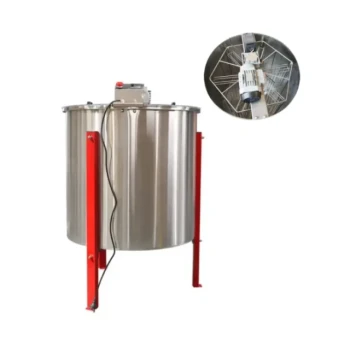
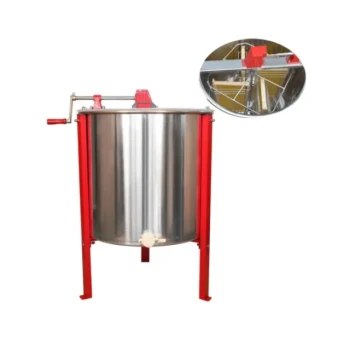
The centerpiece of modern extraction is the specialized honey centrifuge (or spinning extractor).
This machine utilizes high-speed rotation to generate centrifugal force. This force expels the honey from the frames without requiring destructive manual pressing.
Preserving Nutritional Quality
Centrifuges are superior to heating methods or manual pressing because they preserve the honey's chemistry.
By extracting physically rather than thermally, you protect heat-sensitive nutritional components, such as proteins and enzymes. This maintains the original purity and sensory quality of the harvest.
Protecting the Honeycomb
The mechanical advantage of a spinning extractor extends to the hardware of the hive.
It separates the honey without destroying the fragile beeswax structure. This allows you to return intact frames to the hive, preserving the colony’s resources and reproductive capacity.
Filtration and Finishing Tools
Clearing the Frames
Before extraction, you must separate the bees from the honey supers.
A blower is often used to gently move bees away from the hive. Alternatively, a soft bee brush allows for the manual removal of bees from individual frames without agitation.
Filtering and Settling
Once extracted, the honey must be processed to remove impurities like wax bits or propolis.
A bottling pail with filters is standard for straining the honey immediately after it leaves the extractor. Following filtration, the honey requires a "decanting" period, where remaining bubbles and fine impurities rise to the surface for final removal.
Understanding the Trade-offs
Mechanical vs. Manual Extraction
A common pitfall is underestimating the value of preserving the comb.
Manual pressing is cheaper but destructive; it forces bees to rebuild comb, which costs them energy and honey stores. Centrifugal extraction requires a higher upfront investment in machinery but dramatically increases future yields by saving the comb.
Speed vs. Precision
While mechanized uncappers are fast, they can lack the nuance of a hand-held knife.
Over-reliance on automated uncappers without manual follow-up (scratching) can leave honey trapped in low corners of the frame. Conversely, relying solely on manual tools during a peak June flow can lead to fatigue and bottlenecks.
Making the Right Choice for Your Goal
- If your primary focus is preserving hive health: Prioritize a high-quality centrifugal extractor, as it saves the comb structure and allows bees to focus on honey production rather than wax rebuilding.
- If your primary focus is product purity: Invest in high-grade filtration and settling tanks (decanting) to ensure the final product is free of debris and retains its enzymatic value by avoiding heat.
Ultimately, the best extraction setup balances mechanical efficiency with biological respect for the hive, ensuring you harvest the surplus without compromising the colony's future.
Summary Table:
| Equipment Category | Essential Tools | Primary Function |
|---|---|---|
| Uncapping | Specialized Knives & Scratchers | Removing wax seals while preserving comb structure |
| Extraction | Centrifugal Honey Extractors | Using centrifugal force to spin honey out without heat |
| Processing | Blowers & Soft Bee Brushes | Gently clearing bees from supers before harvesting |
| Refinement | Pails with Filtration Systems | Removing wax particles and impurities via decanting |
| Storage | Food-Grade Containers | Securely holding and transporting high-volume yields |
Maximize Your Honey Yield with HONESTBEE Professional Equipment
At HONESTBEE, we specialize in empowering commercial apiaries and distributors with high-performance beekeeping solutions. Whether you are scaling up your operation or supplying the industry, our comprehensive wholesale portfolio delivers the durability and precision you need for a successful harvest.
Our value to your business:
- Advanced Machinery: From high-capacity honey-filling machines to specialized hive-making equipment.
- Precision Tools: Professional-grade extractors and uncapping tools designed to preserve honeycomb integrity.
- Complete Supply Chain: A full spectrum of essential industry consumables and honey-themed cultural merchandise.
Ready to eliminate bottlenecks and enhance your production efficiency?
Contact our wholesale team today to discuss your equipment requirements and secure your peak season supplies.
Related Products
- Electric 8 Frame Honey Spinner Extractor Equipment for Beekeeping
- 6 Frame Manual Stainless Steel Honey Extractor Beekeeping Equipment
- HONESTBEE 2 Frame Manual Acrylic Honey Extractor Beekeeping Equipment
- HONESTBEE 72 Frame Industrial Electric Honey Extractor for Beekeeping
- 32 Frame Commercial Electric Honey Extractor for Beekeeping and Honey Production
People Also Ask
- What are the advantages of an electric honey extractor? Boost Efficiency and Scale Your Honey Production
- What are the characteristics of electric honey extractors? Boost Your Apiary Efficiency with Automated Technology
- What are the disadvantages of using an electric honey extractor? Weighing Cost, Power, and Comb Safety
- What are the features of an electric honey extractor? Boost Your Apiary's Productivity with Motorized Efficiency
- What are the technical advantages of electric honey extractors? Maximize Yield and Protect Your Bee Colony