The method you choose depends entirely on the volume of your harvest. For small batches, manual cleaning using screens, trays, and tweezers is the standard approach, while commercial operations rely on specialized machinery that utilizes fans and agitation to separate debris from the pellets.
Core Insight Cleaning bee pollen is a function of scale rather than complexity. While hobbyists can achieve high purity through manual sorting and sieving, commercial viability requires adapting agricultural seed-cleaning technologies to automate the separation of impurities like insect parts and plant debris.
Manual Cleaning for Small Batches
Using Screens and Trays
For small quantities of pollen, the most effective tool is a simple screen or flat tray.
Spreading the pollen out creates a single layer, allowing you to easily identify foreign objects.
This method is best suited for hobbyists or small-scale beekeepers where volume does not justify equipment investment.
The Role of Hand Tools
Once spread, you can use tweezers to physically remove visible debris.
Common impurities found at this stage include bee wings, beetles, and other large waste materials.
Hand picking ensures that only the debris is removed, leaving the delicate pollen pellets intact.
Utilizing Sieves for Fine Cleaning
To improve efficiency, you can employ a multi-step sieving process.
First, a fine fiber-glass mesh sieve can be used to remove dust and very small particles.
Next, passing the pollen through 3mm mesh screens helps separate larger debris from the pollen pellets.
Mechanical Cleaning for Commercial Operations
Air and Agitation Technology
Commercial processing requires speed and consistency that manual methods cannot provide.
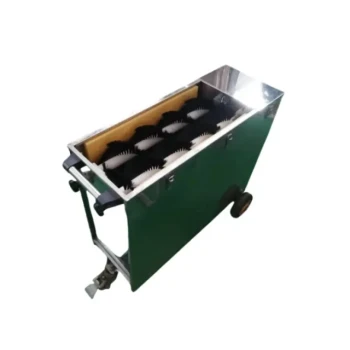
Large operations use machinery equipped with fans and agitation systems.
These machines use air currents to blow away lighter debris (like wings or dust) while heavier pollen pellets remain.
Adaptation of Seed Cleaning Methods
The technology used for cleaning bee pollen is remarkably similar to that used for cleaning and harvesting agricultural seeds.
By adapting these established agricultural methods, producers can process high volumes of pollen efficiently.
This ensures a consistent product standard required for the retail market.
Timing and Process sequencing
Pre-Processing (Before Drying)
Initial cleaning often occurs before the drying process begins.
Using industrial standard screens (such as 6-mesh), producers separate large impurities like solid waste and insect remains from the raw pollen.
This step is critical because heating contaminants during the drying phase can produce odors or degrade the final quality of the pollen.
Final Cleaning (After Drying)
Some cleaning steps are best performed after the pollen has been dried to approximately 6% moisture.
Dried pollen is harder and less sticky, making it easier to sieve without clumping.
This final pass removes any remaining dust or foreign material before the product is frozen or packaged.
Understanding the Trade-offs
Labor vs. Capital
Manual cleaning requires zero capital investment but has a very high labor cost. It is only sustainable for personal use or very small commercial sales.
Mechanical cleaning requires significant upfront capital for machinery but drastically reduces the time per pound of processed pollen.
Risk of Contamination
If you delay cleaning until after drying, you risk "baking in" contaminants.
Drying pollen with debris like beetles or moist plant matter can lead to spoilage or off-flavors.
Therefore, a coarse pre-clean is highly recommended regardless of your equipment level.
Making the Right Choice for Your Goal
To ensure your bee pollen is safe and marketable, align your cleaning method with your production goals:
- If your primary focus is personal use or small-scale sales: Rely on hand sieves and tweezers; use a fine mesh for dust and a 3mm mesh for larger debris to ensure purity without machinery.
- If your primary focus is commercial production: Invest in agitation and fan-based machinery to automate the separation process and ensure consistency across large batches.
- If your primary focus is product quality and flavor: Perform a pre-clean using a coarse screen to remove organic waste before drying to prevent odors from affecting the pollen.
Regardless of the method, the ultimate goal is to remove all foreign matter to prevent spoilage and ensure the pollen is safe for consumption.
Summary Table:
| Scale | Cleaning Method | Primary Equipment | Key Advantage |
|---|---|---|---|
| Hobbyist | Manual Sorting | Screens, tweezers, 3mm mesh | Low cost, high precision |
| Small-Scale | Multi-Step Sieving | Fiber-glass mesh & coarse screens | Better efficiency for batches |
| Commercial | Mechanical Separation | Fans, agitation systems, seed-cleaners | High volume & consistency |
| All Scales | Pre-Processing | 6-mesh industrial screens | Prevents odor/quality degradation |
Scale Your Pollen Production with HONESTBEE
Whether you are a growing distributor or a commercial apiary, HONESTBEE provides the industrial-grade machinery you need to turn raw harvest into premium product. We specialize in high-efficiency honey-filling machines, hive-making equipment, and comprehensive beekeeping toolsets designed for professional scale.
From essential industry consumables to specialized processing hardware, our wholesale offerings empower you to reduce labor costs and ensure product consistency. Contact us today to discover how our tailored equipment solutions can streamline your operations and enhance your market competitiveness.
Related Products
- Heavy-Duty Ergonomic Grip Galvanized Pollen Shovel
- Heavy-Duty Ergonomic Stainless Steel Pollen Shovel
- Stainless Steel Pollen Shovel with Wooden Handle
- High Performance Cordless Electric Bee Shaker for Beekeeping
- Commercial Grade Vertical Electric Bee Sweeper for Bee Removal
People Also Ask
- For what reasons do beekeepers collect bee pollen? Boost Hive Health and Unlock New Revenue Streams
- Why should commercial apiaries focus on the collection of diversified bee products? Maximize Your Hive’s Profit Potential
- How do bee pollen collection tools affect the quality of bee pollen used in functional dairy ice cream production?
- How does a specialized pollen collector facilitate the harvesting of diverse bee products? Automate High-Value Yields
- What is the impact of pollen collectors and associated equipment on the cost structure of pollen production? Maximize ROI