Beekeeping equipment falls into four primary categories: housing for the colony, tools for hive management, protective gear for the beekeeper, and machinery for harvesting honey.
At a minimum, a functional apiary requires a bee hive with internal components (frames and foundation), a protective suit, a hive tool for manipulation, and a smoker to ensure safety during inspections.
Beekeeping hardware is designed to balance the biological needs of the colony with the beekeeper's need for accessibility. The goal is to allow for inspection and harvesting without destroying the bees' home or disrupting their natural cycles.
Housing the Colony
The physical structure of the apiary is the most critical investment. It replaces the hollow trees or cavities bees would naturally inhabit.
Bee Hives
The bee hive serves as the permanent shelter for the colony.
Modern hives are modular, allowing you to stack boxes vertically to expand the space as the colony grows or stores more honey.
Frames
Inside the hive boxes, you place frames.
These are rectangular structures, typically made of wood or plastic, that hold the comb in place. They allow you to remove and inspect individual "slices" of the hive without breaking the comb or killing bees.
Foundation
Inside the frame sits the foundation.
This is a sheet made of beeswax or plastic embossed with a hexagonal pattern. It acts as a guide, encouraging the bees to build straight, uniform combs within the frame rather than irregular structures that are difficult to manage.
Protection and Hive Management
Direct interaction with the colony requires tools to manage the bees' defensive instincts and the physical mechanics of the hive.
The Beekeeping Suit
A beekeeping suit is essential for personal safety.
It covers the body to prevent stings, typically featuring a veiled helmet to protect the face and neck while maintaining visibility.
The Smoker
The smoker is the primary tool for calming the colony.
By puffing cool smoke into the hive, you mask the bees' alarm pheromones and trigger a feeding response, making them docile and far less likely to sting during inspections.
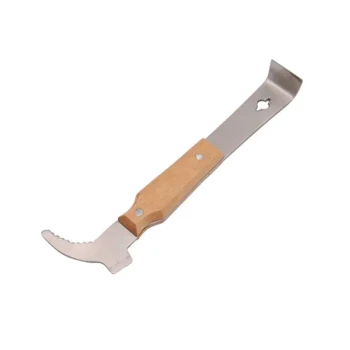
The Hive Tool
A hive tool is a flat metal bar used for leverage.
Bees seal cracks in their hive with a sticky substance called propolis. The hive tool is necessary to pry apart boxes and lift heavy frames that have been glued down by the bees.
Nutritional Support Systems
There are times, particularly in late summer or winter, when natural nectar and pollen are scarce. Feeders are used to provide sugar water or syrup to ensure colony survival.
Internal Feeders
These devices are placed inside the hive housing.
Frame feeders replace a standard frame within the brood box, keeping the food source close to the cluster. Top feeders sit on top of the uppermost box, holding a large volume of syrup.
A simple, low-cost internal method involves placing a sealed bag of syrup with a small slit directly across the top bars of the frames.
External Feeders
These attach to the outside or the entrance of the hive.
Entrance feeders slide into the front opening, allowing you to monitor food levels without opening the hive. Bucket feeders are inverted buckets with small holes placed over the hive to allow gravity-fed access to syrup.
Harvesting the Yield
Once the colony is established and productive, specific equipment is needed to collect honey.
The Honey Extractor
The honey extractor is a mechanical device used during harvest.
It uses centrifugal force to spin honey out of the combs. Crucially, this removes the liquid honey without destroying the wax comb, allowing the frames to be returned to the hive for immediate reuse by the bees.
Understanding the Trade-offs
While the equipment list can seem extensive, understanding the limitations of each tool is vital for efficient management.
Simplicity vs. Disturbance
Internal feeders generally offer better protection against "robber bees" from other colonies, but refilling them requires you to open the hive.
This disturbs the colony's temperature and temperament. External feeders are easier to refill but can attract pests or induce robbing behavior at the hive entrance.
Investment vs. Scale
Honey extractors represent a significant financial investment and require storage space.
For a beginner with only one or two hives, the cost may not be justifiable compared to simpler crush-and-strain methods, even though an extractor saves the comb.
Making the Right Choice for Your Goal
Selecting the right equipment depends heavily on the scale of your operation and your immediate objectives.
- If your primary focus is starting a new hobby: Prioritize high-quality protective gear (suit) and a reliable smoker, as your confidence in handling bees is the most important initial factor.
- If your primary focus is colony survival: Invest in diverse feeding options (both internal and external) to ensure you can support the bees during nectar dearths without opening the hive in freezing weather.
- If your primary focus is honey production: Plan for a honey extractor early, as preserving drawn comb is the single best way to maximize future honey yields.
Successful beekeeping is less about having every gadget and more about mastering the few essential tools that keep you safe and your bees healthy.
Summary Table:
| Category | Essential Equipment | Primary Function |
|---|---|---|
| Housing | Hives, Frames, Foundation | Provides shelter and structure for the colony. |
| Protection | Beekeeping Suit, Veil, Gloves | Ensures beekeeper safety from stings. |
| Management | Smoker, Hive Tool, Feeders | Calms bees, prys hive parts, and provides nutrition. |
| Harvesting | Honey Extractor, Uncapping Tools | Efficiently collects honey while preserving wax combs. |
Scale Your Apiary with HONESTBEE
Whether you are a commercial apiary looking to optimize honey production or a distributor seeking a reliable supply of premium beekeeping gear, HONESTBEE is your strategic partner.
We provide a comprehensive wholesale portfolio, including:
- Advanced Machinery: Hive-making and honey-filling machines for high-volume operations.
- Full-Spectrum Equipment: Everything from durable frames and smokers to industrial honey extractors.
- Essential Consumables: A wide array of tools and supplies to keep your colonies thriving.
- Cultural Merchandise: Unique honey-themed products to expand your market reach.
Ready to elevate your beekeeping business?
Contact HONESTBEE today to discuss our wholesale solutions and how we can support your growth.
Related Products
- HONESTBEE 15-in-1 Beekeeper Multi-Tool with Hammer and Pliers for Beekeeping
- Stainless Steel J Hook Hive Tool for Beekeeping
- Stainless Steel Queen Grafting Tool for Beekeeping and Bee Queen Grafting
- Multi-Function Plier-Style Frame Grip Hive Tool
- HONESTBEE Professional Mini J-Hook Hive Tool for Beekeeping
People Also Ask
- What is the recommended method for storing beekeeping tools? Expert Vertical Storage Solutions for Your Apiary
- Why is the treatment of beekeeping tools with high-concentration chemical disinfectants necessary for preventing AFB?
- How does a favorable microclimate interact with beekeeping tools? Boost Overwintering Success and Equipment Longevity
- How do specialized beekeeping tools and high-specification protective equipment assist in colony health management?
- What role do specialized beekeeping tools play in pest management? Enhance Apiary Health with Precision Tech