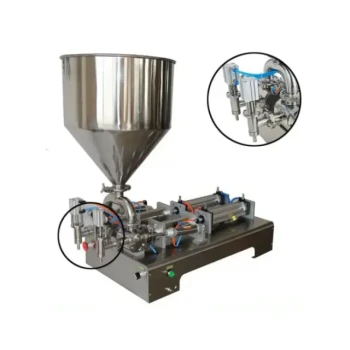
Industrial processing of antimicrobial Manuka honey requires equipment specifically calibrated to manage high concentrations of Methylglyoxal (MGO), significant viscosity, and high osmotic pressure. To maintain the honey's Unique Manuka Factor (UMF) rating, machinery must utilize precise temperature control and optimized fluid dynamics, ensuring that flow rates and filling pressures never compromise the product's non-peroxide antimicrobial mechanism or trigger the formation of Hydroxymethylfurfural (HMF).
Core Insight: The primary challenge in Manuka honey processing is not simply moving the product, but preserving its value. Equipment must strike a delicate balance: applying enough force and heat to liquefy and move the dense fluid, without exceeding the thermal and physical thresholds that degrade its rare bioactive compounds.
Preserving Chemical Integrity
The value of Manuka honey is defined by its chemical profile. Industrial equipment must be designed to protect these specific markers during the filling process.
Protecting Methylglyoxal (MGO)
Manuka honey is distinguished by high concentrations of Methylglyoxal (MGO). This compound is responsible for the honey's unique non-peroxide antimicrobial activity.
Processing equipment must ensure that the mechanical stress of filling does not alter this chemical structure. Maintaining MGO levels is essential for meeting industry standards regarding the Unique Manuka Factor (UMF) rating.
Inhibiting HMF Formation
Heat stress during processing can lead to the secondary formation of Hydroxymethylfurfural (HMF). Elevated HMF levels are an indicator of thermal degradation and can negatively impact the honey's quality rating.
To prevent this, machinery must employ precise temperature control systems during liquefaction and filtration. This ensures the honey remains fluid enough to process without reaching temperatures that catalyze chemical changes.
Managing Physical Properties
Manuka honey is a physically demanding substance to process. Equipment must handle its density and texture without altering its natural state.
Handling High Viscosity
Manuka honey possesses an naturally high viscosity. Industrial fillers must be robust enough to move this thick substance but sensitive enough to do so smoothly.
Equipment utilizes optimized fluid dynamics to manage flow rates. This allows for consistent filling speeds that accommodate the honey's thickness without requiring excessive heat to thin it down.
Controlling Osmotic Pressure
The equipment must account for the honey's high osmotic pressure. This physical characteristic is vital to its stability and antimicrobial properties.
Processing systems are designed to maintain this pressure equilibrium, ensuring the honey is not destabilized during the high-speed filling phase.
Maintaining Moisture Balance
Processing machinery must operate within a sealed or controlled environment to manage moisture content.
The system must prevent both the loss of intrinsic moisture (drying out) and the absorption of ambient moisture (dilution). Maintaining this balance preserves the original physicochemical indicators measured when the raw material was received.
Understanding the Trade-offs
When configuring equipment for Manuka honey, operators face inevitable conflicts between efficiency and quality preservation.
Heat vs. Bioactivity
The most common trade-off involves temperature. Increasing heat lowers viscosity, allowing for faster filtration and filling.
However, excessive heat degrades MGO and spikes HMF levels. High-quality equipment prioritizes thermal precision over raw speed, utilizing lower temperatures even if it slightly reduces throughput.
Pressure vs. Structure
High-pressure filling systems can expedite production but may exert shear forces that damage the honey's texture.
To mitigate this, advanced equipment focuses on controlled filling pressures. This approach avoids damaging the honey’s natural sensory characteristics, ensuring the final product feels and tastes as it did in its raw state.
Making the Right Choice for Your Goal
To select the correct processing parameters or equipment, you must prioritize your production objectives.
- If your primary focus is UMF Certification: Prioritize equipment with advanced temperature modulation to eliminate heat stress and preserve MGO levels.
- If your primary focus is Shelf Stability: Ensure machinery features sealed processing zones that strictly prevent moisture absorption and HMF formation.
- If your primary focus is Sensory Quality: Select systems with optimized fluid dynamics that manage viscosity without high shear pressure, preserving texture.
Ultimate Success Factor: The superior processing setup is one that treats the honey's viscosity as a constraint to be managed by engineering, rather than a problem to be solved by heat.
Summary Table:
| Factor Type | Key Challenge | Management Strategy |
|---|---|---|
| Chemical | MGO & UMF Preservation | Precise temperature control to prevent thermal degradation. |
| Chemical | HMF Inhibition | Low-heat liquefaction and filtration systems. |
| Physical | High Viscosity | Optimized fluid dynamics and robust, low-shear pump systems. |
| Physical | Osmotic Pressure | Maintaining pressure equilibrium during high-speed filling. |
| Physical | Moisture Content | Sealed processing environments to prevent dilution or drying. |
Elevate Your Honey Processing with HONESTBEE
Preserving the integrity of premium Manuka honey requires more than just standard machinery—it requires specialized engineering. HONESTBEE provides commercial apiaries and distributors with high-performance honey-filling machines and processing equipment designed specifically to handle high-viscosity products without compromising bioactivity.
Whether you are scaling a professional apiary or managing a global distribution network, our comprehensive wholesale offering covers everything from specialized hardware to essential industry consumables. Ensure your UMF ratings stay high and your production stays efficient.
Contact HONESTBEE Today to Discuss Your Equipment Needs
References
- Г. І. ДАВИДОВА, О. В. КОРБУТ. АНТИМІКРОБНА АКТИВНІСТЬ ПРОДУКТІВ БДЖІЛЬНИЦТВА: СЬОГОДЕННЯ ТА ПЕРСПЕКТИВИ ЇХ ВКЛЮЧЕННЯ ДО АПІФІТОКОМПЛЕКСІВ. DOI: 10.46913/beekeepingjournal.2022.10.01
This article is also based on technical information from HonestBee Knowledge Base .
Related Products
- Commercial Rotary Honey Filling Machine for Production
- Fully Automatic Honey Filling Packaging Machine for Processing Line
- Precision Durable Efficient HONESTBEE Rotary Honey Filling Machine
- Manual Honey Filling Machine Bottling Machine for Honey
- Double Nozzle Small Honey Filling Machine Honey Sachet Packing Packaging Equipment
People Also Ask
- What role do commercial honey filling machines play in honey distribution? Scaling Efficiency and Quality Control
- What technical support do commercial-grade filling machines provide? Convert Honey NTFPs into Marketable Commodities
- What is the significance of specialized honey filling equipment? Scaling from Beekeeping to Commercial Success
- Why is professional honey filling machinery critical for honey production? Scale Your Apiary's Profit & Efficiency
- Why is high-capacity honey filling machinery necessary for Giant Honey Bees? Solve the Apis dorsata Volume Crisis