Beeswax processing equipment must be designed around a narrow melting range, low density, and significant overheating risk. Beeswax typically melts at 61–65°C (143–149°F) and solidifies at approximately 60–63°C (140–145°F), so heating systems must provide stable, controllable indirect heat rather than uncontrolled direct contact. Its specific gravity is about **0.95—below that of water—so molten wax floats and can be separated from heavier debris through settling or hot-water processing.
The key operating principle is controlled heat: melt beeswax completely without exceeding safe temperatures, then use its lower density and water insolubility to support efficient separation, clarification, and recovery.
The Physical Properties That Determine Equipment Design
Melting and solidification temperature
Beeswax does not behave like a material with one exact melting point. It softens progressively and becomes fully liquid across a range of approximately 61–65°C.
Equipment should therefore be capable of maintaining the wax consistently above its working liquefaction range. A practical operating setpoint must provide complete melting while avoiding unnecessary thermal exposure.
As the wax cools, it begins to solidify at approximately 60–63°C. Piping, valves, filters, pumps, and transfer lines must be insulated or heat-traced where necessary to prevent blockages during transfer.
Specific gravity and buoyancy
Natural beeswax has a specific gravity of approximately 0.95, meaning it is less dense than water and will float on it when molten.
This property is central to hot-water separation equipment. Wax rises to the surface while heavier slumgum, dirt, cocoon material, and other debris settle below.
Insolubility in water
Beeswax is insoluble in water. Water can therefore act as a separation and heat-transfer medium without dissolving the wax itself.
However, water may remain trapped in or beneath molten wax. Processing systems should provide adequate settling, drainage, filtration, and drying stages to reduce retained moisture in the finished product.
How These Properties Affect Heating Equipment
Use indirect heating
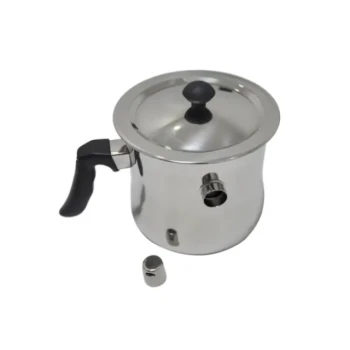
Water-jacketed tanks, steam jackets, and double-boiler or bain-marie systems are generally preferable to direct flame or exposed heating elements.
Indirect heating distributes energy more evenly and reduces the likelihood of localized scorching, smoke, wax degradation, and ignition.
Provide precise temperature control
Heating elements should be sized and controlled to maintain reliable liquefaction around the 62–65°C range, rather than simply delivering maximum heat.
For commercial buyers, important specifications include temperature sensors, thermostatic control, insulated vessels, over-temperature protection, and a uniform heat-transfer design.
Avoid excessive temperatures
Beeswax is thermally stable only within limits. Reference data identifies approximately 92°C (200°F) as a critical upper boundary; above this point, wax may smoke, develop an acrid odor, vaporize, and present a serious fire hazard.
Smoke or a sharp acrid smell should be treated as an immediate warning to remove or reduce heat. The exact threshold can vary with equipment conditions and wax composition, so operators should not use the upper limit as a normal operating target.
Manage the thermal working range
Melting is not the only temperature requirement. Foundation-sheet and forming equipment must keep wax sufficiently fluid or plastic during sheeting, embossing, and extrusion.
If the wax is too cool, it can become viscous, crack, or produce uneven sheets. If it is too hot, it may lose quality, distort during forming, or create avoidable safety risks.
How Density Supports Separation and Clarification
Hot-water separation
In a rendering or clarification tank, molten wax can rise through heated water because its density is lower than water.
Heavier contaminants settle beneath it, allowing operators to skim or remove the wax layer after sufficient settling. Equipment should provide enough residence time and a controlled outlet or skimming mechanism to avoid disturbing separated solids.
Clarification and filtration
Density-based separation removes much of the heavy material, but it does not eliminate all fine particles. Clarification tanks, strainers, or filters may still be necessary when producing cleaner wax for foundation, candles, cosmetics, or industrial applications.
Filters and screens must remain warm enough to prevent wax from solidifying across the filtration surface.
Cappings recovery
Cappings are a particularly valuable wax source. A commonly cited recovery rate is approximately 1 kg of beeswax per 60 kg of extracted honey, although actual output depends on cappings thickness, honey content, comb condition, and processing losses.
This yield is relevant when distributors and commercial apiaries size tanks, collection vessels, storage capacity, and expected throughput.
Equipment Implications for Commercial Operations
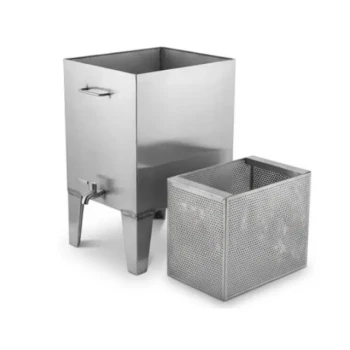
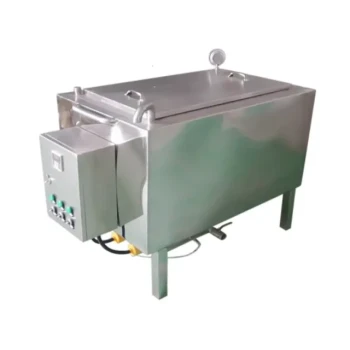
Rendering tanks and wax melters
Rendering equipment should combine:
- Indirect, even heating
- Accurate temperature measurement
- Over-temperature protection
- Insulation to limit heat loss
- Accessible filtration and cleaning points
- Drainage for water and separated residue
The correct design reduces processing time without requiring operators to compensate with excessive heat.
Refining and clarification tanks
Refining systems benefit from a heated holding zone that keeps wax molten while suspended debris settles.
A well-designed outlet should draw clarified wax without pulling bottom sediment into the next processing stage. Removable screens and accessible cleanout areas are especially important for commercial maintenance.
Foundation-making equipment
Comb foundation machinery requires tighter control than basic rendering because the wax must remain within a suitable plastic and forming range.
Temperature instability can cause inconsistent thickness, poor embossing, cracking, or deformation. Buyers should assess not only the melter but also the temperature control of feed lines, rollers, molds, and forming surfaces.
Pumps, valves, and transfer lines
Molten beeswax can solidify quickly when exposed to cooler equipment surfaces.
Transfer systems should therefore use short, well-insulated routes where possible, with heated or heat-retaining components at points vulnerable to blockage. Components must also be designed for cleaning because residual wax can harden inside narrow passages.
Understanding the Trade-offs
Higher temperature is not the same as higher productivity
Increasing temperature may shorten the initial melting time, but it can increase scorching, odor, degradation, and fire risk.
The better productivity strategy is usually stable indirect heat, adequate insulation, and sufficient residence time, not maximum heater output.
Water separation improves recovery but adds moisture control
Hot-water processing uses beeswax’s buoyancy effectively and can separate heavy contaminants. However, the recovered wax may retain water and require settling, draining, drying, or additional clarification.
A system optimized only for separation may still produce a wet or inconsistent finished product if downstream moisture handling is inadequate.
Fine filtration improves purity but can reduce throughput
Smaller filters can produce cleaner wax, but they also clog more easily as wax cools or debris accumulates.
Commercial systems should balance target purity against throughput, filter accessibility, replacement cost, and the ability to keep filter surfaces warm.
Direct heating creates avoidable operational risk
Direct heat can create hot spots even when the average tank temperature appears acceptable.
Water must never be used to extinguish a beeswax fire because it can spread or splatter hot wax. Appropriate fire extinguishing equipment and fire blankets should be available, and operators should follow the site’s documented fire procedures.
Making the Right Choice for Your Goal
The correct specification depends on whether the priority is recovery, purity, forming quality, or high-volume fulfillment.
- If your primary focus is efficient wax recovery: Choose an indirectly heated rendering or hot-water separation system with reliable temperature control, settling capacity, and accessible residue removal.
- If your primary focus is high-purity beeswax: Prioritize staged clarification, suitable filtration, moisture drainage, and heated transfer paths that prevent premature solidification.
- If your primary focus is comb foundation production: Select equipment with precise control across the melter, feed system, rollers, and forming section to maintain consistent wax plasticity.
- If your primary focus is operational safety: Require indirect heating, over-temperature protection, insulation, clear temperature monitoring, and appropriate fire-response provisions.
- If your primary focus is dependable commercial supply: Work with a supplier or distributor able to provide the complete equipment portfolio, responsive technical service, spare parts, and fast order fulfillment rather than isolated components.
Understanding melting behavior, density, water interaction, and thermal limits allows buyers to specify beeswax processing equipment that is safer, more reliable, and better matched to production goals.
Summary Table:
| Property | Value/Behavior | Equipment Impact |
|---|---|---|
| Melting range | 61–65°C (143–149°F) | Requires stable indirect heating and precise control to avoid scorching |
| Solidification point | 60–63°C (140–145°F) | Transfer lines need insulation or heat tracing to prevent blockages |
| Specific gravity | ~0.95 (floats on water) | Enables hot-water separation; use settling and skimming for clarity |
| Water solubility | Insoluble | Water can be used as heat/transfer medium; need drying stages |
| Thermal stability | Degrades above ~92°C (200°F) | Include over-temperature protection and avoid direct heating |
| Plasticity range | Suitable for forming at controlled temps | For foundation, maintain even heat in feed and forming sections |
Are you a beekeeper, distributor, or commercial apiary looking for reliable beeswax processing equipment? At HONESTBEE, we offer a comprehensive range of beekeeping tools, machinery, and consumables to meet your needs. From wax melters and clarification tanks to foundation makers, our one-stop sourcing ensures you get quality products with fast delivery. Our advantages: rapid response, dedicated service, and professional expertise. Contact us today to discuss your requirements and benefit from our OEM/ODM support and competitive pricing. Get in touch with us now!
Related Products
- Steam Beeswax Melter Wax Warmer for Wax Processing
- Manual Beeswax Flat Sheet Machine for Beeswax Processing
- Electric Commercial Beeswax Melter for Factory Use
- Electric Beeswax Flat Sheet Machine with Operating Tray for Wax Processing
- Electric Flatting and Embossing Machine with Tray for Beekeeping
People Also Ask
- How does a steam wax melter work? A Fast, Efficient Method for High-Quality Wax
- How does a professional steam wax melter optimize the recovery of beeswax? Maximize Yield & Hygiene for Your Apiary
- What are the steps to use a steam wax melter? Master Safe & Efficient Wax Rendering
- How do steam wax melters function in the disinfection of apiary equipment? Achieve Chemical-Free Organic Sterilization
- How do you operate a steam wax melter? Master Efficient Wax Extraction and Frame Sterilization