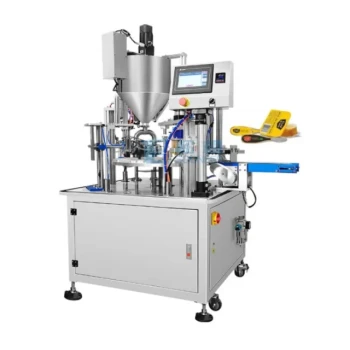
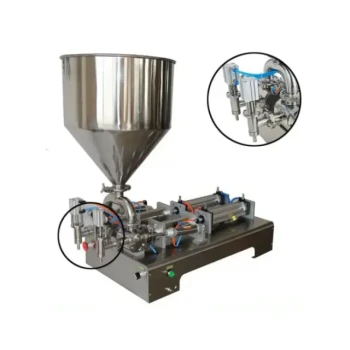
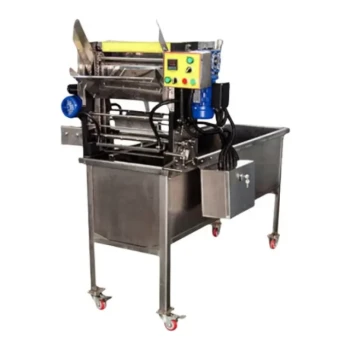
Automated honey-filling machines address critical production bottlenecks by guaranteeing precise volumetric control and strictly hygienic sealing, effectively eliminating common inconsistencies found in manual processing. These systems resolve issues related to net weight variance, environmental contamination, and low packaging throughput, ensuring that final products comply with the rigorous food safety standards required for global trade.
Core Takeaway Integrating automation is not merely about increasing speed; it is about establishing a standardized, closed-loop process. By removing human error and environmental exposure, producers transform variable raw harvests into consistent, export-grade retail products.
Solving Precision and Consistency Challenges
One of the most persistent issues in honey processing is managing the material's viscosity to ensure accurate dosing.
Eliminating Quantitative Errors
Manual filling often leads to overfilling (product loss) or underfilling (compliance violations). Automated machines utilize precise metering controls to guarantee the exact net weight for every container.
This precision applies even to difficult textures. Whether processing pure liquid honey, honey with nuts, or honeycomb infused varieties, automated systems maintain consistency where manual methods struggle.
Managing Viscosity and Dripping
Honey is a highly viscous fluid that is prone to dripping, which creates waste and sticky exterior packaging.
High-precision machines address this by controlling the flow dynamics during the dispense cycle. This ensures a clean cut-off after filling, maintaining the aesthetic quality essential for direct retail sales.
Addressing Hygiene and Contamination Risks
As apiaries scale, the risk of biological and physical contamination increases. Automation acts as a critical firewall between the raw product and the external environment.
Reducing Cross-Contamination
Traditional packaging methods expose honey to open air and human contact. Automated fillers operate as closed systems, significantly reducing the window for oxygen ingress and contact with operators.
This isolation is vital for maintaining the certification status of organic products, where brand reputation relies on absolute purity.
Filtering Physical Impurities
Raw honey is susceptible to contamination from hive pests, such as Wax Moths or Hive Beetles.
Advanced filling lines often integrate multi-stage filtration systems immediately before the fill head. This efficiently removes physical impurities, larval remains, or foreign debris, preventing secondary contamination during the final packaging stage.
Improving Preservation and Shelf Life
Beyond simple containment, automated lines address the challenge of product stability during long-term storage.
Controlling Crystallization and Oxidation
Oxygen and moisture are enemies of honey quality. Advanced machines can implement vacuum or nitrogen-flush sealing techniques.
By displacing oxygen, these systems slow down the natural crystallization process and prevent fermentation. This ensures quality stability, allowing products to endure long retail supply chains without degrading.
Understanding the Trade-offs
While automation solves many problems, it introduces new operational considerations that must be managed.
Complexity of Maintenance
Honey is an abrasive and sticky medium. Automated systems require rigorous cleaning protocols to prevent machinery from seizing or clogging, particularly when switching between honey varieties.
Calibration Requirements
To maintain the high precision mentioned earlier, sensors and metering devices require regular calibration. A lack of technical oversight can lead to a drift in accuracy, negating the primary benefit of the investment.
Making the Right Choice for Your Goal
The level of automation you implement should align with your specific market objectives.
- If your primary focus is Global Export: Prioritize machines with certified hygienic sealing and volumetric controls to ensure compliance with international weight and safety standards.
- If your primary focus is Boutique/Organic Retail: Look for systems with closed-loop designs and nitrogen flushing to preserve the natural enzymatic quality and prevent oxidation.
- If your primary focus is High-Volume Production: Focus on machines that offer high-speed throughput with anti-drip technology to maximize daily output and reduce labor costs.
Automation effectively converts a raw agricultural commodity into a standardized, high-value consumer good.
Summary Table:
| Challenge Category | Specific Problem Addressed | Solution via Automation |
|---|---|---|
| Precision | Net weight variance and product loss | Precise metering controls and volumetric dosing |
| Hygiene | Environmental and human cross-contamination | Closed-loop systems and integrated filtration |
| Quality | Rapid crystallization and oxidation | Vacuum sealing or nitrogen-flush technology |
| Aesthetics | Sticky packaging and messy dripping | Anti-drip technology and clean flow cut-off |
| Scale | Low throughput and high labor costs | High-speed processing and reduced manual intervention |
Scaling Your Apiary Operations with HONESTBEE
Transitioning from manual processing to industrial-grade automation is a critical step for growing commercial apiaries and distributors. HONESTBEE is your dedicated partner in this evolution, providing the technical expertise and robust equipment needed to compete in the global market.
Why Partner with HONESTBEE?
- Comprehensive Wholesale Range: From specialized hive-making and honey-filling machines to essential industry consumables.
- Global Compliance: Our machinery is designed to meet rigorous food safety and weight standards required for international trade.
- End-to-End Solutions: We support beekeeping businesses with everything from heavy-duty machinery to honey-themed cultural merchandise.
Ready to eliminate production bottlenecks and enhance your product's market value? Contact HONESTBEE today to discover how our automated solutions can streamline your operations!
References
- Derick Nomuh Forbanka, William Diymba Dzemo. Distribution, biology and ecology of honeybees, Apis mellifera (Hymenoptera; Apidae) in the Eastern Cape Province, South Africa: a review. DOI: 10.1007/s42690-025-01552-1
This article is also based on technical information from HonestBee Knowledge Base .
Related Products
- Fully Automatic Honey Filling Packaging Machine for Processing Line
- Automatic Honey Filling and Filtering Machine for Beekeeping Bottle Filling
- Precision Durable Efficient HONESTBEE Rotary Honey Filling Machine
- Semi Automatic Small Honey Bottle Filling Machine Honey Filler
- Precision Automated Packaging Turntable Honey Spoon Filling Sealing Packing Machine
People Also Ask
- Why are fully automatic honey filling and packaging lines essential? Boost Your Honey's Market Value and Quality
- What is a fully-automatic honey filler? Streamline Your Production with High-Precision Automation
- How do automated honey filling and packaging machines affect profitability? Boost Margins with HONESTBEE Technology
- How do automated honey filling and packaging machines contribute to the market value of honey products? Maximize Your ROI
- How do industrial-grade automated honey filling and packaging machines mitigate the risk of physical contamination?