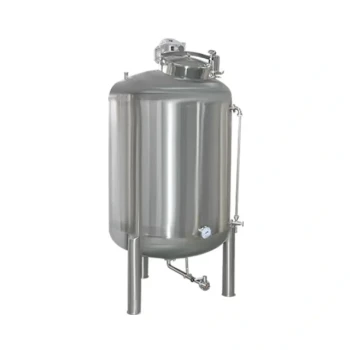
Controlled temperature storage equipment acts as a critical stabilizer during the pretreatment and storage of honey samples by maintaining a constant environment of 16 degrees Celsius and strictly excluding light. By regulating these two variables, the equipment directly inhibits the formation of Hydroxymethylfurfural (HMF) and slows the degradation of diastase activity, preserving the sample's chemical profile for accurate analysis.
Core Takeaway: The primary function of this equipment is to pause the biological clock of the honey sample. By stabilizing temperature and light exposure, it ensures that laboratory results reflect the honey’s true quality at the time of collection, rather than artifacts of degradation caused by poor storage conditions.
Mechanisms of Chemical Preservation
Inhibiting HMF Formation
Hydroxymethylfurfural (HMF) is a key indicator of honey freshness and overheating. It forms naturally over time but accelerates rapidly with elevated temperatures.
Controlled storage maintains the sample at 16 degrees Celsius, a specific threshold that significantly slows the chemical reaction responsible for HMF production. This ensures the HMF levels measured during testing are intrinsic to the honey, not a result of storage heat.
Preserving Diastase Activity
Diastase is a natural enzyme in honey used as a primary quality metric, but it is highly sensitive to heat and aging.
By maintaining a cool, constant environment, storage equipment prevents the thermal denaturation of these enzymes. This allows researchers to obtain valid diastase numbers that accurately represent the biological activity of the original product.
The Role of Light Exclusion
Exposure to light can catalyze chemical changes and degrade specific nutrients within the honey matrix.
Standardized storage equipment includes opaque or dark interactions to shield samples from photonic energy. This protection works in tandem with temperature control to maintain the physicochemical stability of the sample.
Ensuring Biological and Physical Validity
Preventing Fermentation
Honey contains osmophilic yeasts that can trigger fermentation, particularly if the storage environment fluctuates or warms up.
A cool, controlled environment inhibits the metabolic activity of these yeasts. This prevents increases in acidity and changes in moisture content that would otherwise render the sample unrepresentative of the production lot.
Standardizing the Baseline
For laboratory testing to be valid, the "time zero" state of the sample must be preserved until the moment of analysis.
Controlled storage eliminates environmental variables such as diurnal temperature swings. This guarantees that the physical and chemical properties remain static, ensuring that data regarding moisture, acidity, and metal content is accurate and reproducible.
Understanding the Trade-offs
While controlled temperature storage is essential for chemical stability, it is not a complete solution for sample preservation on its own.
Temperature vs. Humidity
Temperature control cabinets often regulate heat but may not inherently control humidity. Even at 16°C, honey acts as a hygroscopic substance, meaning it will absorb moisture from the air if not properly sealed.
Reliable preservation requires a dual approach: temperature control via the equipment, and moisture control via tightly sealed plastic containers. Relying on temperature control alone without airtight sealing will lead to moisture absorption and potential spoilage.
Crystallization Risks
It is important to note that temperatures around 14-16°C are often the optimal range for honey crystallization.
While this protects chemical markers like HMF, it may accelerate the physical solidification of the sample. Researchers must be prepared to gently liquefy samples before testing without overheating them, balancing physical state against chemical integrity.
Making the Right Choice for Your Goal
To ensure your honey analysis remains valid and defensible, apply the following storage protocols:
- If your primary focus is Chemical Analysis (HMF/Diastase): Prioritize maintaining a strict 16°C dark environment to prevent enzymatic degradation and heat-induced chemical changes.
- If your primary focus is Moisture and Acidity Control: Ensure samples are stored in airtight, sealed containers within the temperature-controlled unit to prevent hygroscopic absorption and fermentation.
- If your primary focus is Shelf-Life Research: Use constant temperature cabinets to simulate specific environmental conditions to quantify how different temperatures accelerate aging markers over time.
The integrity of your analytical data depends entirely on the stability of your sample during the waiting period.
Summary Table:
| Factor Protected | Storage Condition | Impact on Honey Quality |
|---|---|---|
| HMF Levels | 16°C Temperature | Inhibits rapid formation; ensures freshness markers. |
| Diastase Activity | Constant Cool Environment | Prevents thermal denaturation of natural enzymes. |
| Chemical Stability | Light Exclusion | Shields from photonic energy & nutrient degradation. |
| Fermentation | Stable Cool Temp | Inhibits osmophilic yeast metabolic activity. |
| Physical Properties | Controlled Environment | Standardizes baseline data for moisture and acidity. |
Maximize Your Honey Quality with HONESTBEE
Maintaining the biological integrity of honey requires more than just storage—it requires precision equipment. At HONESTBEE, we specialize in supporting commercial apiaries and distributors with high-performance beekeeping tools and machinery. From honey-filling machines to specialized hardware, our comprehensive wholesale offerings are designed to help you preserve the value of your product from collection to sale.
Ready to scale your apiary operations? Contact us today to discover how our industry-leading equipment and consumables can optimize your honey production and storage workflow.
References
- Alina Zhuk, Mariia Fedorіak. Physicochemical quality indicators of honey: An evaluation in a Ukrainian socioecological gradient. DOI: 10.15421/022246
This article is also based on technical information from HonestBee Knowledge Base .
Related Products
People Also Ask
- What economic role do honey storage tanks play? Boost Your Revenue Through Strategic Inventory Management
- What roles do industrial honey storage tanks and filtration meshes play in processing? Ensure Purity & Consistency
- What is the purpose of a honey storage tank? Streamline Your Honey Processing for Quality & Efficiency
- What are honey storage tanks used for? Essential Features for Quality Preservation and Profit
- How do large honey storage tanks and gravity fall filling systems improve honey packaging efficiency and safety?