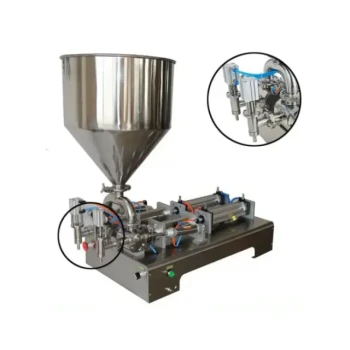
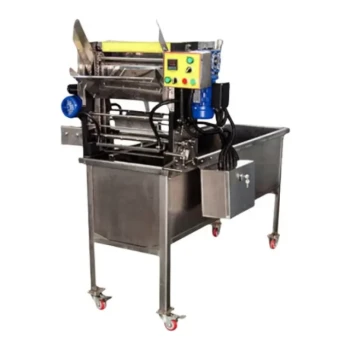
Automated honey filling and packaging production lines act as the critical infrastructure for converting raw apiary output into commercial-grade commodities. Their primary role is to transform bulk honey into retail-standard, pre-packaged products through precision metering and advanced sealing technologies. By ensuring uniform specifications and sanitary safety, these systems facilitate access to high-volume retail channels and cross-border trade markets.
By standardizing weight and hygiene, automated lines do more than increase speed; they legitimize the product for international markets. They enable the shift from a bulk supply model to a professional retail brand, ensuring regulatory compliance and minimizing high-value product loss.
Transforming Operations through Precision
The immediate impact of automation is the shift from variable manual processing to standardized industrial precision.
Achieving Quantitative Accuracy
Honey is a high-value commodity where overfilling erodes margins and underfilling invites legal penalties. Automated machines provide high-precision quantitative filling to ensure consistent net weight for every unit. This guarantees that products meet strict commercial trade standards regarding volumetric accuracy.
Minimizing Material Waste
Honey’s high viscosity makes it prone to spills and drips during manual handling. Automated lines incorporate specific anti-drip mechanisms and precise flow controls. This prevents material loss during the packaging phase, directly preserving the yield from bulk raw materials.
Ensuring Compliance and Product Integrity
Beyond simple efficiency, these production lines serve as a gatekeeper for food safety and regulatory adherence.
Eliminating Contamination Risks
Manual handling introduces the risk of "secondary contamination," where pathogens or debris enter the product before sealing. Automated lines feature fully enclosed, hygienic designs that isolate the honey from the environment. This is a prerequisite for meeting international food safety standards required for export.
Extending Shelf Life via Sealing
The role of the machinery extends to the final closure of the product. Integrated capping and sealing equipment ensure airtightness, which is critical for preventing fermentation or crystallization caused by moisture ingress. This directly extends the commercial shelf life of the product.
Enhancing Commercial Value and Logistics
The production line dictates how the product survives the supply chain and performs on the retail shelf.
Facilitating Long-Distance Trade
For honey to be traded globally, packaging must be durable. Automated packaging machinery ensures consistent sealing integrity, which minimizes leaks and damage during long-distance transportation. This reliability is essential for maintaining relationships with commercial distributors.
Establishing Brand Authority
Retail channels, such as supermarkets, demand aesthetic consistency. Automated filling ensures uniform fill levels and clean packaging, which establishes a professional brand image. This visual consistency allows producers to command an international price premium compared to non-standardized artisanal packaging.
Critical Considerations: The Material Trade-off
While the machinery is vital, it introduces a dependency on the quality of consumables.
The Dependency on Packaging Materials
The efficiency of an automated line is entirely dependent on the quality of the packaging materials used. As noted in logistics data, the selection of materials impacts sealing integrity and environmental footprint.
Using low-grade or incompatible packaging materials can negate the benefits of the machine, leading to leaks during distribution or machine jams. Producers must view the machinery and the packaging material as a single, integrated system; one cannot function optimally without the other.
Making the Right Choice for Your Goal
To leverage these systems effectively, align your equipment strategy with your specific market trajectory.
- If your primary focus is entering mass retail: Prioritize systems with high-speed sealing and aesthetic consistency to meet the visual and volume standards of supermarkets.
- If your primary focus is international export: Prioritize systems with fully enclosed hygienic designs and rigorous sealing integrity to ensure compliance with cross-border food safety regulations.
Ultimately, automated packaging is the mechanism that allows an apiary to evolve from a local farm into a scalable, international manufacturing entity.
Summary Table:
| Key Role | Impact on Honey Trade | Primary Benefit |
|---|---|---|
| Quantitative Accuracy | Ensures net weight compliance for global trade | Prevents product loss & legal penalties |
| Sanitary Sealing | Eliminates secondary contamination risks | Meets international food safety standards |
| Hygienic Isolation | Extends shelf life and preserves quality | Facilitates long-distance export & storage |
| Brand Standardization | Provides uniform aesthetic and fill levels | Increases commercial value in retail markets |
| Waste Reduction | Minimizes drips and spills via anti-drip tech | Maximizes profit margins from bulk supply |
Scale Your Honey Business with HONESTBEE
Transition from bulk supply to a global retail brand with HONESTBEE. As a premier partner for commercial apiaries and distributors, we provide the full spectrum of equipment needed to dominate the market. From precision honey-filling machines and advanced hive-making hardware to a complete range of beekeeping tools and essential consumables, our solutions are designed to ensure your products meet the highest international standards.
Ready to automate your success? Contact us today to explore our wholesale machinery and tools and see how we can optimize your production for maximum profit.
References
- Agnieszka Borowska. Produkcja, konsumpcja i handel zagraniczny miodem w Polsce w latach 2004-2015. DOI: 10.22630/rnr.2016.103.4.41
This article is also based on technical information from HonestBee Knowledge Base .
Related Products
- Fully Automatic Honey Filling Packaging Machine for Processing Line
- Precision Automated Packaging Turntable Honey Spoon Filling Sealing Packing Machine
- Automatic Single-Dose Snap & Squeeze Honey Sachets Packing Machine
- Automatic Honey Filling and Filtering Machine for Beekeeping Bottle Filling
- Economy Small Honey Filling Machine Honey Bottle Filler Packaging Machine
People Also Ask
- Why are fully automatic honey filling and packaging lines essential? Boost Your Honey's Market Value and Quality
- What is a fully-automatic honey filler? Streamline Your Production with High-Precision Automation
- How do automated honey filling and packaging machines affect profitability? Boost Margins with HONESTBEE Technology
- How do automated honey filling and packaging machines contribute to the market value of honey products? Maximize Your ROI
- How do industrial-grade automated honey filling and packaging machines mitigate the risk of physical contamination?