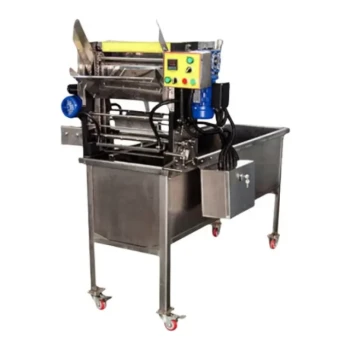
Automated honey-filling machines function as the critical gateway for forest honey producers seeking entry into mainstream retail markets. They solve the primary barriers to entry—hygiene compliance and precise volume standardization—transforming an artisanal raw material into a shelf-ready commercial product that supermarkets and hypermarkets can legally and logistically stock.
Automated filling technology professionalizes the packaging process, bridging the gap between consumer demand for natural products and the strict requirements of retail distribution. By ensuring precise volume control, sterility, and consistent sealing, these machines allow forest honey to transition from local availability to professional distribution channels.
The Pillars of Retail Compliance
Achieving Standardization and Precision
Retailers operate on strict margins and require absolute consistency in their inventory. Automated filling machines eliminate the variance associated with manual packaging.
By utilizing high-precision quantitative filling systems, often servo-driven or pneumatic, these machines ensure the net weight remains consistent across every batch. This allows producers to meet the "precise volume requirements" mandated by consumer protection laws and retail contracts.
Ensuring Hygiene and Food Safety
Mainstream retail environments demand rigorously enforced hygiene standards to prevent contamination. Manual filling exposes honey to human contact and environmental pathogens, which is unacceptable for large-scale distribution.
Automated systems bridge this gap by offering sterile, professional encapsulation. Features like fully enclosed stainless steel piping prevent the honey from contacting the open air, ensuring the product meets international food safety standards required by institutional buyers and supermarkets.
Scaling for Commercial Distribution
Artisanal production methods often fail to meet the volume demands of wholesale buyers. Manual labor imposes a hard ceiling on how much product can be delivered, creating a barrier to entry for large chains.
Automation enables producers to overcome these volume limitations. By implementing high-efficiency filling lines, producers can process thousands of tons of honey with the industrial capacity necessary to sustain large-scale wholesale supply and branded operations.
Preserving Product Integrity
Mitigating Oxidation and Moisture
Forest honey is a high-value product defined by its unique floral characteristics, but it is sensitive to environmental degradation. Air exposure is a critical enemy, causing aroma loss and moisture absorption that can spoil the honey or dilute its quality.
Advanced filling machines utilize enclosed systems that significantly reduce oxidation risks during the bottling process. This preserves the organic integrity of the honey, maintaining its status as a premium product.
Extending Shelf Life
Retailers require products that remain stable on the shelf for extended periods. Professional filling machines utilize superior sealing technologies that manual methods cannot replicate.
By hermetically sealing containers immediately after filling, these machines extend the product's shelf life. This stability is a prerequisite for entering supply chains that involve long transport times or warehousing.
Understanding the Operational Trade-offs
Rigidity vs. Flexibility
While automation grants access to mass markets, it introduces a requirement for operational rigidity. Unlike manual filling, which can easily switch between random jar sizes, automated machines often require specific filling molds and standardized container specifications.
The Necessity of Consistent Input
To utilize high-speed filling lines effectively, the upstream supply of raw honey must be consistent. Producers must aggregate sufficient volume from forest sources to justify the operation of high-capacity lines, making this technology less suitable for micro-batch producers who cannot guarantee a steady flow of raw material.
Making the Right Choice for Your Goal
To successfully leverage automation for market access, align your equipment choice with your specific business objective.
- If your primary focus is Institutional Access (e.g., Schools): Prioritize systems that guarantee strict hygiene compliance and exact weight consistency to meet procurement regulations.
- If your primary focus is Premium Branding: Focus on machines with enclosed piping systems to prevent aroma loss and oxidation, ensuring the "organic integrity" justifies a higher price point.
- If your primary focus is Mass Retail/Wholesale: Invest in high-speed, servo-driven lines that maximize throughput to satisfy the volume demands of supermarket chains.
Ultimately, automation is not just a tool for speed; it is the mechanism that validates forest honey as a compliant, trustworthy commodity for the modern global market.
Summary Table:
| Key Barrier | Automation Solution | Benefit for Retail Access |
|---|---|---|
| Hygiene Standards | Enclosed stainless steel systems | Meets international food safety & sterility laws |
| Volume Consistency | Servo-driven precision filling | Ensures net weight compliance for consumer laws |
| Supply Capacity | High-efficiency industrial lines | Supports large-scale wholesale & supermarket demand |
| Product Degradation | Hermetic sealing & reduced oxidation | Extends shelf life and preserves premium floral aroma |
Elevate Your Honey Production with HONESTBEE
Ready to transition from artisanal batches to mainstream retail success? HONESTBEE specializes in empowering commercial apiaries and distributors with the industrial tools needed to scale. We provide a comprehensive range of professional beekeeping machinery, honey-filling machines, and specialized hardware designed to meet strict global standards.
Whether you are looking to improve hygiene compliance or maximize your wholesale throughput, our experts are here to help you select the right equipment to grow your brand. Contact us today to explore our wholesale solutions and see how we can streamline your honey production process.
References
- Ben Ali Samir, Dalhoumi Lamin. Determinants of Tunisian consumer preferences for forest honey: a market segmentation analysis. DOI: 10.31428/10317/10621
This article is also based on technical information from HonestBee Knowledge Base .
Related Products
- Fully Automatic Honey Filling Packaging Machine for Processing Line
- Automatic Honey Filling and Filtering Machine for Beekeeping Bottle Filling
- Precision Durable Efficient HONESTBEE Rotary Honey Filling Machine
- Semi Automatic Small Honey Bottle Filling Machine Honey Filler
- Precision Automated Packaging Turntable Honey Spoon Filling Sealing Packing Machine
People Also Ask
- Why are fully automatic honey filling and packaging lines essential? Boost Your Honey's Market Value and Quality
- What is a fully-automatic honey filler? Streamline Your Production with High-Precision Automation
- How do automated honey filling and packaging machines affect profitability? Boost Margins with HONESTBEE Technology
- How do automated honey filling and packaging machines contribute to the market value of honey products? Maximize Your ROI
- How do industrial-grade automated honey filling and packaging machines mitigate the risk of physical contamination?