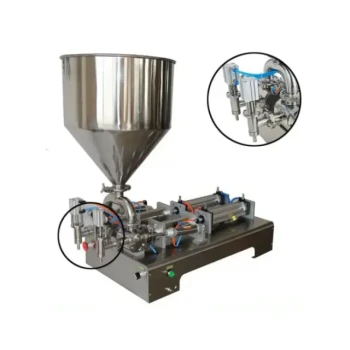
High-precision honey-filling machines act as the critical operational bridge between artisanal beekeeping and industrial-scale distribution. These systems utilize automated metering and sealing technologies to ensure absolute weight consistency and packaging integrity. By replacing manual operations, they dramatically increase production line speeds while meeting the rigorous food safety standards required for commercial branding.
The core value of these machines lies in their ability to standardize a variable natural product. They transform honey packaging from a labor-intensive chore into a precise science, ensuring every jar meets strict hygiene regulations and weight specifications necessary for mass market entry.
Enhancing Operational Efficiency and Scalability
Transitioning to Industrial Branding
Moving from small-scale sales to commercial distribution requires reliability. High-precision machines facilitate the transition from artisanal production to industrial branding by stabilizing the output quality.
Guaranteeing Measurement Accuracy
Manual filling often leads to overfilling (product loss) or underfilling (compliance issues). Automated volumetric or mass-based metering systems ensure consistent net weights across every unit, meeting international trade standards.
Reducing Labor and Material Costs
By automating the dispensing process, producers can significantly reduce labor costs associated with manual packaging. Furthermore, precise volume control prevents material loss and drip waste, maximizing the yield from bulk honey supplies.
Protecting Product Quality and Integrity
Eliminating Secondary Contamination
One of the primary risks in honey packaging is secondary contamination from human contact or the environment. These machines often operate in a closed or sterile environment, isolating the product from external impurities and microbial threats.
Preserving Biological Value
Honey contains delicate components like enzymes (amylase and catalase) and aromatic compounds. Enclosed filling systems minimize air contact, which protects these natural properties and prevents the volatilization of aromas, preserving the honey's "raw" status.
Improving Visual Appeal and Shelf Life
Advanced machines utilize vacuum anti-drip designs and constant temperature controls. This prevents the formation of air bubbles and crystallization nuclei, ensuring the honey remains clear and visually appealing while sealing out atmospheric moisture to extend shelf life.
Understanding the Trade-offs
Complexity of Viscosity Management
While efficient, these machines must be carefully calibrated to handle the specific viscosity of honey. Honey thickness changes with temperature; improper settings can lead to inaccurate fills or equipment strain.
Maintenance and Sanitation Requirements
The move to automation introduces a requirement for rigorous equipment hygiene. The internal components of filling machines must be cleaned thoroughly to prevent cross-contamination between batches, which is often more complex than cleaning manual tools.
Making the Right Choice for Your Goal
To select the right filling technology, you must align the machine's capabilities with your specific business objectives.
- If your primary focus is Mass Market Distribution: Prioritize machines with high-speed automated metering to ensure strict weight compliance and maximize throughput.
- If your primary focus is Premium "Raw" Honey: Look for equipment with enclosed, vacuum-sealed systems to protect enzyme activity and prevent oxidation or aroma loss.
Investing in high-precision filling is not merely about working faster; it is about guaranteeing the safety, consistency, and purity of your brand at scale.
Summary Table:
| Key Feature | Benefit for Commercial Apiaries | Impact on Product Quality |
|---|---|---|
| Automated Metering | Eliminates overfilling and product waste | Guarantees weight compliance |
| Closed Filling Systems | Reduces labor and human contact | Prevents secondary contamination |
| Vacuum Anti-drip Design | Maximizes yield and keeps jars clean | Enhances visual appeal & shelf life |
| Enzyme Protection | Standardizes industrial production | Preserves "raw" biological value |
Elevate Your Honey Production with HONESTBEE
Transitioning from artisanal beekeeping to industrial-scale distribution requires equipment you can trust. HONESTBEE specializes in empowering commercial apiaries and distributors with high-performance honey-filling machines, hive-making hardware, and a complete range of professional beekeeping tools.
Whether you are looking to maximize throughput or protect the delicate biological value of premium raw honey, our comprehensive wholesale offerings are designed to scale your business efficiently. From specialized machinery to essential consumables, we provide the hardware you need to meet international trade standards.
Ready to automate your success? Contact HONESTBEE today to discuss how our solutions can enhance your brand's consistency and market reach.
References
- Nicholaus Bhikolimana Tutuba, Hawa Petro Tundui. Business Model Innovation for Sustainable Beekeeping in Tanzania: A Content Analysis Approach. DOI: 10.33423/ajm.v19i1.1340
This article is also based on technical information from HonestBee Knowledge Base .
Related Products
- Precision Durable Efficient HONESTBEE Rotary Honey Filling Machine
- Commercial Rotary Honey Filling Machine for Production
- Precision Automated Packaging Turntable Honey Spoon Filling Sealing Packing Machine
- Fully Automatic Honey Filling Packaging Machine for Processing Line
- Automatic Honey Filling and Filtering Machine for Beekeeping Bottle Filling
People Also Ask
- How do honey filling machines work? Achieve Precision & Speed for Your Apiary
- How do high-precision honey filling machines ensure quality? Optimize Your Commercial Production with HONESTBEE
- How do honey filling and processing machines aid native bee product conservation? Boost Value with HONESTBEE Technology
- What is a key feature of the new generation of the honey filling machine? The Advanced Electronic Control Unit
- What are the common types of bottling machines used for honey? Choosing the Right Solution for Your Apiary