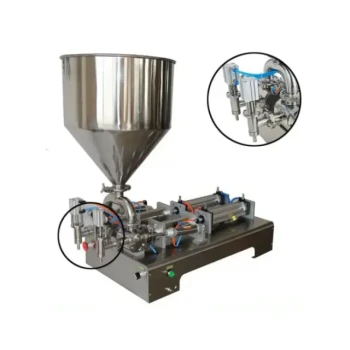
Honey filling and packaging machines act as the critical automated link between bulk production and retail distribution. They are responsible for the precise volumetric conversion of bulk honey into consumer-ready units, ensuring strict adherence to weight specifications and hygiene standards. By utilizing sanitary sealing technologies, these systems protect the product from moisture and contaminants, effectively transforming raw material into a shelf-stable, competitive retail product.
Core Takeaway These machines do not simply bottle liquid; they serve as a preservation system that safeguards the physical and chemical stability of honey against fermentation and spoilage. By combining precision dosing with professional aesthetics, they secure the product's market value and ensure compliance across the global supply chain.
Preserving Product Integrity
The primary function of these machines is to maintain the biological and chemical quality of the honey from the factory to the consumer's table.
Blocking Contaminants and Moisture
Sanitary packaging technology is the first line of defense against spoilage. These machines create a sealed environment that effectively blocks external pollutants and moisture infiltration. This is crucial because excess moisture can lead to fermentation, rendering the honey unfit for sale.
Preventing Oxidation and Degradation
During long-distance or transoceanic transport, honey is vulnerable to environmental changes. Professional sealing equipment ensures the physical and chemical stability of the product. This prevents color oxidation and preserves the volatile aromatic components that define the honey's flavor profile.
Ensuring Hygiene Standards
Automated systems minimize human contact with the product, significantly reducing the risk of secondary contamination. This allows producers to maintain a sterile, hygienic filling environment that meets rigorous food safety standards required for mass market distribution.
Enhancing Operational Efficiency
Beyond quality control, these machines are essential for the economic viability of large-scale honey operations.
High-Precision Volumetric Filling
Manual filling is prone to inconsistency, but automated machines utilize quantitative filling technology. This ensures that every bottle contains the exact volume required, providing uniform product specifications across different batches.
Reducing Waste and Costs
By achieving precise dosage control, producers can significantly reduce material loss. Furthermore, automating the distribution process increases operational speed and reduces labor costs, allowing for higher output and better continuity in large-scale production.
Driving Market Competitiveness
The role of packaging machinery extends to how the product is perceived and tracked in the retail market.
Elevating Brand Appearance
The visual appeal of a product is a key driver of consumer choice. These machines ensure professional packaging appearance through clean sealing and consistent aesthetics, which directly enhances the brand's competitiveness on retail shelves.
Ensuring Traceability and Compliance
Advanced packaging lines often serve as critical nodes for traceability. Integrated systems apply mandatory origin labels and ensure accurate net weights, reducing the risk of origin fraud and protecting consumer rights regarding transparency.
Understanding the Trade-offs
While automation offers immense benefits, it requires a strategic approach to implementation to avoid common pitfalls.
Dependency on Quality Consumables
To effectively block oxygen and moisture, the machinery must be paired with modern consumables, such as specific glass or plastic bottles with high-quality sealing gaskets. Using inferior packaging materials will negate the preservation benefits of the machinery, leading to potential spoilage despite precise filling.
Complexity of High-Speed Operations
Industrial machines are designed for high-speed, continuous output. This level of throughput requires consistent monitoring to ensure that dosage control remains precise over time. A lapse in calibration can lead to widespread inconsistencies across large batches before the error is detected.
Making the Right Choice for Your Goal
To select the right machinery for your supply chain, identify your primary operational objective:
- If your primary focus is Export and Logistics: Prioritize machinery with advanced sealing capabilities to ensure stability and prevent oxidation during transoceanic transport.
- If your primary focus is Brand Positioning: Focus on equipment that delivers flawless aesthetic presentation and consistent volumetric filling to justify premium pricing.
- If your primary focus is Risk Management: Implement lines with integrated labeling and traceability systems to ensure compliance and prevent origin fraud.
By leveraging the right filling and packaging technology, you convert a raw agricultural commodity into a verifiable, high-value consumer asset.
Summary Table:
| Key Role | Primary Benefit | Core Technology/Feature |
|---|---|---|
| Product Preservation | Prevents fermentation & oxidation | Sanitary sealing & moisture-blocking tech |
| Operational Efficiency | Reduces labor costs & material waste | High-precision quantitative volumetric filling |
| Market Competitiveness | Enhances brand image & shelf appeal | Professional aesthetic finishing & sealing |
| Supply Chain Compliance | Ensures traceability & weight accuracy | Integrated labeling & dosage control systems |
Scale Your Honey Business with HONESTBEE Professional Solutions
Maximize your apiary's output and market reach with HONESTBEE. As a premier partner for commercial apiaries and distributors, we provide a total-solution wholesale offering. From high-speed honey-filling machines and precise packaging hardware to specialized beekeeping tools and essential consumables, we empower your production line with industrial-grade reliability.
Ready to transform your bulk production into a high-value retail brand?
Contact HONESTBEE Today for a Customized Equipment Quote
References
- Melaku Melese Haile. FACTORS INFLUENCING HONEY MARKETING IN CASE OF GIMBO WOREDA; KAFA ZONE. DOI: 10.46281/ijmri.v5i1.1474
This article is also based on technical information from HonestBee Knowledge Base .
Related Products
- Fully Automatic Honey Filling Packaging Machine for Processing Line
- Economy Small Honey Filling Machine Honey Bottle Filler Packaging Machine
- Precision Automated Packaging Turntable Honey Spoon Filling Sealing Packing Machine
- Double Nozzle Small Honey Filling Machine Honey Sachet Packing Packaging Equipment
- Small Honey Filling Machine Sachet Packing Equipment Single Nozzle
People Also Ask
- Why are fully automatic honey filling and packaging lines essential? Boost Your Honey's Market Value and Quality
- What is a fully-automatic honey filler? Streamline Your Production with High-Precision Automation
- How do automated honey filling and packaging machines affect profitability? Boost Margins with HONESTBEE Technology
- How do automated honey filling and packaging machines contribute to the market value of honey products? Maximize Your ROI
- How do industrial-grade automated honey filling and packaging machines mitigate the risk of physical contamination?