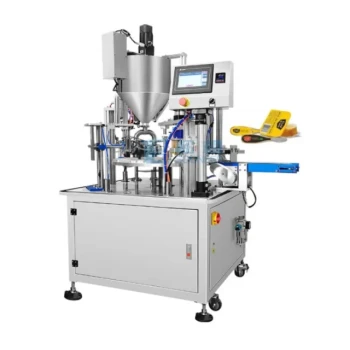
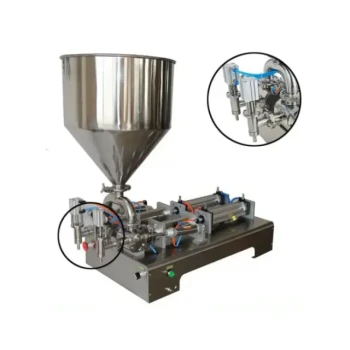
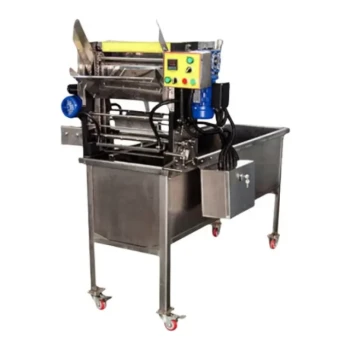
Industrial filling and sealing machines serve as the fundamental bridge between raw apiary production and the global marketplace. They act as the primary control point for standardizing product volume and establishing the hermetic seals necessary to lock in volatile aromatic compounds. Without this automation, honey cannot meet the rigorous physical and hygiene requirements mandated for international export certification.
The Core Reality While manual packaging may suffice for local farm stands, industrial automation is a non-negotiable requirement for export. It provides the only reliable method to stabilize the honey's chemical properties against moisture and oxidation, ensuring the product that arrives on a foreign shelf matches the quality of the product that left the factory.
The Pillars of Commercial Viability
Precision and Volumetric Control
In the context of international trade, consistency is currency. Industrial machines utilize automated filling technologies that precisely control the volume of product in every jar.
This eliminates the variances inherent in manual labor. It ensures that every unit meets strict weight regulations required by high-end retail markets and customs authorities.
Preservation of Volatile Components
Honey is defined by its unique flavor and aroma, which are derived from volatile organic compounds. Primary processing equipment is designed to hermetically seal the packaging immediately after filling.
This locking mechanism prevents the escape of these volatile components. It ensures the natural aroma and specific flavor profile—the product's primary value proposition—remain intact during long transit times.
Prevention of Secondary Contamination
Commercialization requires an aseptic environment. Industrial-grade machines replace manual interaction with a closed, mechanical system.
This drastically reduces the risk of secondary contamination from external impurities or human handling. It creates a hygiene standard that manual operations simply cannot replicate at scale.
Ensuring Chemical Stability for Export
Moisture and Oxidation Control
Honey is hygroscopic; it naturally absorbs moisture from the air. Automated sealing creates an airtight environment that prevents the honey from absorbing humidity during the packaging stage.
This is critical for preventing fermentation and oxidation. If moisture levels rise, the honey can spoil, rendering it unfit for commercial sale.
Stabilizing Physicochemical Indicators
For honey to be exported, it must maintain specific chemical levels. The hermetic seal provided by these machines stabilizes key indicators such as electrical conductivity, pH, and HMF (Hydroxymethylfurfural) levels.
Maintaining these levels is often a legal requirement for entry into foreign markets. It ensures the honey retains its classification as a natural, high-quality product throughout its shelf life.
Handling Production Trade-offs
Viscosity Management
Honey varies significantly in thickness depending on temperature and floral source. A common challenge in commercialization is maintaining filling speed across these variables.
Industrial machines address this by handling varying viscosities (including thick products like royal jelly) without sacrificing precision. However, operators must calibrate these systems carefully to prevent under-filling or machinery strain.
The Shift from Manual to Mechanical
Transitioning to industrial machinery signifies a move from artisanal variability to standardized consistency.
While this increases efficiency and brand credibility, it requires a rigid adherence to maintenance schedules. The reliance on mechanical precision means that even minor calibration errors can affect an entire batch's compliance with export weight standards.
Making the Right Choice for Your Goal
To determine how these machines fit into your operation, assess your specific commercial targets:
- If your primary focus is International Export: You must prioritize machines that guarantee a hermetic seal to stabilize HMF levels and meet border entry hygiene certifications.
- If your primary focus is High-End Retail: You should focus on precision filling technology to ensure identical packaging appearance and consistent consumer experience.
- If your primary focus is Shelf-Life Extension: You need equipment designed to eliminate oxygen exposure immediately upon filling to prevent fermentation and oxidation.
Industrial automation is not merely a tool for speed; it is the mechanism that transforms a raw agricultural ingredient into a stable, compliant, and tradable global commodity.
Summary Table:
| Key Role | Impact on Commercialization | Export Benefit |
|---|---|---|
| Volumetric Control | Eliminates weight variance in jars | Ensures compliance with international trade laws |
| Hermetic Sealing | Locks in volatile aromatic compounds | Preserves natural flavor and aroma during transit |
| Contamination Shield | Replaces manual handling with closed systems | Meets rigorous global hygiene and aseptic standards |
| Chemical Stability | Prevents moisture absorption and oxidation | Stabilizes pH and HMF levels to prevent fermentation |
Elevate Your Apiary to the Global Stage with HONESTBEE
Transitioning from local sales to international export requires more than just honey—it requires precision engineering. At HONESTBEE, we specialize in empowering commercial apiaries and distributors with the industrial tools needed to compete globally.
Our comprehensive portfolio includes:
- Advanced Machinery: High-precision honey-filling and hermetic-sealing machines designed for export-grade stability.
- Beekeeping Infrastructure: Everything from hive-making equipment to essential consumables.
- Growth Support: Tailored wholesale solutions for large-scale operations and distributors.
Don't let manual processes limit your market reach. Partner with HONESTBEE to ensure your product meets the highest international standards for quality and consistency.
Contact us today to upgrade your production line!
References
- Afrânio Silva Madeiro, Fernando Gomes de Souza. BEEKEEPING PRODUCTIVE ABILITY FOR BEE HONEY: Apis mellifera, IN THE SAVANNAH REGION, IN THE STATE OF RORAIMA. DOI: 10.22533/at.ed.9733192328118
This article is also based on technical information from HonestBee Knowledge Base .
Related Products
- Precision Automated Packaging Turntable Honey Spoon Filling Sealing Packing Machine
- Precision Durable Efficient HONESTBEE Rotary Honey Filling Machine
- Commercial Rotary Honey Filling Machine for Production
- Fully Automatic Honey Filling Packaging Machine for Processing Line
- Automatic Honey Filling and Filtering Machine for Beekeeping Bottle Filling
People Also Ask
- Why is the use of professional filling and sealing packaging machinery necessary for the production of high-value honey?
- What role do automated filling and packaging machines play in the honey supply chain? Scale Your Retail Distribution
- What are the benefits of automated honey filling and packaging? Scale Your Apiary with Industrial Precision
- What role do professional automated filling and packaging machines play in honey processing? Boost Efficiency & Value
- How do automated honey filling and packaging machines contribute to the market value of honey products? Maximize Your ROI