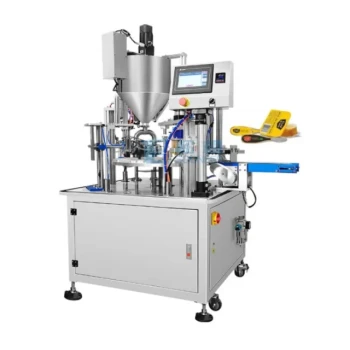
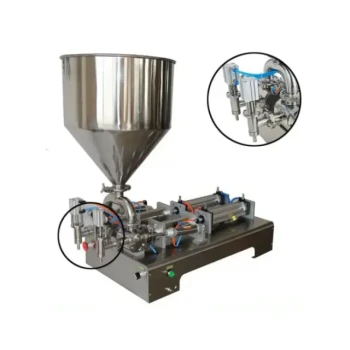
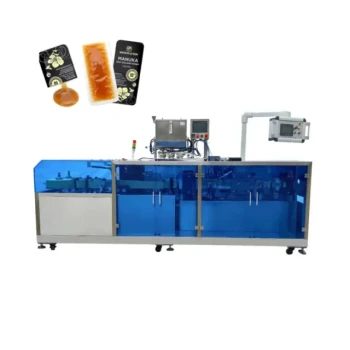
Industrial honey filling machines act as the critical infrastructure required to transition small-scale beekeeping units into modern commercial enterprises. By replacing manual labor with automated operations, these systems ensure strict hygiene compliance and provide the technical capacity necessary to supply markets at a large scale.
Core Insight While honey production relies on nature, commercial profitability relies on processing speed and consistency. Industrial filling machines resolve the primary bottleneck of scaling up—packaging—allowing operations to shift from selling low-margin bulk raw materials to high-margin, retail-ready branded products.
The Pillars of Modernization
Automating for Scalability
For a beekeeping operation to modernize, it must move beyond the limitations of manual packaging. Industrial filling machines provide automated workflows that significantly increase packaging efficiency.
This automation allows producers to handle the high yields associated with increased honeybee populations without being overwhelmed by labor requirements. It creates a system where production volume is no longer dictated by how fast a human can fill a jar, but by the capacity of the line.
Precision and Standardization
Commercial distribution demands consistency that manual filling cannot guarantee. Industrial-grade machines utilize high-precision quantitative filling technologies.
These systems facilitate precise dosage control, ensuring that every unit meets exact net weight specifications regardless of the product's viscosity. Whether packaging liquid honey or denser substances like royal jelly, the machine ensures the uniformity required for retail shelves.
Ensuring Hygiene and Compliance
Modern consumers and regulatory bodies demand impeccable food safety. Industrial machines operate within enclosed filling environments, which prevents secondary contamination during the packaging process.
This strict hygiene control allows beekeeping enterprises to meet the rigorous standards of the food, pharmaceutical, and cosmetic industries. It transforms a raw agricultural product into a compliant, export-grade commercial good.
Economic Transformation
Capturing Added Value
The shift to industrial machinery enables a fundamental change in business strategy. Instead of relying on bulk sales, operations can produce high-quality packaged products that command higher market value.
This brand-oriented approach allows beekeepers to capture the profit margins usually lost to third-party packers. It facilitates deep processing, allowing for the diversification into other bee products like royal jelly with equal efficiency.
Supporting a Dual-Revenue Model
Modernization involves balancing service income with product income. By increasing industrial capacity, apiaries can offset the management costs associated with providing pollination services.
This creates a stable dual-revenue model: service fees from pollination and significant revenue from value-added honey products. The efficiency of the filling line incentivizes the expansion of hive scale, as the backend processing can finally keep up with increased field operations.
Understanding the Operational Trade-offs
The Requirement for Standardization
Implementing industrial filling machines forces an operation to adopt standardized packaging requirements. You cannot easily switch between irregular bottle shapes or sizes without adjusting the line, which reduces flexibility compared to manual packing.
Management Investment
While these machines reduce manual labor intensity, they require a shift toward technical management. Success depends on maintaining the equipment and managing the workflow, rather than just managing hives. The machinery represents a capital commitment that demands high production volume to justify the Return on Investment (ROI).
Making the Right Choice for Your Goal
To modernize effectively, align your equipment choice with your specific strategic objective:
- If your primary focus is Market Expansion: Prioritize machines with high-speed automated workflows to maximize volume and meet large-scale retail demand.
- If your primary focus is Brand Building: Focus on machines offering hygienic sealing and precision dosing to ensure the visual and quantitative consistency required for premium positioning.
- If your primary focus is Product Diversification: Select equipment capable of handling varying viscosities, allowing you to package honey, royal jelly, and byproducts on a single line.
True modernization is not just about producing more honey; it is about refining the process to deliver a consistent, safe, and profitable product to the world.
Summary Table:
| Modernization Pillar | Key Benefit | Operational Impact |
|---|---|---|
| Automation | High-speed throughput | Removes manual labor bottlenecks; scales with hive growth. |
| Precision | Quantitative dosing | Ensures net weight consistency and regulatory compliance. |
| Hygiene | Enclosed environments | Prevents contamination; meets food & pharma safety standards. |
| Value Addition | Retail-ready packaging | Shifts from bulk sales to high-margin branded products. |
| Versatility | Viscosity management | Supports diversification into honey, royal jelly, and more. |
Scale Your Apiary Operations with HONESTBEE
Transition from bulk production to a high-margin retail brand with HONESTBEE’s professional-grade honey processing solutions. We specialize in empowering commercial apiaries and distributors with the tools needed for modern industrial success.
Our value to your business:
- Comprehensive Equipment Range: From high-precision honey-filling machines to specialized hive-making and honey-extraction hardware.
- Total Wholesale Supply: Access a full spectrum of beekeeping tools, machinery, and essential consumables.
- Industry Expertise: Enhance your brand with our honey-themed cultural merchandise and specialized technical support.
Ready to modernize your production line and capture higher market value? Contact HONESTBEE today to discover our tailored wholesale offerings!
References
- Vedat Ceyhan, Hatice Türkten. ECONOMIC STRUCTURE AND SERVICES EFFICIENCY OF TURKISH BEEKEEPERS’ ASSOCIATION. DOI: 10.14207/ejsd.2017.v6n4p53
This article is also based on technical information from HonestBee Knowledge Base .
Related Products
- Commercial Rotary Honey Filling Machine for Production
- Precision Durable Efficient HONESTBEE Rotary Honey Filling Machine
- Fully Automatic Honey Filling Packaging Machine for Processing Line
- Precision Automated Packaging Turntable Honey Spoon Filling Sealing Packing Machine
- Automatic Honey Filling and Filtering Machine for Beekeeping Bottle Filling
People Also Ask
- What role do commercial honey filling machines play in honey distribution? Scaling Efficiency and Quality Control
- What technical support do commercial-grade filling machines provide? Convert Honey NTFPs into Marketable Commodities
- What is the significance of specialized honey filling equipment? Scaling from Beekeeping to Commercial Success
- Why is professional honey filling machinery critical for honey production? Scale Your Apiary's Profit & Efficiency
- Why is high-capacity honey filling machinery necessary for Giant Honey Bees? Solve the Apis dorsata Volume Crisis