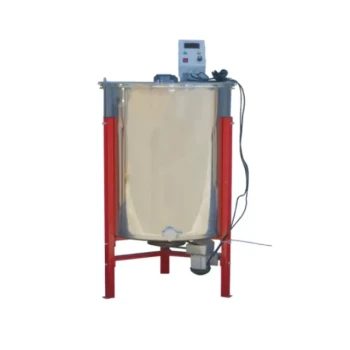
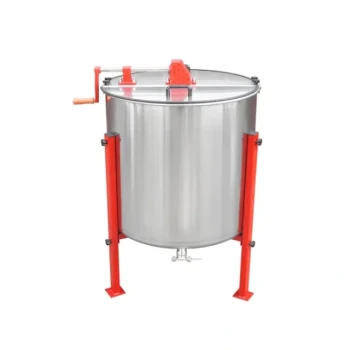
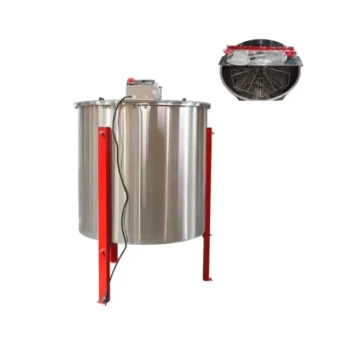
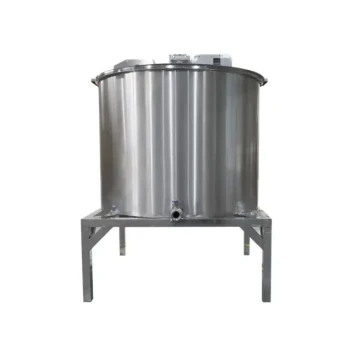
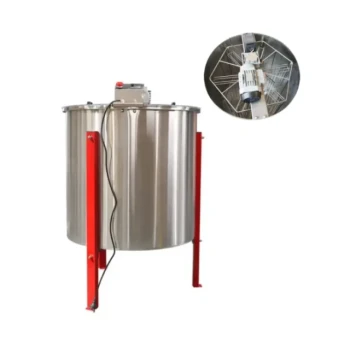
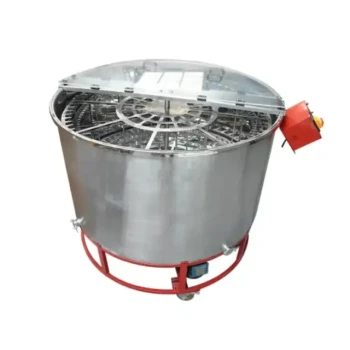
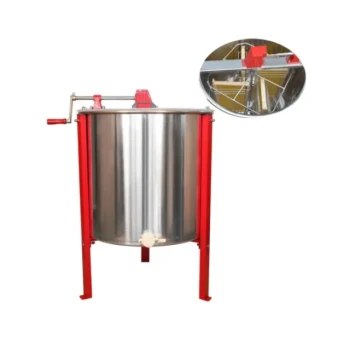
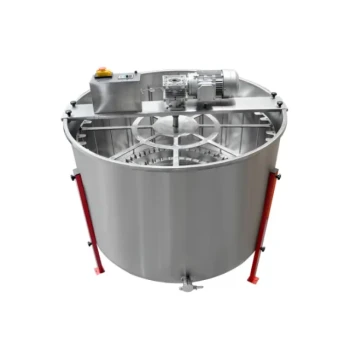
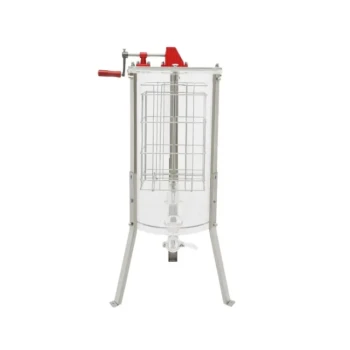
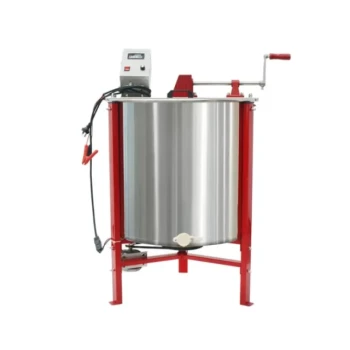
Professional centrifugal honey extractors and settling tanks function as the primary defense against contamination in modern apiculture. By establishing a closed or semi-closed processing chain, this equipment isolates honey from external pollutants while enabling rigorous cleaning protocols that prevent fermentation and microbial growth.
The integration of professional extraction and settling equipment replaces high-risk manual contact with sanitary engineering, ensuring the final product achieves the biological stability and purity required for commercial food safety standards.
The Mechanics of Hygienic Processing
Establishing a Closed Loop
The fundamental role of professional extractors is to minimize the exposure of honey to the open environment.
Unlike traditional methods, these machines create a closed or semi-closed processing chain. This design significantly reduces the risk of dust, debris, or insects entering the product during the extraction phase.
Preventing Microbial Cross-Contamination
Hygiene management relies heavily on the ability to sterilize equipment between uses.
Professional extractors are designed to be compatible with a sufficient water supply. This allows operators to thoroughly rinse and disinfect the machinery between batches, effectively eliminating the risk of fermentation and preventing the transfer of microbes from one harvest to the next.
Purification Through Sedimentation
The Role of Static Settling
Once extracted, hygiene management shifts from containment to purification within settling tanks.
These tanks utilize static sedimentation, a process where honey rests for approximately two weeks. This passive method allows the physics of density differences to separate impurities without invasive mechanical intervention.
Removing Physical Contaminants
During the settling period, fine impurities, air bubbles, and residual wax particles naturally separate from the pure honey.
These contaminants either rise to the surface or settle at the bottom. The result is a high-purity product free of visible residues, which is essential for meeting strict hygiene standards.
Material Integrity and Safety
Eliminating Chemical Leaching
Hygiene is not just about bacteria; it is also about chemical safety.
Professional settling tanks and extractors are typically constructed from food-grade materials. This prevents the contamination risks associated with improper storage, such as the leaching of heavy metals or plastic residues into the honey.
Avoiding Biological Degradation
Traditional manual squeezing can introduce impurities and damage the biological structure of the comb.
Centrifugal extractors preserve the integrity of the honeycomb, allowing it to be reused by the colony. By avoiding manual crushing, the process reduces the introduction of excess wax and debris that could compromise the honey's purity.
Understanding the Operational Trade-offs
Infrastructure Dependencies
While professional equipment elevates hygiene, it introduces new infrastructure requirements.
Effective sanitization is impossible without a reliable water source. Facilities without access to sufficient clean water cannot utilize the rinsing capabilities of these machines, negating their primary hygiene advantage.
The Cost of Time
Achieving high purity through settling tanks requires patience.
The sedimentation process is slow, often taking up to two weeks to complete effectively. Producers must account for this lag time in their supply chain, as rushing this stage can result in a product that retains air bubbles and fine particulate matter.
Making the Right Choice for Your Goal
To select the right equipment for your processing line, consider your specific production objectives:
- If your primary focus is strict food safety: Prioritize extractors with seamless, easy-to-clean interiors that support thorough disinfection to prevent microbial growth.
- If your primary focus is market-ready clarity: Invest in settling tanks with sufficient capacity to allow for the full two-week sedimentation cycle, ensuring the removal of all visible impurities.
- If your primary focus is production efficiency: Choose centrifugal extractors that preserve honeycombs for reuse, reducing the workload on the bees and accelerating the next harvest cycle.
By aligning professional equipment with rigorous cleaning protocols, you transform honey processing from a raw agricultural activity into a controlled, sanitary manufacturing process.
Summary Table:
| Feature | Hygiene Role | Key Benefit |
|---|---|---|
| Centrifugal Extractor | Creates a closed-loop system | Minimizes dust, debris, and microbial exposure |
| Food-Grade Materials | Eliminates chemical leaching | Prevents heavy metal and plastic residue contamination |
| Static Sedimentation | Natural density-based separation | Removes fine wax particles and air bubbles without additives |
| Washable Design | Supports rigorous disinfection | Prevents fermentation and microbial cross-contamination |
Elevate Your Honey Production with HONESTBEE
At HONESTBEE, we specialize in empowering commercial apiaries and distributors with the professional tools needed to meet global food safety standards. From high-capacity centrifugal honey extractors and settling tanks to advanced honey-filling machines and specialized hardware, our comprehensive wholesale portfolio covers your entire processing chain.
Whether you are scaling your extraction facility or looking for reliable industry consumables and honey-themed cultural merchandise, we deliver the quality and expertise your business deserves. Contact us today to discover how our premium beekeeping equipment can enhance your product purity and operational efficiency.
References
- А. Ф. Кузнецов, V. V. Achilov. Hygiene water and water supply in beekeeping. DOI: 10.52419/issn2782-6252.2024.3.102
This article is also based on technical information from HonestBee Knowledge Base .
Related Products
- electric honey extractor honey centrifuge 3 frame honey extractor stainless steel honey frame extractor
- Manual Hand Crank 4 Frame Honey Extractor Centrifuge for Beekeeping
- Professional 4 Frame Self Reversing Electric Honey Extractor for Beekeeping
- 24 Frame Honey Extractor Commercial Radial Honey Frame Extraction Machine
- Electric 4 Frame Tangential Honey Extractor
People Also Ask
- What are the characteristics of electric honey extractors? Boost Your Apiary Efficiency with Automated Technology
- What are the disadvantages of using an electric honey extractor? Weighing Cost, Power, and Comb Safety
- What are the advantages of an electric honey extractor? Boost Efficiency and Scale Your Honey Production
- What are the technical advantages of electric honey extractors? Maximize Yield and Protect Your Bee Colony
- How does an electric honey extractor affect the quality of honey? Preserve Flavor & Purity with Precision Extraction