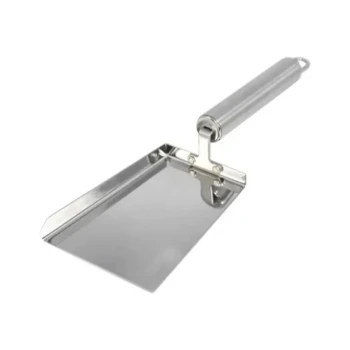
Specialized collection devices function as precision harvesting instruments that isolate specific hive by-products through physical isolation or behavioral induction. By utilizing tools such as pollen traps and propolis mats, beekeepers can capture high-value consumables without disrupting the colony's normal biological activities or development.
The integration of specialized collection hardware fundamentally shifts an apiary's business model from exclusive honey production to a diversified, multi-product operation. This diversification maximizes the economic yield per colony and builds financial resilience against market volatility.
The Mechanics of Extraction
Physical Isolation via Pollen Traps
Pollen traps operate on a principle of physical isolation. They utilize a grid structure placed at the hive entrance.
As worker bees enter the hive, they must pass through this specific grid. The mechanism gently dislodges pollen pellets attached to their hind legs, collecting them in a separate tray while allowing the bee to enter safely.
Behavioral Induction via Propolis Mats
Propolis collection relies on induction mechanisms rather than physical barriers. These devices simulate natural hive conditions to trigger a biological response.
Propolis mats mimic crevices or gaps within the hive structure. Because bees have a natural instinct to seal gaps to protect the colony, they are induced to deposit propolis onto the mat, allowing for efficient, clean harvest.
Preservation of Colony Activity
A critical feature of these specialized tools is their non-intrusive design.
Unlike invasive harvesting methods, these devices are engineered to leverage bee behavior. This allows for the continuous extraction of by-products without interfering with the colony’s daily routines or overall health.
The Strategic Shift: From Honey to Multi-Product
Economic Diversification
The primary strategic role of these devices is enabling a transition from single-product honey production to a comprehensive resource utilization model.
By harvesting pollen, propolis, royal jelly, and beeswax alongside honey, apiaries significantly increase the total economic output generated by a single colony. This transforms the hive into a source of multiple revenue streams.
Market Resilience and New Sectors
Expanding into by-products allows beekeepers to enter high-value markets beyond the food industry, including pharmaceuticals and cosmetics.
These sectors value bioactive substances found in propolis and venom. Furthermore, relying on multiple products provides a financial buffer, protecting the operation against honey yield fluctuations caused by climate issues or honey price volatility.
Understanding the Trade-offs
Equipment-Dependent Purity
While these tools increase output, they shift the operational focus toward precision and purity.
To access high-value biomedical or cosmetic markets, the collection must prevent external impurities. This requires reliance on the specific engineering of these specialized tools rather than ad-hoc manual methods, which may not meet industrial purity standards.
Operational Complexity
Adopting these devices moves the operation away from simple honey extraction toward advanced processing.
Beekeepers must manage a more complex workflow involving different harvest cycles for pollen and propolis. Success depends on correctly implementing the equipment to ensure the "non-disruptive" promise holds true, maintaining the balance between harvest volume and colony welfare.
Making the Right Choice for Your Goal
To determine how to integrate these devices into your operation, consider your primary business objective:
- If your primary focus is Maximum Revenue per Hive: Implement both pollen traps and propolis mats to tap into the "multi-product matrix," extracting value from every resource the bees produce.
- If your primary focus is Market Stability: Prioritize propolis and venom collection to secure raw material contracts in the pharmaceutical or cosmetic industries, reducing dependence on the volatile honey market.
By treating the hive as a multi-faceted production unit rather than just a honey source, you unlock the full economic and biological potential of your apiary.
Summary Table:
| Device Type | Mechanism | Primary By-product | Economic Benefit |
|---|---|---|---|
| Pollen Traps | Physical Isolation (Grid) | Bee Pollen | High-volume nutritional supplement revenue |
| Propolis Mats | Behavioral Induction (Gaps) | Propolis | Entry into pharmaceutical & cosmetic markets |
| Collection Trays | Gravity/Passive Collection | Clean Hive Debris | Diversified material for processing |
| Specialized Mats | Instinctive Sealing | High-Purity Resin | Premium pricing through industrial grade purity |
Unlock the Full Potential of Your Apiary with HONESTBEE
Transition from simple honey production to a high-yield, multi-product operation with our professional-grade equipment. HONESTBEE specializes in supporting commercial apiaries and distributors by providing the industry's most reliable specialized collection devices, hive-making machinery, and essential consumables.
How we add value to your business:
- Maximizing ROI: Our precision pollen traps and propolis mats turn every hive into a diverse revenue stream.
- Industrial Scalability: From honey-filling machines to automated hardware, we supply the tools needed for large-scale processing.
- Market Expansion: We help you meet the purity standards required for the lucrative cosmetic and pharmaceutical sectors.
Ready to scale your wholesale beekeeping business? Contact HONESTBEE today to explore our comprehensive range of beekeeping machinery and tools.
References
- Sangeet Ranguwal. Economic Potential of Beekeeping in Punjab. DOI: 10.30954/2394-8159.03.2023.10
This article is also based on technical information from HonestBee Knowledge Base .
Related Products
- 8 Frame and 10 Frame Propolis Trap Collector Screen for Propolis Collection
- 30 cm Plastic Entrance Hole Bee Pollen Trap and Collector
- Removable Plastic Pollen Trap With Ventilated Tray for Bees Pollen Collector
- Plastic Bee Pollen Trap Strips Comb Catcher Collector
- High-Efficiency Diamond Maze Bee Escape for Clearing Supers
People Also Ask
- Why is a specific wooden frame required when installing a propolis screen? Optimize Your Propolis Harvest Efficiency
- What are the advantages of using propolis collector screens? Elevate Your Harvest to Pharmaceutical Purity
- How does the mesh size of a propolis collection screen influence the efficiency of propolis harvesting? Optimize Yields!
- How do commercial-grade plastic screens compare to custom fine-mesh screens? Maximize Your Propolis Yield & ROI
- What are the technical advantages of using specialized propolis collection screens? Maximize Purity and Efficiency