Specialized wicks serve as the critical combustion engine in traditional stingless bee beeswax candles, acting as the primary determinant of the candle's performance and quality. Embedded specifically during the cooling and molding stage, the wick's material and thickness are engineered to navigate the unique texture of this rare wax, ensuring the liquid fuel rises evenly via capillary action.
The success of a stingless bee beeswax candle relies on the precise calibration between the wick and the wax. Without a specialized wick designed to match the wax's specific texture, the candle cannot achieve the smoke-free, stable, and long-lasting burn that defines a high-quality traditional craft product.
The Mechanics of Wick Interaction
Managing Unique Wax Texture
Stingless bee beeswax possesses a distinct texture that differs from standard commercial waxes. A generic wick is often unable to process this material effectively.
The specialized wick is selected to be compatible with this specific viscosity. It ensures that the transition from solid wax to liquid fuel occurs smoothly without clogging the fibers.
Optimizing Capillary Action
The fundamental function of the wick is to draw liquid wax upward to the flame.
In these specific candles, the wick facilitates an even rise of liquid wax through capillary action. This precise flow rate is what prevents the flame from starving (becoming too small) or flooding (drowning in the wax pool).
Performance Metrics Controlled by the Wick
Combustion Stability and Brightness
The physical characteristics of the wick directly dictate the quality of the light emitted.
By regulating the fuel intake, the specialized wick ensures a consistent, bright flame. This stability is crucial for preventing the flickering often associated with lower-quality beeswax candles.
Burning Duration
The thickness of the wick controls how quickly the wax is consumed.
A specialized wick is calibrated to extend the burning duration. It balances the heat output to melt only as much wax as is needed, maximizing the lifespan of the candle.
Understanding the Trade-offs
The Risk of Incorrect Thickness
Selecting the wrong wick thickness has immediate negative consequences on performance.
If the wick is too thin for the wax's melting point, the flame will be weak and potentially extinguish itself. Conversely, if the wick is too thick, it will consume the wax too aggressively, reducing the burn time significantly.
Smoke Generation vs. Clean Burning
A key indicator of a mismatched wick is the production of smoke.
The primary reference notes that a correct wick achieves a "smoke-free" effect. Failing to match the wick material to the stingless bee wax texture results in incomplete combustion, leading to soot and smoke that ruin the aesthetic and aromatic experience.
Making the Right Choice for Your Goal
When producing or selecting stingless bee beeswax candles, the wick is the variable that must be adjusted based on your specific requirements.
- If your primary focus is longevity: Prioritize a wick thickness that restricts fuel flow slightly to extend burn time without suffocating the flame.
- If your primary focus is visual quality: Ensure the wick material is highly compatible with the wax texture to guarantee a bright, flicker-free, and smoke-free flame.
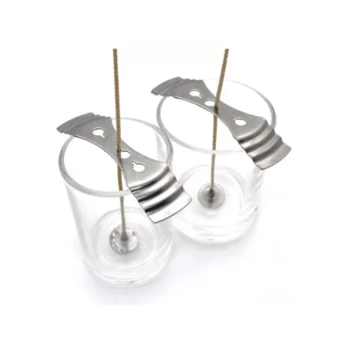
- If your primary focus is structural integrity: Verify that the wick was embedded during the cooling stage to ensure it is perfectly centered and integrated with the hardened wax.
Ultimately, the specialized wick transforms stingless bee beeswax from a raw material into a functional, high-performance light source.
Summary Table:
| Feature | Specialized Wick Impact | Impact of Incorrect Wick |
|---|---|---|
| Combustion | Stable, bright, and smoke-free | Flickering, soot, and smoke production |
| Fuel Flow | Even capillary action; balanced rise | Clogging or drowning (flooding) |
| Burn Time | Maximized through precise calibration | Rapid wax consumption or weak flame |
| Compatibility | Matches unique stingless bee wax texture | Material mismatch leading to failure |
| Installation | Centered during cooling/molding stage | Off-center wick causing uneven melting |
Elevate Your Bee-Product Business with HONESTBEE
At HONESTBEE, we understand that every detail—from the rare wax of stingless bees to the specialized tools used to process it—defines the success of your brand. As a premier partner for commercial apiaries and distributors, we provide more than just supplies; we provide a complete wholesale ecosystem.
Our extensive portfolio includes:
- Beekeeping Machinery: Precision honey-filling and specialized hive-making machines.
- Professional Hardware: A full spectrum of durable beekeeping tools and equipment.
- Industry Consumables: Everything needed to maintain and scale your operations.
- Retail-Ready Merchandise: Honey-themed cultural products to expand your market reach.
Whether you are scaling a professional apiary or stocking a distribution network, our expertise ensures you get the highest quality materials at wholesale scale. Contact us today to optimize your production and supply chain!
References
- Alejandro Reyes-González, Alejandro Casas. Diversity, local knowledge and use of stingless bees (Apidae: Meliponini) in the municipality of Nocupétaro, Michoacan, Mexico. DOI: 10.1186/1746-4269-10-47
This article is also based on technical information from HonestBee Knowledge Base .
Related Products
- 3D Square Honeycomb Pillar Silicone Candle Molds for Making Beeswax Candles
- Beeswax Melter for Candle Making Honey Bee Wax Melter
- Professional Stainless Steel Wax Melter for Beekeeping and Crafts
- 3D Beehive Silicone Skep Wax Candle Molds for Candles
- Bee Floral Relief Silicone Mold for Artisan Soap Candle Making
People Also Ask
- Is spray release necessary when using silicone molds for candle making? Master the Art of Flawless Demolding
- Why are silicone molds preferred over tin or plastic molds for beeswax candles? Boost Efficiency & Quality
- What is the first tip for pouring beeswax into a silicone mold? Ensure a Perfect Release
- Which specific shapes and designs are commonly available for beeswax candle molds? Choose the Best Molds for Production
- How do you secure a silicone mold for candle making? Prevent Leaks and Achieve Perfect Candles